REVIEW ARTICLE | DOI: https://doi.org/dx.doi.org/JIHM/PP.0011
1Department of International Public Health, Liverpool School of Tropical Medicine, Pembroke Place, Liverpool, L3 5QA, United Kingdom.
2Department of Pharmacy and Health and Nutrition Sciences, University of Calabria, Rende, Italy.
3Department of Physical Science, Eastern New Mexico University, USA.
4Department of Biochemistry, Faculty of Biosciences, Federal University Wukari, Taraba State, Nigeria.
5ResearchHub Nexus Institute, Nigeria.
6Department of Chemical Sciences, Faculty of Science, Anchor University, Ayobo, Lagos State, Nigeria.
*Corresponding Author: Moses Adondua Abah
Citation: Moses Adondua Abah , Ovwigho-Ugbede , Oghenetejiri C, Micheal Abimbola Oladosu , Micah Nnabuko Okwah , Ochuele Dominic Agida , Ahinful Isaac Anku and Abah Sarah Onyeoche (2026), Advances in Hematopoietic Stem Cell Transplantation: A Review of Recent Developments and Challenges, J. Innovations in Healthcare and Medicine 2(4): dx.doi.org/JIHM/PP.0011
Copyright  :
© 2026 Moses Adondua Abah. This is an open-access article distributed under the terms of the Creative Commons Attribution License, which permits unrestricted use, distribution, and reproduction in any medium, provided the original author and source are credited.
:
© 2026 Moses Adondua Abah. This is an open-access article distributed under the terms of the Creative Commons Attribution License, which permits unrestricted use, distribution, and reproduction in any medium, provided the original author and source are credited.
Received: 16 June 2026 | Accepted: 14 August 2026 | Published: 21 August 2026
Keywords: hematopoietic stem cell transplantation; graft-versus-hostdisease; conditioning regimens; gene editing, immunotherapy and donor selection.
Hematopoietic stem cell transplantation (HSCT) remains a cornerstone therapy for a wide spectrum of hematologic malignancies, congenital immunodeficiencies, and inherited metabolic disorders. Over the past decade, significant scientific and clinical advancements have reshaped HSCT, extending its curative potential while mitigating associated risks. Progress in donor selection, including high-resolution HLA typing and the widespread use of haploidentical donors, has expanded global transplant accessibility. Innovations in conditioning regimens such as reduced-intensity approaches and antibody-drug conjugates have optimized the balance between efficacy and toxicity, enabling safer procedures for older and medically fragile patients. Parallel developments in graft engineering, immune modulation, and cellular therapy integration have transformed post-transplant outcomes, particularly through the introduction of post-transplant cyclophosphamide, regulatory T-cell infusion, and NK-cell–based strategies to control graft-versus-host disease (GVHD). The emergence of gene-editing technologies, including CRISPR/Cas9-mediated autologous transplantation, has further broadened the therapeutic frontier for genetic and hematologic disorders. Advances in infection prophylaxis, supportive care, and long-term survivorship management continue to improve quality of life and survival rates. Despite these achievements, persistent challenges such as chronic GVHD, relapse, donor scarcity, and socioeconomic disparities underscore the need for continued innovation. This review synthesizes contemporary breakthroughs in HSCT biology, technology, and clinical application, critically examines unresolved barriers, and highlights future directions including artificial intelligence (AI)-driven predictive analytics, universal donor platforms, and equitable global access strategies.
Hematopoietic stem cell transplantation (HSCT) is an established curative therapy for a spectrum of malignant and nonmalignant hematologic disorders, and its clinical role has continued to expand as transplantation techniques, donor availability, and supportive care have improved (Passweg et al., 2023; D'Souza et al., 2020). Over the last decade, refinements in HLA-typing, registry infrastructure and conditioning strategies have increased transplant candidacy and improved outcomes worldwide; the 2023 EBMT activity survey documents rising allogeneic transplant volumes and broader use of alternative donor platforms (Passweg et al., 2023). These system-level advances, together with technological progress in graft processing and immunomodulation, underpin HSCT’s transition from a high-risk salvage therapy to a more routinely deployable precision intervention in hematology.
Clinical and biologic innovations have accelerated recently. Ex vivo graft modification and expansion reached a regulatory milestone with the U.S. Food and Drug Administration’s approval of Omisirge (omidubicel-onlv) in April 2023; randomized trial data showed median neutrophil recovery of 12 days with omidubicel versus 22 days with conventional cord blood grafts and a reduced incidence of serious infections through day 100 (Horwitz et al., 2021; U.S. Food and Drug Administration, 2023). Simultaneously, gene-editing and autologous stem-cell approaches have matured: exagamglogene autotemcel (exa-cel) demonstrated profound clinical benefit in severe sickle cell disease, illustrating how gene-modified hematopoietic products are converging with classical transplantation paradigms (Frangoul et al., 2024).
Donor-access strategies and GVHD prophylaxis have also advanced. Haploidentical transplantation using post-transplant cyclophosphamide (PTCy) is now widely adopted and has yielded outcomes that in many contexts rival matched donor transplants; registry and multicenter reports document acceptable GVHD rates, expanding donor options for ethnically diverse and previously underserved populations (Nishikawa et al., 2024; Xu et al., 2025). At the same time, improvements in graft engineering (selective T-cell depletion, NK-cell enhancement) and targeted conditioning regimens aim to preserve graft-versus-leukemia activity while limiting toxicity.
Important challenges remain. Chronic GVHD continues to drive late morbidity and mortality despite advances in prophylaxis and therapy (Chin et al., 2025), and relapse, engraftment failure, infection during early immune reconstitution, and long-term organ toxicities remain major contributors to poor outcomes. Moreover, the high cost and complex logistics of advanced cell and gene therapies raise serious questions about equitable access, particularly in low- and middle-income countries where registry diversity and transplant infrastructure lag behind high-income regions (Passweg et al., 2023). Looking forward, HSCT is being reimagined at the interface of cellular engineering, gene therapy, and data science. Integration of CAR and NK cellular platforms into transplant pathways, the adoption of CRISPR-based corrective strategies for inherited hematologic disease, and use of artificial intelligence for donor selection and outcome prediction are already changing clinical trial design and clinical workflows (Frangoul et al., 2024; Choudhery, Arif and Mahmood, 2025). The critical task for the next decade will be translating these innovations into safer, more cost-effective, and equitably distributed treatments.
This review aims to provide a comprehensive analysis of contemporary advances in hematopoietic stem cell transplantation (HSCT), focusing on innovations that have redefined clinical practice and patient outcomes. The scope encompasses recent progress in donor selection, including haploidentical transplantation and ex vivo-expanded grafts, novel conditioning regimens designed to minimize toxicity, and breakthroughs in graft engineering and immune reconstitution. The review further explores the clinical integration of gene-editing technologies, CAR-T and NK-cell therapies, and artificial intelligence applications in transplantation monitoring and prediction. Alongside these scientific advances, it critically assesses ongoing challenges such as graft failure, GVHD, infection control, relapse prevention, and long-term survivorship issues. Moreover, the review evaluates socioeconomic and ethical aspects influencing global access, donor representation, and regulatory policy surrounding novel transplantation technologies. The overarching purpose is to synthesize current clinical and translational evidence to guide future research priorities, inform clinical decision-making, and promote equitable implementation of emerging HSCT innovations worldwide. Ultimately, the goal is to bridge laboratory advances with clinical realities, ensuring that progress in hematopoietic stem cell transplantation translates into safer, more effective, and globally accessible therapeutic outcomes.
2. Hematopoietic Stem Cell types/Sources
The success of hematopoietic stem cell transplantation (HSCT) depends critically on choosing the right stem cell source and donor. Different sources—bone marrow, peripheral blood, umbilical cord blood, and emerging alternatives such as induced pluripotent stem cells (iPSCs) each bring distinct advantages and limitations in terms of engraftment speed, immune reconstitution, graft-versus-host disease (GVHD) risk, and logistical feasibility. Meanwhile, donor matching (HLA typing, registry reach, haploidentical or mismatched options) shapes access and outcome. In this section, we review the types/sources of HSCs and examine recent advances in donor selection and matching, with attention to recent data.
2.1 Bone Marrow-Derived Stem Cells
Bone marrow (BM) remains a classic and often preferred source of hematopoietic stem cells. The collection involves surgical aspiration (often from the iliac crest), usually under anesthesia, and yields a graft rich in primitive stem and progenitor cells. BM grafts are associated with a lower incidence of chronic GVHD compared to peripheral blood stem cells (PBSCs), which makes them advantageous in patients for whom minimizing GVHD is a priority. A recent retrospective cohort in myelodysplastic syndrome (MDS) patients comparing BM vs PBSC for HLA‐identical related donors showed comparable overall survival but better GVHD-free, relapse-free survival and chronic GVHD-free/relapse-free survival for BM grafts versus PBSC grafts (hazard ratios ~1.24 to 1.29, P < 0.05) (Itonaga et al., 2023). However, BM sources have some disadvantages. Engraftment is slower, especially of neutrophils and platelets, which can extend the period of vulnerability to infections and transfusion dependence. The collection procedure is more invasive and less acceptable in some donor settings. Additionally, BM graft yield and donor morbidity are considerations that can limit donor availability.
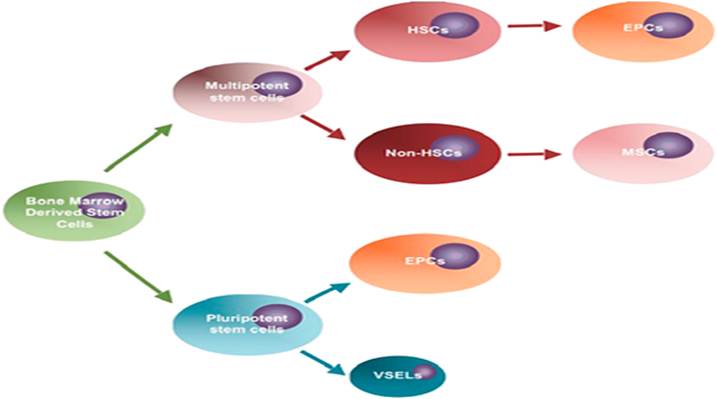
Figure 1. Bone marrow-derived stem cells. The diagram displays subsets of bone marrow-derived stem cells, including HSCs, MSCs, EPCs, and VSELs, that have undergone laboratory testing and are quickly being developed into clinical uses as effective stem cell sources for stroke transplantation therapy.
Source: Borlongan (2011)
2.2 Peripheral Blood Stem Cells (PBSCs)
Peripheral blood stem cells (mobilized typically using G-CSF, sometimes combined with other mobilizers) are now the most commonly used source for many HSCT procedures, especially in adult malignancy settings. Their key advantages include faster neutrophil and platelet engraftment, shorter hospital stays, and more rapid immune recovery. These benefits are especially pronounced when disease risk or infection risk is high. The trade-off is a higher incidence of chronic GVHD with PBSCs compared to BM grafts. The MDS study above demonstrated that while overall survival was similar between BM and PBSC sources, PBSC recipients had worse GVHD-free/relapse-free survival and more chronic GVHD (Itonaga et al., 2023). In aplastic anemia, meta-analysis shows similar survival between BM and PBSC sources but again increased GVHD risk with PBSC transplantation (PBSCT) (Zhang, Zhou, Cheng and Hu, 2023).
2.3 Umbilical Cord Blood Stem Cells
Umbilical cord blood (UCB) offers several unique immunologic advantages: higher tolerance for HLA mismatches, lower GVHD incidence, and the ability to use cord units from diverse donor populations. This makes UCB particularly valuable for patients lacking a fully matched donor. However, UCB is challenged by lower cell doses per unit, which lead to slower engraftment and prolonged immune recovery—hence greater infection risk, especially in adult recipients. Recent graft engineering strategies (e.g. ex vivo expansion, dual‐cord transplantation, co-culture with supportive stromal cells) are being used to overcome these limitations. For example, “omidubicel” (an expanded UCB product) has shown shortened neutrophil recovery and fewer infections in randomized settings relative to standard UCB grafts (Horwitz et al., 2021; U.S. FDA, 2023)
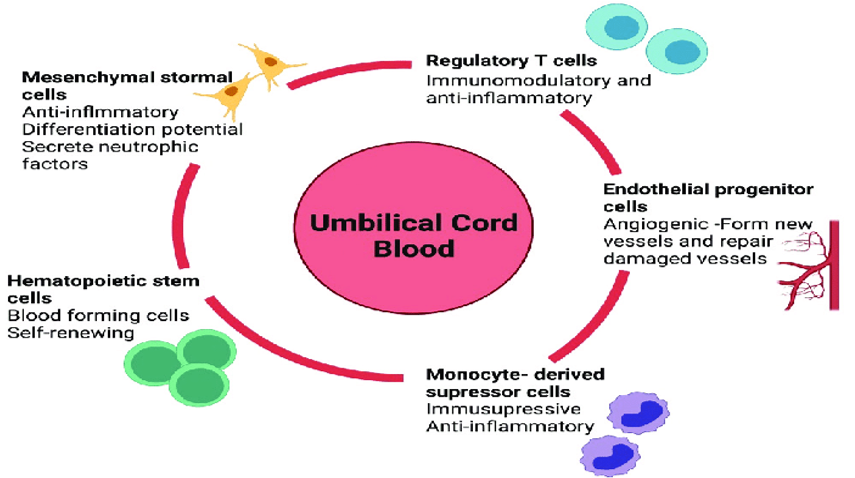
Figure 2. The main stem and progenitor cells present in umbilical cord blood (UCB) and their primary functions. The diagram represents the five main stem and progenitor cell subtypes produced by UCB, which include mesenchymal stromal cells, endothelial progenitor cells, hematopoietic stem cells, monocyte-derived suppressor cells, and regulatory T cells.
Source: Kusindarta and Wihadmadyatami (2021)
3. Emerging and Alternative Sources
Emerging sources include induced pluripotent stem cells (iPSCs) and engineered ex vivo expansion platforms. Preclinical studies now show that iPSC‐derived hematopoietic stem/progenitor cells (HSPCs) can engraft multilineage in immunodeficient animal models, and can be expanded via defined differentiation routes involving hemogenic endothelium and HOX gene modulation (Ng et al., 2026). Another example: protocols comparing iPSCs derived from fibroblasts versus hESC (human embryonic stem cells) show that iPSC lines may outperform in yield of HSPCs under optimized cytokine conditions (Lim, Cheong and Leong, 2025). There is also progress in banking iPSC lines matched for HLA haplotypes to allow off-the-shelf grafts with minimized immunogenic risk (Alowaysi et al., 2023). But human transplantation using iPSC-derived HSCs is not yet common; safety, long-term repopulation, and immune rejection remain challenges.
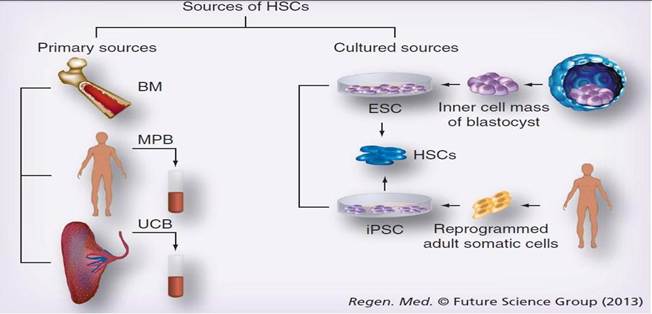
Figure 3. Sources of Hematopoietic stem cells. This diagram illustrates the three principal sources of hematopoietic stem cells such as bone marrow, peripheral blood, and umbilical cord blood. It also presents their cultural sources.
Source: Sudulaguntla et al. (2016)
4. Recent Advances in Transplantation Techniques
Recent years have seen significant refinements in the core technical components of hematopoietic stem cell transplantation (HSCT): conditioning regimens, donor matching, graft engineering, and gene-edited stem cell therapies. These innovations aim to reduce toxicity, improve safety, expand eligibility, and enhance disease control. Below are key developments in each area.
4.1 Conditioning Regimens
The conditioning regimen remains essential for enabling engraftment while suppressing malignancy, but its intensity and components have been optimized to reduce toxicities. Reduced-intensity conditioning (RIC) and non-myeloablative regimens are now more widely used, especially in older patients or in those with comorbidities, achieving acceptable engraftment with lower transplant‐related mortality (TRM) (Passweg et al., 2023). Novel agents such as treosulfan have shown favorable toxicity profiles: in recent allogeneic transplants, treosulfan-based RIC reduced risk of organ damage compared to busulfan while preserving engraftment. Moreover, pharmacokinetically adjusted busulfan continues to be optimized in gene-editing based transplants: for example, in the exa-cel trial for sickle cell disease, patients received dose-adjusted busulfan conditioning before ex vivo CRISPR editing of CD34+ hematopoietic progenitors (Frangoul et al., 2024).
4.2 Donor Matching and Selection
Advances in HLA typing technologies, especially next-generation sequencing, have increased resolution and accuracy of donor matching, facilitating better prediction of GVHD, rejection, and survival outcomes (Nishikawa et al., 2024). Haploidentical HSCT with post-transplant cyclophosphamide (PTCy) has become increasingly mainstream, with outcomes in many large studies approaching those of matched donor transplants in terms of overall survival and relapse risk (Xu et al., 2025). Mismatched unrelated donor transplantation is also better managed now, with improved supportive therapies and donor registry diversity helping reduce risk.
4.3 Graft Engineering and Manipulation
Graft engineering continues to be a major area of innovation. T-cell depletion (both ex vivo and in vivo) is refined to reduce GVHD while preserving graft-versus-leukemia (GVL) effect. NK cell modulation is another promising strategy: recent work highlights natural killer cells’ role in GVL and identifies improved methods for harnessing NK alloreactivity in the haploidentical setting (Hadjis and McCurdy, 2024). Cord blood-derived NK cell expansion protocols under serum-free, defined factor conditions have been developed, allowing better yields of functional NK cells suitable for adoptive use or graft supplementation. There is also progress in combining CAR-NK, regulatory T cells, and costimulatory molecule blockade to modulate graft immune response.
4.4 Gene-Edited Stem Cells
Gene-editing technologies have moved from promising preclinical models into approved clinical therapies. Exagamglogene autotemcel (exa-cel), a CRISPR/Cas9-edited autologous CD34+ cell product targeting the BCL11A erythroid enhancer to upregulate fetal hemoglobin, demonstrated substantial reduction in vaso-occlusive crises in sickle cell disease in its Phase 3 trial (Frangoul et al., 2024). In tandem, base editing approaches show promise in preclinical studies: adenine base editors converting the sickle mutation to non-pathogenic variants in HSPCs, with durable engraftment in murine xenograft models (Newby et al., 2021) (PAMID studies) (≤) († see search result). Prime editing has also been used ex vivo to correct HBB^S to HBB^A alleles in HSPCs from SCD patients with stable engraftment and reduced sickling phenotypes in animal models (Everette et al., 2023). These developments are paving the way toward safer, less immunogenic, and more durable gene repair mechanisms for inherited blood disorders, while regulatory, safety, and cost issues remain under study.
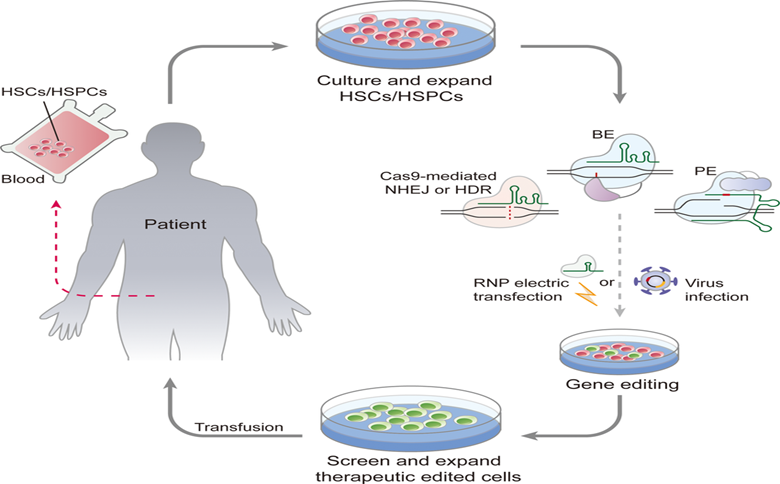
Figure 4. Work flow of CRISPR/Cas gene editing in gene therapy of IEIs. Following ex vivo culture and CRISPR/Cas editing, autologous HSCs obtained from patients are screened, expanded, and then transfused into conditioned patients to rebuild their immune systems. To enable effective pathogenic gene correction, CRISPR/Cas gene editing agents could be introduced into HSCs by RNP, "all RNA," or AAV vector.
Source: Liu and Li (2023)
5. Immunological Innovations in Hematopoietic Stem Cell Transplantation
Immunological advances have reshaped allogeneic HSCT by enabling more precise modulation of donor–recipient immune interactions. Improvements in GVHD prophylaxis and therapy, strategies to preserve graft-versus-leukemia (GVL) effects, adoptive cellular therapies, and immune monitoring together aim to reduce early transplant mortality and late morbidity while maintaining anti-tumor efficacy (Zeiser et al., 2021; Cutler et al., 2021).
5.1 GVHD: Pathogenesis, Prophylaxis and Targeted Therapy
GVHD is driven by donor alloreactive T cells, host antigen presentation and inflammatory pathways; recent therapies target specific molecular nodes to reduce tissue injury while sparing beneficial immunity. Targeted agents have transformed management of steroid-refractory GVHD. The JAK1/2 inhibitor ruxolitinib improved overall response and failure-free survival versus best available therapy in steroid-refractory chronic GVHD (Zeiser et al., 2021). Belumosudil (ROCK2 inhibitor) produced high response rates in the phase 2 ROCKstar program and received FDA approval for chronic GVHD after ≥2 prior systemic therapies (Cutler et al., 2021; U.S. FDA, 2021). At the prophylaxis level, post-transplant cyclophosphamide (PTCy) has become a standard approach to reduce severe GVHD in haploidentical and some matched-donor settings (Nagler et al., 2023). Biomarker panels (e.g., ST2, REG3α) are increasingly used to stratify GVHD risk and guide individualized prophylaxis in clinical studies.
Table 1. GVHD prevention & targeted immunotherapies
Strategy / Agent | Mechanism / Target | Clinical role / impact | Source |
Post-transplant cyclophosphamide (PTCy) | Selective depletion of proliferating alloreactive T cells when given early post-transplant | Widely adopted for haploidentical allo-HSCT; lowers severe aGVHD and expands donor availability. | Luznik, O'Donnell and Fuchs, 2012. |
Ruxolitinib (JAK1/2 inhibitor) | Blocks JAK-STAT mediated inflammatory signaling | Phase-3 REACH3: superior overall response in steroid-refractory / -dependent chronic GVHD vs best available therapy. | Zeiser et al., 2021. |
Belumosudil (ROCK2 inhibitor) | Modulates T-cell differentiation and fibrotic pathways | FDA-approved option for chronic GVHD after ≥2 prior lines (ROCKstar/KD025 studies). | Przepiorka et al. (2022, FDA, 2021) |
Regulatory T-cell (Treg) approaches (low-dose IL-2, adoptive Treg infusions) | Expand or infuse suppressive Tregs to restore tolerance | Early/phase-2 data: reduced GVHD incidence or severity; active development of donor-Treg products and CAR-Treg strategies. | Koreth et al., 2011. |
5.2 Graft-Versus-Leukemia (GVL) Effect and Donor Immune Modulation
The therapeutic goal is to retain donor-derived anti-leukemic immunity (GVL) while preventing off-target tissue damage (GVHD). Registry and cohort analyses indicate that modern donor-modulation strategies (for example, PTCy-based haploidentical transplants) preserve effective GVL with acceptable relapse rates across a range of diseases (Nagler et al., 2023). Choice of graft source (bone marrow versus peripheral blood) and selective cellular manipulation (αβ T-cell depletion, Treg enrichment) are tactics used to reduce chronic GVHD while maintaining anti-tumor control; large registry analyses show lower chronic GVHD with bone-marrow grafts in some haplo settings without loss of overall survival (Lacan et al., 2024).
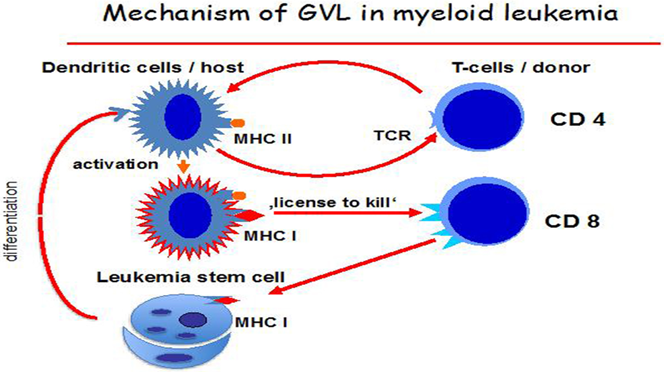
Figure 5. Mechanisms of the graft-versus-leukemia (GvL) effect. Host dendritic cells (DCs), activated by CD4-positive T cells, mature and can then activate CD8-positive T cells via a “license to kill” and attack leukemia cells. The leukemia cells themselves can also differentiate into selfDC.
Source: Dickinson et al. (2017)
5.3 Cellular Immunotherapies and Immune Reconstitution
Adoptive cellular therapies (virus-specific T cells, NK cells, Tregs, CAR constructs) are now integrated into HSCT care to treat infections, prevent relapse, and induce tolerance.
6. Immune Monitoring, Biomarkers and Future Directions
High-resolution immune profiling and biomarker-guided algorithms enable risk-adapted prophylaxis and early preemptive therapy. Multiplex biomarker panels (cytokines, cellular phenotypes), MRD assays (NGS), and emerging multi-omics approaches are increasingly applied to forecast GVHD, infectious risk, and relapse; combining these data with AI/ML tools promises individualized immunosuppression and timely cellular interventions (Zeiser et al., 2023). Remaining challenges include equitable access to advanced cellular products, standardization of assays, and balancing infection risk with immunomodulation.
6.1 Technological and Translational Developments
Technological and translational innovations are reshaping hematopoietic stem cell transplantation (HSCT), enabling greater efficiency, precision, and long-term patient monitoring. Integration of biobanking automation, artificial intelligence (AI), multi-omics technologies, and digital health tools is redefining clinical workflows and improving patient outcomes. These advancements not only enhance transplant logistics and safety but also facilitate personalized care and predictive analytics in the evolving field of HSCT.
6.2 Biobanking and Stem Cell Expansion Technologies
Biobanking quality now rests on optimized cryopreservation methods and automation to preserve cell viability and traceability; several recent reviews show that controlled-rate freezing, improved cryoprotectants, and standardized processing reduce post-thaw loss and support reliable clinical use of stored allografts (Valentini et al., 2024). At the same time, 3D scaffold systems and perfusion bioreactors enable ex-vivo expansion of hematopoietic stem and progenitor cells (HSPCs) by recreating niche-like conditions, improving stemness retention and scale-up potential for clinical applications (Branco et al., 2024). These platforms are especially important for low-cell-dose sources such as cord blood and for manufacturing gene-edited/autologous products.
6.3 Artificial Intelligence and Predictive Analytics
AI and machine-learning models applied to large transplant datasets are improving donor–recipient selection, predicting GVHD and early mortality, and personalizing conditioning and supportive-care decisions. Recent ML studies and ensemble models demonstrate meaningful gains in predictive accuracy for aGVHD and survival endpoints compared with traditional statistical models, though external validation and model generalizability remain active requirements before routine clinical deployment (Asteris et al., 2025).
6.4 Omics-Based Monitoring and MRD Detection
Multi-omics technologies such as genomics, proteomics, and metabolomics, offer real-time insights into immune reconstitution and minimal residual disease (MRD) after transplantation. Next-generation sequencing (NGS) enables sensitive detection of clonal relapse and chimerism status. Proteomic and metabolomic signatures are being explored as biomarkers for early GVHD detection and therapeutic response evaluation (Presland, 2017). By combining omics data with AI-driven analytics, clinicians can achieve more dynamic, personalized monitoring of post-transplant trajectories.
6.5 Telemedicine and Digital Tools in Post-Transplant Care
Telemedicine platforms, mobile symptom apps, and wearable sensors facilitate remote monitoring of HSCT recipients, improve adherence and early complication detection, and reduce unnecessary readmissions, advantages that are particularly relevant for patients distant from transplant centers (Gandhi and Lee, 2023). Implementation must address data security, integration with electronic health records, and equitable access.
Table 2. Technological innovations in HSCT monitoring and support
Technology | Applications | Clinical/Research Impact | Sources |
AI-driven predictive analytics | Predict GVHD, relapse, and engraftment success | Improves patient stratification and donor selection | Asteris et al., 2025 |
Telemedicine and remote monitoring | Digital post-transplant follow-up | Enhances survivorship care, reduces hospital visits | Gandhi and Lee, 2023 |
Next-Generation Sequencing (NGS) | Detects minimal residual disease (MRD) | Enables preemptive relapse management | Kim et al., 2021 |
7. Ethical, Socioeconomic, and Policy Considerations
Advances in hematopoietic stem cell transplantation (HSCT), cellular therapy, and gene editing offer powerful clinical benefits but also create urgent ethical, socioeconomic, and regulatory challenges that must be addressed to ensure safe, equitable, and socially acceptable deployment. At the ethical level, donor recruitment and cord-blood banking raise enduring concerns about truly informed consent, ownership and future use of biological material, and potential commercial exploitation; scoping reviews of cord-blood banking ethics highlight problems with consent timing, private versus public banking models, and fair access to stored units (Gerdfaramarzi et al., 2022). Gene-editing interventions applied to autologous hematopoietic cells introduce additional moral complexity: while somatic editing (e.g., CRISPR-based therapies for sickle cell disease) promises curative benefit, it also generates questions about long-term safety, off-target effects, post-treatment surveillance obligations, and how to counsel patients about uncertain late risks (WHO Expert Advisory Committee, 2021).
Socioeconomic disparities compound these ethical concerns. Global data show that the majority of HSCT procedures and advanced cellular therapies are delivered in high-income settings, while many low- and middle-income countries (LMICs) lack transplant infrastructure, trained personnel, donor registries, and the financing mechanisms needed to deliver complex therapies at scale (Niederwieser et al., 2021). Recent analyses document persistent disparities in referral, access, and outcomes related to socioeconomic status, geography, and ethnicity; overcoming these gaps will require long-term investments in regional capacity, training, and supply-chain resilience, together with financing innovations to reduce the prohibitive cost of cell- and gene-based interventions (Shoag et al., 2024).
Policy and governance frameworks must therefore balance patient safety, innovation, and equity. International bodies have called for harmonized oversight and registries to track long-term outcomes of genome-editing applications and cellular therapeutics, and the WHO has published a governance framework urging caution, transparency, and global coordination for human genome editing (WHO Expert Advisory Committee, 2021). National regulators are responding: the U.S. Food and Drug Administration has issued guidance specific to investigational gene-editing products that lays out expectations for preclinical data, chemistry/manufacturing controls, and systematic long-term follow-up (U.S. Food and Drug Administration, 2024). Effective policy responses should therefore include standardized consent procedures, international outcome registries, clear post-marketing surveillance obligations, and equitable access initiatives (e.g., technology transfer, tiered pricing, public–private funding models) so that the promise of HSCT and related technologies benefits patients broadly rather than amplifying existing health inequities.
8. Current Challenges and Limitations
Despite important scientific and clinical advances, hematopoietic stem cell transplantation (HSCT) continues to face several persistent challenges that limit its effectiveness and equitable delivery. First, donor availability and registry diversity remain major constraints. Donor registries are still disproportionately composed of donors of European ancestry, leaving patients from many ethnic and racial groups with lower chances of finding suitably matched unrelated donors; increasing recruitment and retention of under-represented donors is a priority for improving equitable access to unrelated-donor transplantation (Schmidt, 2024; Mayor et al., 2024). National and registry data also show ongoing disparities in transplant utilization and outcomes by race, ethnicity, and socioeconomic status, which complicate efforts to broaden access (Mayor et al., 2024).
Second, engraftment failure, relapse, and immune dysregulation remain important clinical problems. Primary and secondary graft failure—though uncommon—carry high morbidity and mortality and are associated with factors such as insufficient cell dose, donor-specific antibodies, and inadequate marrow niche support; salvage approaches (hematopoietic-progenitor boosts or second transplants) are sometimes effective but not uniformly so (Rostami et al., 2024). Relapse of underlying malignancy remains the leading cause of late transplant failure; incomplete immune reconstitution and dysregulated donor-host immunity contribute both to infectious risk and to insufficient graft-versus-leukemia effect in some patients (Rostami et al., 2024).
Third, chronic graft-versus-host disease (cGVHD) and late toxicities significantly affect long-term survivors. cGVHD causes multisystem morbidity, progressive organ dysfunction, and reduced quality of life; it is also a major driver of non-relapse mortality and long-term health burden, necessitating lifelong monitoring and multidisciplinary care (Zeiser et al., 2021). Finally, economic and logistical constraints limit HSCT scale-up and equitable delivery. Transplantation requires specialized infrastructure, highly trained teams, complex supply chains (including cryopreservation and graft transport), and substantial upfront and follow-up costs; these barriers are particularly acute in low- and middle-income countries and for socioeconomically disadvantaged populations (Aljurf et al., 2020; Broder et al., 2017). Addressing these limitations will require coordinated strategies: diversifying donor registries, improving graft engineering and immune monitoring, expanding survivorship programs for cGVHD, and developing sustainable financing, regional capacity building, and logistics solutions to make HSCT more accessible and durable globally.
9. Future Perspectives
The future of hematopoietic stem cell transplantation (HSCT) is being redefined by rapid scientific innovation and a growing global commitment to equitable access. The integration of gene and cell therapies into mainstream HSCT is already transforming treatment paradigms. Autologous gene-edited hematopoietic stem cells—such as those modified with CRISPR/Cas9 for β-thalassemia and sickle cell disease—have demonstrated durable engraftment and transfusion independence, indicating a viable alternative to allogeneic transplantation for some genetic disorders (Frangoul et al., 2021). In parallel, chimeric antigen receptor (CAR)-T and CAR-NK cell therapies are increasingly being evaluated in combination with or as a bridge to HSCT for high-risk hematologic malignancies.
A key frontier is the development of universal donor stem cell lines and off-the-shelf grafts that eliminate human leukocyte antigen (HLA) barriers. Emerging approaches—such as genome editing to remove HLA expression or overexpress immune checkpoint ligands—aim to create hypoimmunogenic stem cell sources capable of serving as universal grafts. Concurrently, advances in nanomedicine, artificial intelligence (AI), and systems biology are enhancing the precision of HSCT. AI-driven models are being used to optimize donor selection, predict graft-versus-host disease (GVHD) risk, and personalize conditioning regimens, while nanotechnology-based delivery systems are improving drug targeting and reducing systemic toxicity (Huang et al., 2020).
Finally, global collaboration and policy reform remain central to achieving equitable access. Strengthening international donor registries, harmonizing gene-editing regulations, and investing in capacity building across low- and middle-income countries will be essential to ensure that emerging HSCT innovations benefit diverse patient populations worldwide (Niederwieser et al., 2022). Future progress will depend on interdisciplinary partnerships that combine technological innovation with ethical governance and global solidarity.
Hematopoietic stem cell transplantation has evolved from a high-risk experimental procedure into a cornerstone of modern hematologic and genetic therapy. Ongoing advancements in transplantation biology, donor matching, graft engineering, gene and cell therapies, and supportive care continue to expand its curative potential. Despite remarkable scientific progress, challenges such as graft-versus-host disease, limited donor diversity, high treatment costs, and disparities in global access persist. The integration of artificial intelligence, nanomedicine, and precision-based approaches promises to further refine treatment outcomes and patient safety. Moving forward, multidisciplinary collaboration, ethical governance, and equitable policy reform will be essential to realize a future where HSCT is safer, more effective, and accessible to all who need it.
Acknowledgement
We thank all the researchers who contributed to the success of this research work.
Conflict of Interest
The authors declared that there are no conflicts of interest.
Funding
No funding was received for this research work.