REVIEW ARTICLE | DOI: https://doi.org/dx.doi.org/JARBB/PP.0013
1 Department of Biochemistry, Faculty of Biosciences, Federal University Wukari, Taraba State, Nigeria
2ResearchHub Nexus Institute, Nigeria
3Nigeria Department of Microbiology/Biotechnology, Faculty of Life Sciences, Federal University Dutse, Jigawa State, Nigeria
4Department of Chemical Sciences, Faculty of Science, Anchor University, Ayobo, Lagos State, Nigeria.
*Corresponding Author: Moses Adondua Abah
Citation: Moses Adondua Abah , Jude Egeonu Vitus , Micheal Oladosu Abimbola , Idris Hamisu Shuaibu and Ochuele Dominic Agida (2026) Biosensors and Bioassays for Pathogen Detection: A Review of Recent Advances in Microbial Biosensors and Diagnostic Tools, J. Advanced Research in Biochemistry and Biotechnology, 2(5): dx.doi.org/JARBB/PP.0013
Copyright  :
© 2026 Moses Adondua Abah. This is an open-access article distributed under the terms of the Creative Commons Attribution License, which permits unrestricted use, distribution, and reproduction in any medium, provided the original author and source are credited.
:
© 2026 Moses Adondua Abah. This is an open-access article distributed under the terms of the Creative Commons Attribution License, which permits unrestricted use, distribution, and reproduction in any medium, provided the original author and source are credited.
Received: 16 July 2026 | Accepted: 10 August 2026 | Published: 04 September 2026
Keywords: Biosensors; Bioassays;Pathogen detection; Microbial diagnostics;CRISPR diagnostics and Nanotechnology.
Rapid and accurate pathogen detection is critical for public health, food safety, and environmental monitoring. Conventional diagnostic methods, including culture-based and molecular techniques, often provide reliable results but can be time-consuming, labor-intensive, and dependent on specialized laboratory infrastructure. Biosensors and bioassays have emerged as powerful alternatives, offering rapid, sensitive, and cost-effective detection of microbial pathogens. Advances in nanotechnology, biotechnology, and microfluidics have significantly improved the performance and versatility of these diagnostic platforms. This review highlights recent developments in microbial biosensors and bioassays for pathogen detection. Key biosensor technologies, including electrochemical, optical, fluorescence-based, and nanomaterial-assisted systems, are discussed alongside advances in immunoassays, nucleic acid-based assays, lateral flow devices, and CRISPR-based diagnostics. Their applications in clinical diagnostics, food safety, environmental surveillance, and point-of-care testing are examined. The review also addresses major challenges, including issues related to sensitivity, specificity, standardization, and large-scale implementation. Emerging trends such as lab-on-a-chip technologies, multiplex detection platforms, portable sensing devices, and artificial intelligence-assisted diagnostics are expected to further enhance the speed, accuracy, and accessibility of pathogen detection. Overall, biosensors and bioassays are transforming microbial diagnostics and hold significant promise for improving disease surveillance and management in both developed and resource-limited settings.
Pathogenic microorganisms remain a major cause of infectious diseases affecting human health, food security, and environmental safety worldwide. The increasing incidence of emerging and re-emerging infectious diseases, antimicrobial resistance, and foodborne outbreaks has intensified the demand for rapid and accurate pathogen detection technologies. Early identification of pathogens is crucial for timely intervention, effective treatment, and prevention of disease transmission. Conventional diagnostic methods such as microbial culture, polymerase chain reaction (PCR), and enzyme-linked immunosorbent assays (ELISA) have long served as standard tools for pathogen detection; however, they are often associated with lengthy analysis times, complex sample preparation procedures, and dependence on specialized laboratory infrastructure (Mao et al., 2022). Furthermore, many traditional techniques require trained personnel and sophisticated instrumentation, limiting their applicability in decentralized and resource-constrained settings (Ding et al., 2024). These limitations have stimulated significant research efforts toward the development of rapid, sensitive, and field-deployable diagnostic platforms (Kim et al., 2024).
Biosensors have emerged as innovative analytical devices capable of addressing many of the shortcomings of conventional diagnostic methods. A biosensor typically integrates a biological recognition element with a transducer that converts biological interactions into measurable signals. These devices offer several advantages, including high sensitivity, rapid response times, portability, and real-time monitoring capabilities (Mao et al., 2022). Advances in sensing technologies have led to the development of electrochemical, optical, piezoelectric, and fluorescence-based biosensors for detecting a wide range of microbial pathogens (Feng et al., 2024). In addition, the incorporation of nanomaterials such as graphene, gold nanoparticles, carbon nanotubes, and quantum dots has significantly enhanced signal amplification and detection performance, enabling the identification of pathogens at extremely low concentrations (Khan et al., 2024). Consequently, biosensors are increasingly being explored as valuable tools for clinical diagnostics, food safety assessment, and environmental monitoring.
Alongside biosensors, bioassays have become essential components of modern microbial diagnostics. Bioassays utilize biological molecules or reactions to identify specific pathogens, toxins, nucleic acids, or microbial biomarkers. Significant technological progress has improved the sensitivity, specificity, and operational simplicity of these systems, facilitating their adoption in diverse diagnostic applications (Nazari-Vanani and Negahdary, 2024). Recent innovations include advanced immunoassays, nucleic acid amplification assays, lateral flow devices, and CRISPR-based diagnostic platforms capable of providing rapid and highly accurate results (Feng et al., 2024). Moreover, the integration of microfluidic technologies has enabled the miniaturization of bioassays, reducing reagent consumption and assay time while improving analytical efficiency (Guo et al., 2024). These developments have accelerated the transition toward point-of-care testing and decentralized diagnostic solutions that can be deployed outside traditional laboratory environments.
The convergence of biosensing technologies with advances in biotechnology, nanotechnology, microelectronics, and data science has transformed the landscape of pathogen detection. Modern diagnostic platforms are increasingly designed to support multiplex detection, real-time monitoring, automation, and wireless data transmission, thereby improving their utility in both clinical and non-clinical settings (Kim et al., 2024). Electrochemical biosensors, aptasensors, genosensors, and field-effect transistor biosensors have demonstrated exceptional potential for the rapid detection of bacterial, viral, and fungal pathogens with high analytical accuracy (Khaleque et al., 2024). Furthermore, emerging technologies incorporating artificial intelligence and machine learning are enhancing data interpretation and predictive diagnostic capabilities, paving the way for smarter and more efficient pathogen surveillance systems (Guo et al., 2024). Despite these advances, challenges related to reproducibility, standardization, regulatory approval, and large-scale commercialization continue to limit widespread implementation (Ding et al., 2024).
This review provides a comprehensive evaluation of recent advances in biosensors and bioassays for pathogen detection, with a particular focus on microbial diagnostic technologies and their growing applications. The review first discusses the fundamental principles and classifications of biosensors and bioassays, highlighting the roles of biological recognition elements, transducers, and signal generation mechanisms in pathogen identification. It subsequently examines recent developments in major biosensor platforms, including electrochemical, optical, fluorescence-based, nanomaterial-assisted, and portable sensing systems, emphasizing innovations that have enhanced analytical sensitivity, specificity, and operational efficiency. Advances in bioassay technologies, such as immunoassays, nucleic acid-based assays, lateral flow platforms, and CRISPR-enabled diagnostic tools, are also explored. Furthermore, the review assesses the applications of these technologies in clinical diagnostics, food safety monitoring, environmental surveillance, and point-of-care testing. Key challenges associated with commercialization, standardization, scalability, and regulatory acceptance are critically discussed. Finally, emerging research directions involving artificial intelligence, wearable biosensors, microfluidic devices, lab-on-a-chip systems, and multiplex detection strategies are highlighted. By synthesizing recent scientific and technological developments, this review aims to provide researchers, healthcare professionals, and industry stakeholders with a concise yet comprehensive understanding of current progress, existing limitations, and future opportunities in biosensor- and bioassay-based pathogen detection.
Fundamentals of Microbial Biosensors and Bioassays
Microbial biosensors and bioassays are analytical platforms designed to detect, identify, and quantify pathogenic microorganisms or their associated biomarkers through specific biological interactions. Their growing importance stems from the increasing demand for rapid, sensitive, portable, and cost-effective diagnostic tools capable of overcoming the limitations of conventional culture-based and molecular methods. Recent advances in biotechnology, nanotechnology, and sensor engineering have significantly improved the performance of these systems, enabling their application in clinical diagnostics, environmental monitoring, food safety, epidemiological surveillance, and wastewater-based pathogen tracking (Kadadou et al., 2022; Capin et al., 2024; Sinha and Upadhyay, 2025).
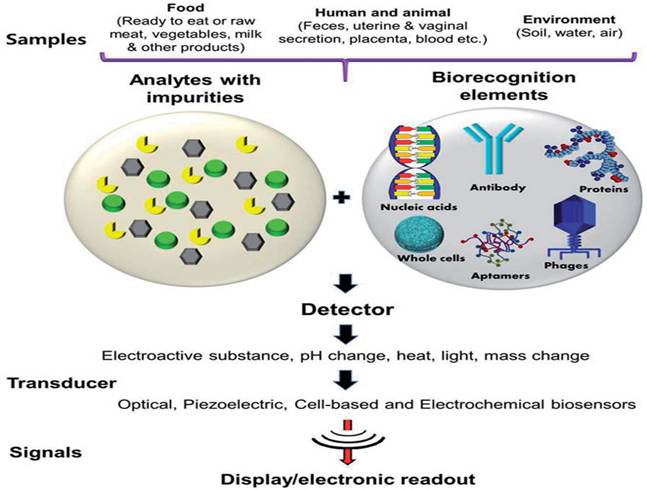
Figure 1. General working design of biosensors for pathogen detection, illustrating sample acquisition, target recognition, signal transduction, and analytical output across food, human, animal, and environmental samples.
Source: Soni et al. (2018)
Principles of Biosensing and Bioassay Technologies
The fundamental principle of biosensing is the selective recognition of a target analyte by a biological sensing element and the subsequent conversion of this interaction into a measurable signal. In microbial diagnostics, the target may be an intact microorganism, microbial toxin, antigen, nucleic acid sequence, metabolite, or other pathogen-associated biomarker. The specificity of detection is achieved through highly selective biological interactions such as antigen–antibody binding, nucleic acid hybridization, enzyme–substrate reactions, or aptamer-target recognition (Cesewski and Johnson, 2020; Sequeira-Antunes and Ferreira, 2023).
Bioassays operate on similar principles but typically employ biological systems or biochemical reactions to generate detectable responses that correlate with the presence or concentration of a pathogen. Depending on the sensing strategy, the resulting signals may be electrical, optical, thermal, mechanical, or magnetic in nature. Advances in sensor miniaturization, molecular engineering, and nanomaterials have substantially enhanced analytical sensitivity and reduced detection times, allowing rapid pathogen identification even at very low concentrations (Banakar et al., 2022; Sinha and Upadhyay, 2025). These developments have facilitated the transition from laboratory-based testing toward point-of-care and field-deployable diagnostic platforms (Capin et al., 2024).
Table 1. Principles of biosensing technology
Principle | Mechanism | Key components |
Biorecognition | Specific interaction between bioreceptors (e.g antibodies, nucleic acids, aptamers, enzymes) and target analytes (pathogen proteins, DNA, toxins) | Bioreceptors (nucleic acids, aptamers, enzymes, antibodies, DNA probes) |
Signal transduction | Conversion of biorecognition event into a measurable signal (optical, electrochemical, piezoelectric or thermal) | Transducers (optical fibers, electrodes, quartz crystals) |
Amplification | Enhancing weak signals to increase sensitivity and detection limits | Nanomaterials (gold nanoparticles, quantum dots, graphene) |
Detection and processing | Processing of amplified signals into readable digit output | Microprocessors, biosensor software, AI integration |
Output/display | Final step showing results in qualitative or quantitative form | Screen displays, portable readers, smartphone integration |
Modified from Shikha et al. (2026)
Key Components: Biorecognition Elements, Transducers, and Signal Processing
A biosensor consists of three interconnected components: a biorecognition element, a transducer, and a signal-processing unit. The biorecognition element serves as the sensing interface and is responsible for the selective identification of the target pathogen. Common bioreceptors include antibodies, nucleic acids, aptamers, enzymes, bacteriophages, and whole microbial cells. Among these, aptamers and nucleic acid probes have attracted increasing attention because of their high specificity, stability, and adaptability for detecting diverse microbial targets (Sequeira-Antunes and Ferreira, 2023).
The transducer converts the biological recognition event into a measurable signal. Depending on the detection mechanism, transducers may be electrochemical, optical, piezoelectric, thermal, magnetic, or semiconductor-based. Electrochemical transducers are among the most widely used because they offer excellent sensitivity, low cost, rapid response, and compatibility with portable devices (Cesewski and Johnson, 2020; Kaya et al., 2021). Emerging field-effect transistor (FET)-based biosensors further enhance analytical performance through label-free and real-time detection capabilities (Feng et al., 2024). Following signal generation, the signal-processing system amplifies, analyzes, and converts the raw signal into a user-interpretable output. Modern biosensors increasingly integrate digital electronics, wireless communication technologies, and automated data-processing systems, enabling rapid and reliable pathogen detection across diverse operational settings (Capin et al., 2024).
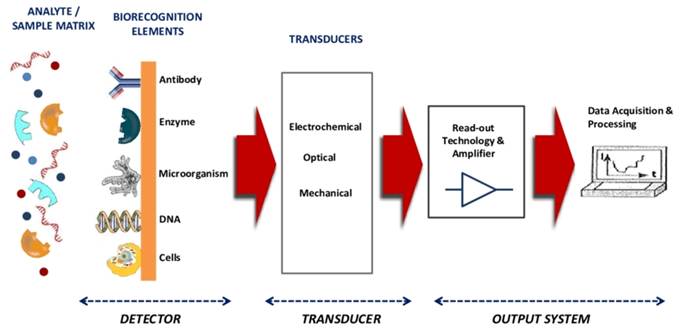
Figure 2.Schematic diagram of biosensor comprising three components: detector, transducer and output system. The detector specifically recognizes the target pathogen, the transducer converts the biological interaction into a measurable signal, and the output system processes and displays the analytical result. Together, these components enable rapid and reliable pathogen detection.
Source: Mohd Said, A. et al. (2014)
Classification of Biosensors
Biosensors can be classified according to either their biorecognition element or signal transduction mechanism. Based on the recognition component, microbial biosensors are commonly categorized as immunosensors, genosensors, aptasensors, enzymatic biosensors, phage-based biosensors, and whole-cell biosensors. Each category offers unique advantages depending on the target pathogen, analytical requirements, and operating environment (Sequeira-Antunes and Ferreira, 2023; Sinha and Upadhyay, 2025). Based on signal transduction mechanisms, biosensors are generally classified as electrochemical, optical, piezoelectric, thermal, magnetic, and field-effect transistor biosensors. Among these, electrochemical biosensors have received the greatest attention due to their simplicity, portability, high sensitivity, and suitability for point-of-care applications (Kaya et al., 2021; Banakar et al., 2022). Optical biosensors provide highly sensitive and often label-free detection, while FET-based biosensors have emerged as promising next-generation platforms for rapid microbial diagnostics (Feng et al., 2024). The continuous integration of advanced materials, nanotechnology, and miniaturized sensing systems is expanding the capabilities of all biosensor classes and accelerating the development of intelligent diagnostic platforms for real-time pathogen surveillance and detection (Kadadou et al., 2022; Capin et al., 2024).
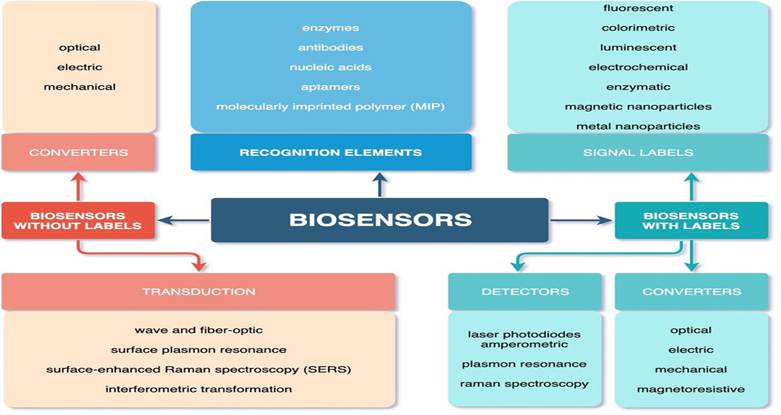
Figure 3.Classification of biosensors. This classification highlights the diversity of biosensor technologies and their adaptability for detecting a wide range of pathogens and biological targets.
Source: Andryukov et al. (2020)
Recent Advances in Biosensor Technologies for Pathogen Detection
Recent technological innovations have significantly enhanced the performance of biosensors for pathogen detection, leading to improvements in sensitivity, selectivity, response time, portability, and real-time monitoring capabilities. Advances in materials engineering, molecular recognition strategies, microelectronics, and data integration have enabled the development of highly efficient biosensing platforms capable of detecting pathogens in clinical, food, and environmental samples. These developments are accelerating the transition from conventional laboratory-based diagnostics to rapid, decentralized, and point-of-care testing systems (Capin et al., 2024).
Electrochemical Biosensors
Electrochemical biosensors remain at the forefront of pathogen detection owing to their high analytical sensitivity, rapid signal generation, low cost, and compatibility with miniaturized devices. Recent advances have focused on improving electrode architectures, bioreceptor immobilization methods, and signal amplification strategies to achieve lower detection limits and greater diagnostic accuracy. Emerging electrochemical aptasensors and genosensors have demonstrated exceptional specificity for bacterial, viral, and fungal pathogens through the selective recognition of nucleic acids and microbial biomarkers (Ding et al., 2024; Nazari-Vanani and Negahdary, 2024). A particularly notable development is the increasing use of impedimetric biosensors, which measure changes in electrical impedance resulting from pathogen–sensor interactions. These systems offer label-free detection, rapid analysis, and simplified assay procedures, making them highly attractive for clinical and environmental diagnostics. Recent improvements in sensor design and data processing have further enhanced their reliability and practical applicability (Verma et al., 2025).
Optical and Fluorescence-Based Biosensors
Optical biosensors have experienced substantial advancement due to their ability to provide highly sensitive, rapid, and often label-free pathogen detection. These systems operate by monitoring variations in optical properties such as fluorescence, absorbance, luminescence, or refractive index following target recognition. Modern optical sensing technologies have benefited from improvements in photonic materials, fluorescence probes, and signal amplification techniques, resulting in enhanced analytical performance and lower detection thresholds (Hsu et al., 2024). An emerging trend is the development of electrochemical–optical dual-mode biosensors that combine the strengths of both sensing approaches within a single platform. These hybrid systems provide improved analytical reliability through dual-signal verification while reducing false-positive and false-negative results. Such innovations are particularly valuable for detecting environmental pathogens and microbial contaminants in complex sample matrices (Hsu et al., 2024).
Nanomaterial- and Paper-Based Biosensors
Nanomaterials have become indispensable components of next-generation biosensors due to their exceptional electrical, optical, catalytic, and surface properties. Materials such as graphene, carbon nanotubes, quantum dots, metallic nanoparticles, and metal–organic frameworks significantly enhance signal transduction and biorecognition efficiency. Their incorporation into biosensing platforms has enabled ultra-sensitive pathogen detection with improved response times and lower limits of detection (Khan et al., 2024). In parallel, paper-based biosensors have emerged as affordable and user-friendly alternatives for rapid pathogen screening. These devices combine low manufacturing costs, portability, disposability, and ease of operation, making them particularly suitable for resource-limited settings. Recent integration of nanomaterials, microfluidic designs, and smartphone-assisted readout technologies has greatly improved their analytical performance while maintaining simplicity and accessibility. Consequently, paper-based biosensors are increasingly being explored for food safety testing, environmental monitoring, and field diagnostics (Nnachi et al., 2022).
Wearable and Portable Sensing Platforms
The growing demand for decentralized healthcare and real-time disease surveillance has stimulated the development of wearable and portable biosensing technologies. Portable biosensors enable rapid pathogen detection outside conventional laboratory environments and are increasingly being employed in point-of-care diagnostics, outbreak investigations, and environmental surveillance programs. Their compact design, rapid response, and ease of operation make them highly suitable for field deployment (Capin et al., 2024). Recent progress in wearable biosensors has expanded their role from simple physiological monitoring to intelligent disease detection systems. Advances in flexible electronics, wireless communication, Internet-of-Things integration, and real-time data analytics have enabled continuous monitoring of infection-related biomarkers. For example, wearable sensing platforms designed for early sepsis detection can continuously track vital signs and transmit data for automated analysis, facilitating timely clinical intervention and improved patient outcomes (Dheman et al., 2024). These innovations highlight the growing potential of wearable and portable biosensors as key components of future pathogen surveillance and precision healthcare systems.
Table 2. Developed biosensors for detecting bacterial and viral pathogens
Device | Target Pathogen | LOD | Response Time |
Long-period fiber grating using bacteriophage T4 covalently immobilized on optical fiber surface. | E. coli | 103 CFU/mL
| 20 min |
Label free polyaniline based impedimetric | E. coli O157:H7 | 102 CFU/mL | - |
Electrochemical biosensor using antibody-modified NPs (polymer-coated magnetic NPs and carbohydrate-capped AuNPs). | E. coli O157:H7 | 101 CFU/mL | 45 min |
Graphene-based potentiometric. | S. aureus | 1 CFU/mL | 10–15 min |
Aptamer based biosensor and dual florescence resonance energy transfer from QDs to carbon NPs. | Vibrio parahaemolyticus and Salmonella typhimurium | 25 CFU/mL and 35 CFU/mL, respectively | 80 min |
Impedimetric biosensor based on site specifically attached engineered antimicrobial peptides. | Pseudomona aeruginosa | 102 CFU/mL | 30 min |
Electrochemical DNA biosensor based on flower-like ZnO nanostructures. | Neisseria meningitides | 5 ng/μL | - |
Graphene-enabled biosensor with a highly specific immobilized monoclonal antibody. | Zika virus | 0.45 nM | 4–8 min |
Giant magnetoresistance biosensor. | Influenza A virus | 1.5 × 10² TCID50/mL | - |
Electrochemical biosensor based on DNA hybridization. | Hepatitis A virus | 6.94 fg/μL | 15 min |
Impedimetric electrochemical DNA biosensor for label free detection. | Zika virus | 25 nM | 1.5 h |
Two-dimensional molybdenum disulphide nanosheets based disposable biosensor. | Chikungunya virus | 3.4 nM | 3 h |
Electrochemical DNA biosensor using gold nanorods. | Hepatitis B virus | 2.0 × 10⁻¹² mol/L | 5 h |
Intensity-modulated surface plasmon resonance (IM-SPR) biosensor | Avian influenza A H7N9 virus | 144 copies/mL | 10 min |
Silicon nanowire biosensor. | Dengue virus | 2.0 fM | - |
AuNPs: gold nanoparticles; E. coli: Escherichia coli; IM-SPR: Intensity-modulated Surface Plasmon Resonance; LOD: limit of detection; NPs: nanoparticles; QDs: quantum dots; S. aureus: Staphylococcus aureus; SPR: Surface Plasmon Resonance.
Adapted from Castillo-Henríquez et al. (2020)
Advances in Bioassay-Based Diagnostic Tools
Bioassay-based diagnostic tools have evolved considerably in recent years, driven by the growing demand for rapid, accurate, and field-deployable pathogen detection systems. Modern bioassays integrate advances in immunology, molecular biology, microfluidics, nanotechnology, and genome engineering to overcome the limitations of conventional culture-based diagnostics. These technologies offer improved sensitivity, shorter turnaround times, and enhanced adaptability for detecting pathogens in clinical, food, and environmental samples (Nnachi et al., 2022).
Immunoassays and Lateral Flow Assays
Immunoassays remain among the most established diagnostic approaches for pathogen detection due to their high specificity arising from antigen–antibody interactions. Recent developments have focused on improving analytical sensitivity through the incorporation of nanomaterials, nanozymes, and advanced signal amplification strategies. These innovations have enabled the detection of pathogens at lower concentrations while reducing assay complexity and analysis time (Janik-Karpinska et al., 2022; Zhou et al., 2022). Lateral flow assays (LFAs) represent one of the most successful point-of-care diagnostic technologies. Recent generations of LFAs employ optical nanoparticles, quantum dots, and other nanomaterial-based labels to enhance signal intensity and quantitative performance. Such improvements have expanded their application in rapid viral and microbial diagnostics, making them valuable tools for decentralized testing and outbreak response (Kim et al., 2023; Kim et al., 2024; Ren et al., 2026).
Nucleic Acid-Based Bioassays
Nucleic acid-based bioassays provide highly sensitive and specific pathogen identification through the detection of unique DNA or RNA sequences. Advances in microfluidics and lab-on-a-chip technologies have significantly improved sample preparation, nucleic acid extraction, and assay automation, enabling faster and more accessible molecular diagnostics. These innovations support rapid pathogen detection while reducing equipment requirements and operational complexity (Zhang et al., 2019; Lee and Kim, 2024). Recent progress in next-generation nucleic acid diagnostics has further enhanced the ability to detect emerging and re-emerging pathogens with high accuracy. Lessons learned from large-scale infectious disease outbreaks have accelerated the development of portable and scalable molecular platforms suitable for routine surveillance and point-of-care testing (Papaneri et al., 2025).
CRISPR-Based Diagnostic Platforms
CRISPR-based diagnostics have emerged as a transformative technology for pathogen detection. By exploiting the sequence-specific recognition capabilities of CRISPR-associated proteins, these platforms enable rapid, highly selective, and sensitive identification of pathogen-derived nucleic acids. The combination of CRISPR systems with fluorescence, electrochemical, and lateral flow readout strategies has further expanded their diagnostic versatility (Wang et al., 2022). Recent advances have demonstrated the potential of CRISPR-based bioassays for detecting foodborne pathogens, infectious disease agents, and antimicrobial resistance markers. Their rapid response, programmability, and compatibility with portable analytical devices position them among the most promising next-generation diagnostic technologies (Xie et al., 2024; Pan et al., 2026).
Multiplex and High-Throughput Bioassays
The increasing complexity of pathogen surveillance has stimulated the development of multiplex and high-throughput bioassays capable of simultaneously detecting multiple microbial targets. These platforms reduce analysis time, improve diagnostic efficiency, and provide comprehensive information from a single sample. Multiplex approaches are particularly valuable in food safety monitoring, clinical diagnostics, and environmental surveillance where multiple pathogens may coexist (Wu et al., 2025). Recent advances in optical biosensing, microarray technologies, and automated analytical systems have significantly improved the throughput and accuracy of multiplex bioassays. Coupled with digital data processing and intelligent analytical tools, these technologies are expected to play an increasingly important role in large-scale disease surveillance and precision diagnostics (Verma et al., 2025; Wu et al., 2025).
Table 3. Comparison of advanced bioassay-based diagnostic tools for pathogen detection
Bioassay Platform | Detection principles | Advantages | Limitationd |
Immunoassays | Antigen–antibody interactions
| High specificity, well-established, easy implementation | Lower sensitivity for low-abundance targets |
Lateral Flow Assays (LFAs) | Immunochromatographic detection on paper strips | Rapid, low-cost, portable, user-friendly | Limited quantitative capability |
Nucleic Acid-Based Bioassays | Detection of pathogen-specific DNA/RNA sequences | High sensitivity and specificity | Requires nucleic acid extraction and amplification |
CRISPR-Based Diagnostics | CRISPR-Cas-mediated recognition of target nucleic acids | Ultra-high sensitivity, programmability, rapid detection | Emerging technology with limited standardization |
Multiplex Bioassays | Simultaneous detection of multiple targets in a single assay | High throughput, comprehensive analysis, reduced testing time | Increased assay complexity and cost |
Abbreviations: LFA, lateral flow assay; CRISPR, clustered regularly interspaced short palindromic repeats; Cas, CRISPR-associated protein.
Applications of Biosensors and Bioassays for Pathogen Detection
The rapid advancement of biosensors and bioassay-based diagnostic tools has significantly expanded their applications across healthcare, food safety, environmental monitoring, and public health surveillance. Modern biosensing platforms provide rapid, sensitive, and portable solutions for pathogen detection, overcoming many limitations associated with conventional culture-based and laboratory-dependent diagnostic methods. The integration of nanotechnology, molecular diagnostics, artificial intelligence, and portable sensing systems has further enhanced their practical utility in diverse monitoring environments (Kabay et al., 2022; Dong et al., 2025).
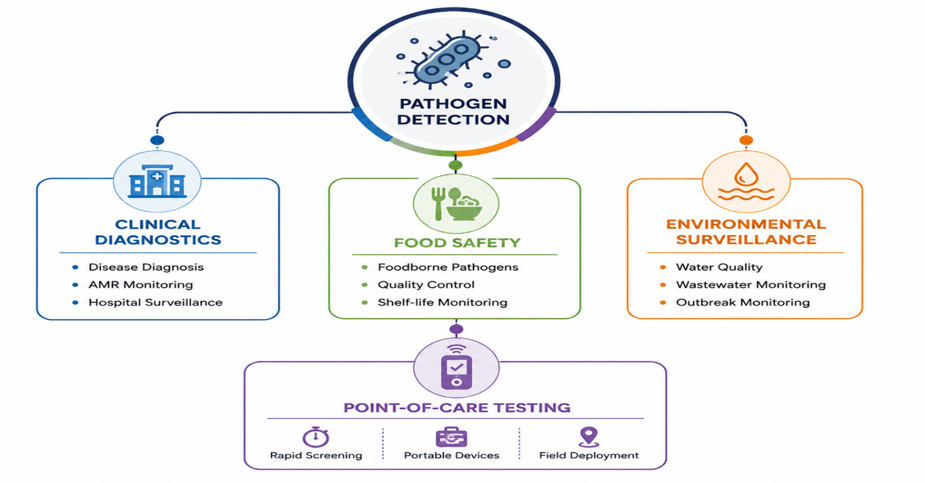
Figure 4.Major application domains of biosensors and bioassay-based diagnostic tools in pathogen detection, highlighting their roles in clinical diagnostics, food safety monitoring, environmental surveillance, and point-of-care testing.
Source: Adapted from Mao et al. (2021) and Kabay et al. (2022).
Clinical Diagnostics
Clinical diagnostics represents one of the most important application areas of biosensor technologies. Rapid identification of infectious agents is critical for timely treatment, infection control, and disease surveillance. Recent advances in biosensors have enabled the detection of pathogen-associated proteins, nucleic acids, and other biomarkers with high sensitivity and specificity. CRISPR/Cas-based diagnostic platforms have emerged as powerful tools for clinical pathogen detection because of their programmability, rapid response, and exceptional analytical accuracy (Wang et al., 2022; Pan et al., 2026). In addition, next-generation nucleic acid diagnostics have improved the detection viral pathogens and emerging infectious diseases. Lessons learned during the COVID-19 pandemic accelerated the development of rapid molecular testing platforms capable of supporting large-scale screening and outbreak management. The integration of artificial intelligence into diagnostic workflows is further improving data interpretation, diagnostic accuracy, and clinical decision-making (Dong et al., 2025; Papaneri et al., 2025).
Foodborne Pathogen Detection
Foodborne diseases continue to pose substantial challenges to global food security and public health. Biosensors have become valuable tools for detecting bacterial, viral, and toxin-producing pathogens throughout food production and distribution chains. Their ability to provide rapid and sensitive detection supports early contamination control and reduces the risk of foodborne outbreaks (Wang et al., 2023). Recent developments in electrochemical biosensors, field-effect transistor sensors, and nanobiosensors have significantly improved the detection of foodborne pathogens. These technologies offer enhanced analytical performance, shorter detection times, and improved portability compared with conventional microbiological techniques. Biosensor platforms have also demonstrated increasing effectiveness in detecting foodborne viruses, supporting more comprehensive food safety monitoring systems (Neethirajan et al., 2017; Feng et al., 2024).
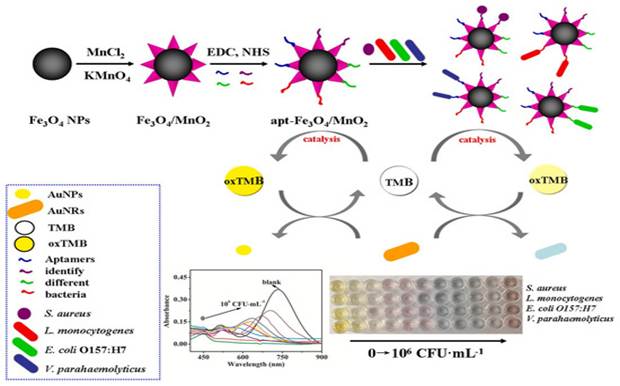
Figure 5.Schematic diagram of the multi-nanomaterials-based multi-colorimetric assay for the detection of foodborne pathogenic bacteria (S. aureus, Listeria monocytogenes, E. coli O157:H7, and Vibrio parahaemolyticus)
Source: Ullah et al. (2024)
Water and Environmental Surveillance
Environmental monitoring has become a major area of biosensor application, particularly for assessing microbial contamination in water resources and tracking pathogen transmission within communities. Biosensors provide rapid and sensitive detection of microbial contaminants in drinking water, wastewater, and environmental samples, enabling timely intervention and risk management (Fdez-Sanromán et al., 2025). One of the most significant developments in this field is wastewater-based epidemiology, where biosensors are employed to monitor pathogen prevalence at the community level. This approach offers an effective early-warning system for disease outbreaks and public health threats. The combination of biosensing technologies with environmental surveillance programs has improved the capacity to detect emerging pathogens and assess environmental health risks in real time (Mao et al., 2021).
Point-of-Care Testing
Point-of-care testing (POCT) has emerged as a key application of modern biosensors because it enables rapid diagnosis directly at or near the site of patient care. Portable biosensing devices reduce dependence on centralized laboratories and provide timely results that support immediate clinical decision-making. These characteristics make POCT particularly valuable in emergency situations, remote locations, resource-limited settings, and outbreak response efforts (Kabay et al., 2022). Recent innovations integrating biosensors with smartphones, artificial intelligence, wireless communication systems, and miniaturized analytical platforms have substantially improved the performance of point-of-care diagnostics. These advances facilitate decentralized healthcare delivery, real-time disease monitoring, and enhanced accessibility to diagnostic services. As digital health technologies continue to evolve, point-of-care biosensing platforms are expected to play an increasingly important role in precision medicine and future infectious disease management (Dong et al., 2025; Kardjadj, 2025).
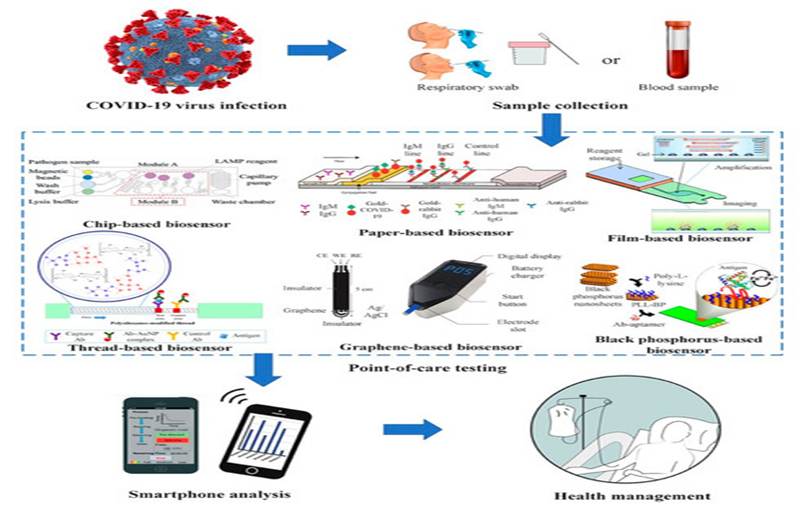
Figure 6.Schematic illustration of a point-of-care (POC) diagnostic system for COVID-19, showing the integration of sample collection, analysis, and result reporting in a rapid and portable testing platform. Such systems enable timely diagnosis outside conventional laboratory settings.
Source: Castillo-Henríquez et al. (2020)
Current Challenges and Limitations
Despite significant advances in biosensor and bioassay technologies, several challenges continue to limit their widespread adoption in routine pathogen detection. One of the major concerns is achieving consistent sensitivity, specificity, and reproducibility across different testing conditions. Complex biological and environmental samples often contain interfering substances that can generate background noise, nonspecific interactions, or false analytical signals, thereby affecting diagnostic accuracy (Sinha and Upadhyay, 2025; Ding et al., 2024). Another important limitation involves sample preparation and matrix interference. Clinical specimens, food products, and environmental samples frequently contain proteins, organic matter, and other contaminants that can influence sensor performance and reduce detection reliability.
Variations in sample composition may also affect biosensor stability, signal transduction, and reproducibility, particularly during field-based applications (Mondal et al., 2024; Ullah et al., 2024). Cost, large-scale manufacturing, and regulatory approval remain additional barriers to commercialization. Although many biosensor platforms demonstrate excellent laboratory performance, translating these technologies into standardized, cost-effective, and market-ready diagnostic products remains challenging. Issues related to device validation, quality control, scalability, and compliance with regulatory requirements continue to hinder broader clinical and industrial implementation (Nath, 2024; Mallick et al., 2025).
Future Perspectives
The future of pathogen detection is expected to be shaped by the convergence of biosensing technologies with artificial intelligence (AI), digital health platforms, and advanced data analytics. AI-driven diagnostic systems can improve signal interpretation, automate data processing, and enhance diagnostic accuracy, enabling faster and more reliable pathogen identification. Integration with digital health networks and cloud-based platforms will further support real-time disease surveillance, outbreak prediction, and personalized healthcare management (Dong et al., 2025; Kardjadj, 2025). Lab-on-a-chip and microfluidic technologies are also emerging as key drivers of next-generation diagnostics. These miniaturized platforms integrate sample preparation, target detection, and result analysis within a single device, reducing assay time, reagent consumption, and operational complexity. Recent advances have improved their portability, automation, and suitability for point-of-care applications, making them promising tools for rapid pathogen detection in clinical, food, and environmental settings (Zhang et al., 2019; Lee and Kim, 2024).
Another important trend is the development of smart, real-time, and decentralized diagnostic systems. Portable biosensors integrated with wireless communication, Internet of Things (IoT) technologies, and mobile devices can facilitate continuous monitoring and rapid data transmission. Combined with multiplex detection capabilities and advanced biosensing strategies, these systems have the potential to transform infectious disease surveillance, enabling timely responses to emerging health threats while expanding access to diagnostic services in resource-limited environments (Kabay et al., 2022; Wu et al., 2025).
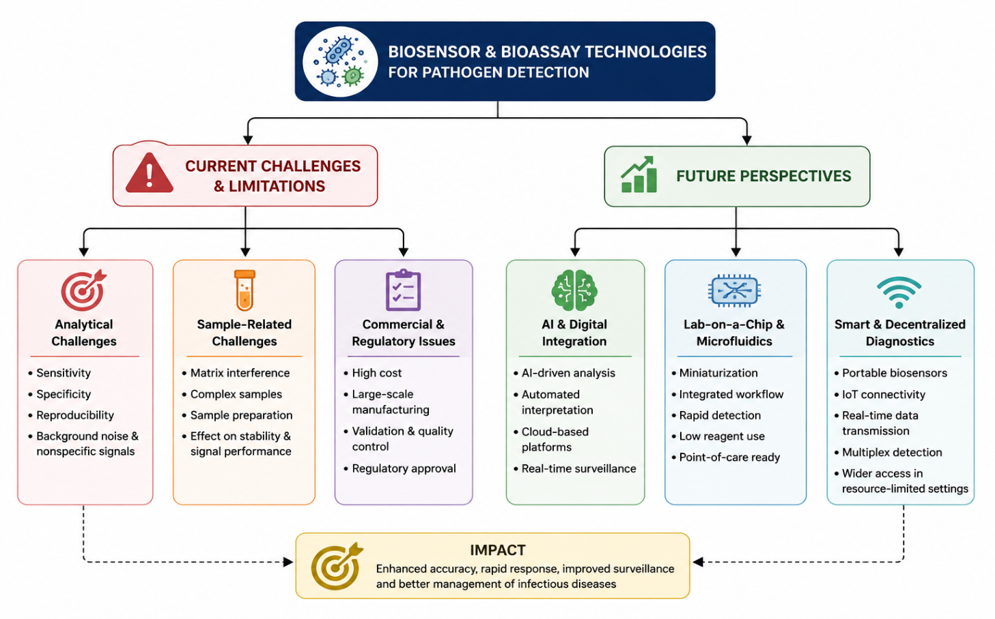
Figure 7.Current challenges and future directions in biosensor-based pathogen detection. This figure highlights key challenges affecting biosensor performance and commercialization, alongside emerging innovations that are driving the development of smarter, faster, and more accessible pathogen detection systems.
Source: Adapted from Dong et al. (2025) and Kardjadj (2025)
Biosensors and bioassay-based diagnostic tools have transformed pathogen detection by providing rapid, sensitive, and reliable alternatives to conventional methods. Recent advances in electrochemical, optical, nanomaterial-based, and molecular diagnostic technologies have significantly enhanced detection performance across clinical, food, and environmental applications. Emerging innovations such as CRISPR-based diagnostics, lab-on-a-chip systems, and portable point-of-care devices are further expanding the capabilities of pathogen monitoring and disease surveillance. Despite challenges related to standardization, cost, and large-scale implementation, continued technological advancements are expected to drive the development of smarter, faster, and more accessible diagnostic platforms, supporting improved public health preparedness and global biosecurity.
Acknowledgement
We thank all the researchers who contributed to the success of this research work.
Conflict of Interest
The authors declared that there are no conflicts of interest.
Funding
No funding was received for this research work.