REVIEW ARTICLE | DOI: https://doi.org/dx.doi.org/JIHM/PP.0010
1 Department of International Public Health, Liverpool School of Tropical Medicine, Pembroke Place, Liverpool, L3 5QA, United Kingdom.
2 Department of Pharmacy and Health and Nutrition Sciences, University of Calabria, Rende, Italy.
3 Department of Physical Science, Eastern New Mexico University, USA.
4 Department of Biochemistry, Faculty of Biosciences, Federal University Wukari, Taraba State, Nigeria.
5 ResearchHub Nexus Institute, Nigeria.
6 Department of Chemical Sciences, Faculty of Science, Anchor University, Ayobo, Lagos State, Nigeria.
*Corresponding Author: Moses Adondua Abah
Citation: Otota-Jumudjayen Eme Precious , Moses Adondua Abah and Micheal Oladosu Abimbola, Iheakolam Uchenna Caleb , Ochuele Dominic Agida (2026), One Health Approach to Antimicrobial Resistance: A Global Perspective, J. Innovations in Healthcare and Medicine 2(4): dx.doi.org/JIHM/PP.0010
Copyright  :
© 2026 Moses Adondua Abah. This is an open-access article distributed under the terms of the Creative Commons Attribution License, which permits unrestricted use, distribution, and reproduction in any medium, provided the original author and source are credited.
:
© 2026 Moses Adondua Abah. This is an open-access article distributed under the terms of the Creative Commons Attribution License, which permits unrestricted use, distribution, and reproduction in any medium, provided the original author and source are credited.
Received: 17 June 2026 | Accepted: 04 July 2026 | Published: 21 August 2026
Keywords: antimicrobial resistance; one health; antimicrobial stewardship; surveillance; zoonotic transmission and global health.
Antimicrobial resistance (AMR) has emerged as one of the most pressing global health challenges of the twenty-first century, threatening the effective prevention and treatment of infectious diseases in humans, animals, and plants. The widespread and often inappropriate use of antimicrobial agents, coupled with environmental contamination and global interconnectedness, has accelerated the emergence and dissemination of resistant microorganisms across diverse ecosystems. Traditional sector-specific approaches have proven insufficient to address the complex and multifactorial nature of AMR, highlighting the need for integrated and collaborative strategies. The One Health approach, which recognizes the interdependence of human, animal, and environmental health, provides a comprehensive framework for understanding and mitigating AMR on a global scale. This review examines the epidemiology and global trends of AMR, emphasizing the interconnected pathways through which resistant pathogens and resistance genes circulate among humans, animals, and the environment. It explores the contributions of healthcare systems, agricultural practices, veterinary medicine, and environmental factors to the development and spread of resistance. The review further evaluates the role of One Health-based surveillance systems, antimicrobial stewardship programs, and international policy initiatives in strengthening AMR prevention and control efforts. Key implementation challenges, including limited resources, fragmented governance, inadequate surveillance infrastructure, and disparities between high-income and low-income regions, are also discussed. Finally, emerging opportunities in integrated surveillance, diagnostic technologies, data sharing, and cross-sectoral collaboration are highlighted. A coordinated One Health strategy is essential for reducing the global burden of AMR and ensuring the long-term effectiveness of antimicrobial therapies for future generations.
Antimicrobial resistance (AMR) has emerged as one of the most significant global health threats of the twenty-first century, undermining decades of progress in the prevention and treatment of infectious diseases (WHO, 2023). AMR occurs when microorganisms, including bacteria, viruses, fungi, and parasites, develop the ability to survive exposure to antimicrobial agents that were previously effective against them. As a result, common infections become more difficult to treat, leading to prolonged illness, increased mortality, higher healthcare costs, and reduced effectiveness of medical interventions such as surgery, transplantation, and cancer chemotherapy (WHO, 2024a). The World Health Organization recognizes AMR as a critical public health challenge with far-reaching implications for human health, food security, and sustainable development. The growing prevalence of multidrug-resistant pathogens across different regions of the world highlights the urgent need for coordinated and comprehensive strategies capable of addressing the underlying drivers of resistance and limiting its global spread (WHO, 2023).
The emergence and dissemination of AMR are driven by a complex interaction of factors operating across human, animal, and environmental systems (Iheakolam et al., 2025). Excessive and inappropriate use of antimicrobials in healthcare settings, livestock production, aquaculture, and agriculture has accelerated the selection of resistant microorganisms. In addition, inadequate sanitation, poor infection prevention practices, environmental contamination, and ineffective waste management contribute to the persistence and transmission of resistance genes within ecosystems (Aslam et al., 2021; Velazquez-Meza et al., 2022). Resistance determinants can spread through horizontal gene transfer among microbial populations, allowing resistance traits to move across species and ecological boundaries. The increasing movement of people, animals, food products, and environmental contaminants through globalization further facilitates the worldwide dissemination of resistant pathogens, transforming AMR into a transboundary challenge that requires international collaboration and multisectoral interventions (Hernando-Amado et al., 2019).
Recognition of the interconnected nature of AMR has led to the adoption of the One Health approach as a fundamental framework for addressing the crisis (Abah et al., 2025). One Health is based on the principle that the health of humans, animals, and the environment is intrinsically linked and must be addressed through coordinated actions across multiple disciplines and sectors (Moses et al., 2025). Resistant microorganisms and antimicrobial resistance genes circulate continuously between humans, domestic animals, wildlife, food systems, water bodies, soil environments, and other ecological reservoirs, creating complex pathways of transmission that cannot be effectively managed through isolated efforts (Velazquez-Meza et al., 2022; Al-Khalaifah et al., 2025). Consequently, successful AMR mitigation requires integrated surveillance systems, responsible antimicrobial stewardship, environmental monitoring, and collaborative policymaking that bridges traditional sectoral boundaries. The One Health framework has therefore become a central component of global strategies aimed at preserving antimicrobial effectiveness and protecting public health (WHO, 2024b).
In recent years, international organizations, governments, researchers, and healthcare professionals have increasingly emphasized One Health-based approaches in AMR policy and practice. Global initiatives have promoted coordinated surveillance, antimicrobial stewardship programs, public awareness campaigns, and research efforts designed to reduce antimicrobial misuse and improve resistance monitoring across sectors (James et al., 2026). Furthermore, emerging evidence suggests that climate change may influence the dynamics of AMR by altering environmental conditions, facilitating pathogen dissemination, and increasing pressures on healthcare and agricultural systems. Environmental disturbances such as rising temperatures, extreme weather events, flooding, and changes in ecosystem structure may enhance the persistence and transmission of resistant microorganisms, reinforcing the need for integrated responses that consider both planetary and public health perspectives (Martin and Genyn, 2024). These developments underscore the importance of strengthening collaboration among stakeholders to address the multifaceted drivers of AMR and improve the resilience of health systems worldwide.
The purpose of this review is to provide a comprehensive examination of antimicrobial resistance through the lens of the One Health approach and to highlight its significance in addressing one of the most complex public health challenges of the modern era. The review explores the global epidemiology and burden of AMR, emphasizing the factors responsible for its emergence, persistence, and spread across human, animal, and environmental domains. It examines the interconnected pathways through which resistant microorganisms and resistance genes circulate among populations and ecosystems, illustrating why sector-specific interventions alone are insufficient. Particular attention is given to the contributions of healthcare systems, veterinary medicine, agriculture, food production, and environmental reservoirs to the development and dissemination of resistance. The review also evaluates the role of integrated surveillance systems, antimicrobial stewardship programs, policy frameworks, and international initiatives designed to mitigate AMR within a One Health context. Furthermore, it discusses key implementation challenges, including resource limitations, governance issues, data gaps, and disparities in global capacity to respond effectively to resistance threats. Finally, emerging opportunities in multidisciplinary research, innovative diagnostics, digital surveillance technologies, and collaborative policymaking are considered. By synthesizing current knowledge and identifying critical gaps, this review aims to enhance understanding of the One Health framework and support the development of coordinated strategies that can reduce the global burden of antimicrobial resistance while preserving the effectiveness of antimicrobial agents for future generations.
Epidemiology and Global Trends of Antimicrobial Resistance
Antimicrobial resistance (AMR) has emerged as one of the most pressing public health threats of the twenty-first century, compromising the effectiveness of antimicrobial therapies and undermining advances in modern medicine. The phenomenon extends beyond healthcare settings and is increasingly recognized as a complex global issue involving interconnected human, animal, and environmental systems (Aslam et al., 2021). The widespread use and misuse of antimicrobials, combined with increasing globalization, environmental contamination, and inadequate infection control practices, have accelerated the emergence and dissemination of resistant microorganisms across geographical and ecological boundaries (Hernando-Amado et al., 2019). Consequently, understanding the epidemiology and global trends of AMR is essential for informing effective prevention, surveillance, and intervention strategies within a One Health framework.
Current Status and Distribution of AMR Worldwide
The burden of AMR has increased dramatically over recent decades and now constitutes a major contributor to global morbidity and mortality. A comprehensive analysis by the Antimicrobial Resistance Collaborators (2022) estimated that bacterial AMR was directly responsible for approximately 1.27 million deaths and associated with nearly 5 million deaths worldwide in 2019, placing it among the leading causes of death globally. More recent projections indicate that AMR-related mortality could increase substantially by 2050 if current trends continue, with the greatest impacts expected in low- and middle-income countries where healthcare infrastructure, surveillance systems, and access to effective antimicrobial stewardship programs remain limited (GBD 2021 Antimicrobial Resistance Collaborators, 2024). The World Health Organization (WHO) similarly identifies AMR as a global health emergency that threatens progress toward universal health coverage, food security, and sustainable development goals (WHO, 2023; WHO, 2024a).
The distribution of AMR varies considerably across regions, reflecting differences in antimicrobial use patterns, healthcare systems, socioeconomic conditions, and public health capacities. Surveillance data generated through international monitoring initiatives reveal widespread resistance among clinically important bacterial pathogens across all WHO regions (WHO, 2024a). Particularly high burdens have been reported in parts of sub-Saharan Africa, South Asia, and Southeast Asia, where infectious disease prevalence, limited diagnostic capacity, and inadequate infection prevention measures contribute to the persistence and spread of resistant organisms. Increasing international travel, trade, migration, and food distribution networks further facilitate the global dissemination of resistance determinants, transforming AMR into a transboundary challenge that requires coordinated international action (Aslam et al., 2021; Velazquez-Meza et al., 2022).
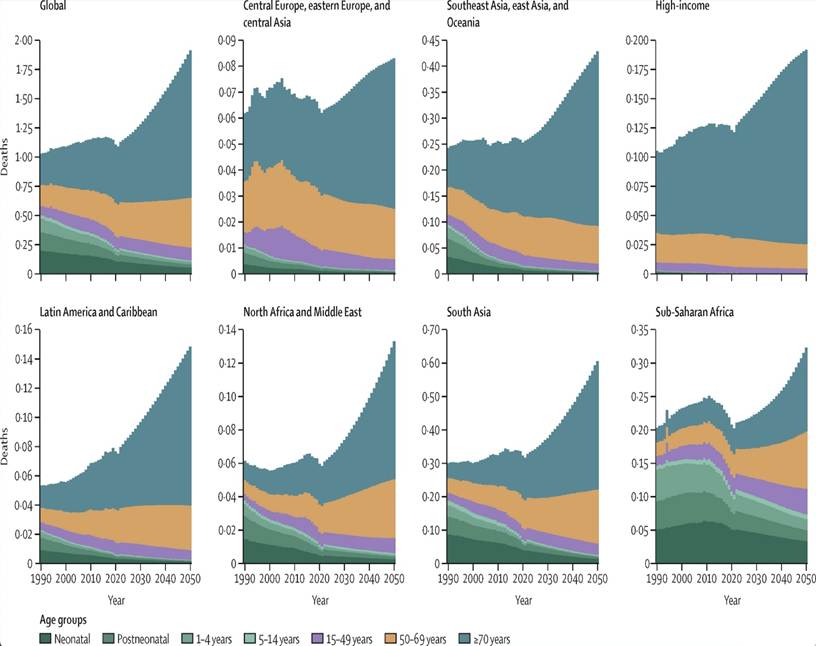
Figure 1: Global and regional trends in antimicrobial resistance-associated deaths by age group, 1990– 2050.The figure illustrates historical and projected trends in AMR-associated mortality across different age groups and world regions from 1990 to 2050, highlighting the anticipated increase in deaths and the disproportionate burden in certain populations and geographic regions.
Source: Bernhard Nocht Institute for Tropical Medicine (2024)
Major Resistant Pathogens and Resistance Mechanisms
Several bacterial species have emerged as major drivers of the global AMR burden. The WHO Bacterial Priority Pathogens List 2024 identifies carbapenem-resistant Acinetobacter baumannii, carbapenem-resistant Pseudomonas aeruginosa, and carbapenem-resistant and third-generation cephalosporin-resistant Enterobacterales as critical- priority pathogens requiring urgent research and public health interventions (Sati et al., 2025). Other important resistant organisms include methicillin-resistant Staphylococcus aureus (MRSA), vancomycin-resistant Enterococcus faecium, multidrug-resistant Mycobacterium tuberculosis, and resistant strains of Salmonella, Shigella, and Neisseria gonorrhoeae (WHO, 2023; Sati et al., 2025). These pathogens are associated with severe clinical outcomes, prolonged hospital stays, increased treatment costs, and elevated mortality rates.
The success and persistence of resistant pathogens are largely attributable to diverse molecular mechanisms that reduce antimicrobial effectiveness. These mechanisms include enzymatic degradation of antimicrobial compounds, modification of drug targets, reduced membrane permeability, activation of efflux pumps, and metabolic adaptations that circumvent antimicrobial action (Hernando-Amado et al., 2019). Particularly concerning is the ability of bacteria to acquire and disseminate resistance genes through horizontal gene transfer mediated by plasmids, transposons, and integrons. The rapid global spread of carbapenemases, extended-spectrum β-lactamases (ESBLs), and other mobile resistance determinants has accelerated the emergence of multidrug-resistant and extensively drug-resistant organisms, significantly limiting available therapeutic options (Bonomo et al., 2018). The increasing prevalence of these resistance mechanisms highlights the urgent need for strengthened surveillance, antimicrobial stewardship, and novel therapeutic approaches.
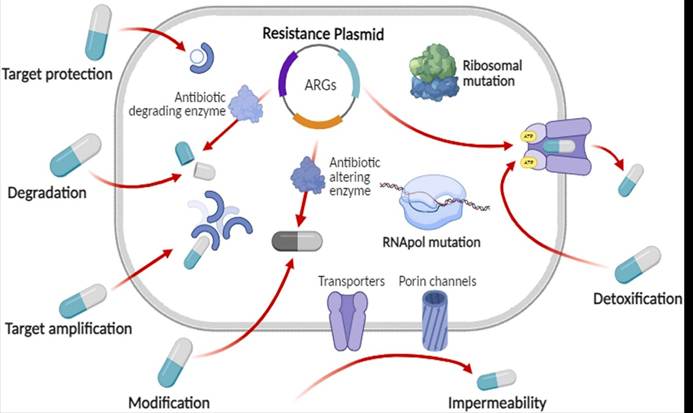
Figure 2. : Major mechanisms of bacterial antimicrobial resistance. The diagram illustrates the principal mechanisms by which bacteria resist antimicrobial agents, including enzymatic drug inactivation, alteration of antimicrobial targets, reduced membrane permeability, active efflux of drugs, and horizontal acquisition of resistance genes. These mechanisms contribute to the emergence and spread of multidrug-resistant pathogens.
Source: Solanki and Das (2024)
Human, Animal, and Environmental Reservoirs of Resistance
AMR is maintained and propagated through interconnected reservoirs encompassing humans, animals, and the environment. In human populations, hospitals, long-term care facilities, and community settings act as important reservoirs where antimicrobial use exerts selective pressure that promotes the emergence and transmission of resistant microorganisms. Inappropriate prescribing practices, self-medication, inadequate sanitation, and poor infection prevention measures further contribute to the persistence and spread of resistance within communities and healthcare systems (WHO, 2024b; James et al., 2026). Animals represent another significant reservoir of AMR. The use of antimicrobials in livestock production, aquaculture, and veterinary medicine contributes to the selection of resistant bacterial populations that can spread through direct contact, food chains, and environmental pathways. Resistant microorganisms and resistance genes originating from food-producing animals have been detected in humans, highlighting the interconnected nature of AMR transmission across species boundaries (Al-Khalaifah et al., 2025). Studies examining livestock
production systems have demonstrated extensive diversity and abundance of resistance genes within animal microbiomes, indicating the important role of animal reservoirs in maintaining and disseminating antimicrobial resistance on a global scale (Munk et al., 2018).
Environmental reservoirs have gained increasing attention as critical components of AMR ecology. Wastewater treatment plants, agricultural soils, surface waters, sediments, and other environmental compartments accumulate antimicrobial residues, resistant microorganisms, and antimicrobial resistance genes derived from human and animal activities. These environments facilitate microbial interactions and horizontal gene transfer, enabling resistance determinants to persist and spread across ecological boundaries (Larsson and Flach, 2022). Recent evidence suggests that environmental contamination contributes significantly to food safety risks and public health concerns by promoting the circulation of resistant microorganisms within aquatic and terrestrial ecosystems (Ifedinezi et al., 2024). The recognition of these interconnected reservoirs reinforces the importance of a One Health approach that integrates human, animal, and environmental surveillance and intervention strategies to effectively address the growing threat of AMR.
Table 1. Characteristics of major antimicrobial resistance reservoirs within a one health framework
Reservoir | Primary sources | Role in AMR Persistence | Key Transmission Routes | |||
Human | Hospitals, long-term care facilities, communities | Selection and amplification of resistant microorganisms through antimicrobial use | Person-to-person contact, healthcare-associated transmission, wastewater discharge | |||
Animal | Livestock, poultry, aquaculture, companion animals
| Maintenance and spread of resistance under veterinary and agricultural antimicrobial exposure | Direct contact, food chain, manure application, environmental contamination | |||
Environmental | Wastewater systems, surface waters, soils, sediments | Long-term storage and dissemination of resistant microorganisms and resistance genes | Water pathways, agricultural runoff, wildlife interactions, horizontal gene transfer | |||
One Health Interface | Human–animal–environment interactions | Facilitates continuous circulation of resistant microorganisms and resistance determinants across sectors | Food systems, shared water resources, waste streams, ecosystem connectivity | |||
Modified from Al-Khalaifah et al. (2025) and James et al. (2026)
The One Health Framework for AMR Control
Antimicrobial resistance (AMR) is a complex global challenge driven by interactions among human, animal, and environmental systems. Traditional sector-specific approaches are often insufficient because resistant microorganisms and antimicrobial resistance genes (ARGs) move across ecological boundaries through interconnected biological and environmental pathways. Recognizing these linkages, the One Health framework promotes collaborative and multidisciplinary actions that integrate human health, veterinary medicine, agriculture, environmental management, and public health. The One Health High-Level Expert Panel (OHHLEP) defines One Health as an integrated and unifying approach that seeks to sustainably balance and optimize the health of people, animals, and ecosystems (OHHLEP et al., 2022). In the context of AMR, this framework provides a foundation for understanding how resistance emerges, circulates, and persists across multiple sectors, thereby supporting coordinated strategies for surveillance, prevention, and control (Hernando-Amado et al., 2019; WHO, 2024b).
Interconnections Between Human, Animal, and Environmental Health
The One Health concept is founded on the recognition that human, animal, and environmental health are intrinsically interconnected. Microorganisms, antimicrobial residues, and ARGs continuously move among these domains, creating a complex network that facilitates the emergence and persistence of resistance. Human activities, agricultural practices, industrial processes, and environmental changes collectively influence microbial ecosystems and contribute to the circulation of resistant organisms across ecological boundaries (Velazquez-Meza et al., 2022; Abdullahi et al., 2026). Environmental compartments such as soil, water bodies, sediments, and wastewater systems serve as interfaces where microorganisms from different sources interact. These interactions create opportunities for the exchange and maintenance of resistance determinants within diverse microbial communities. Consequently, resistance that emerges in one sector can affect the others through interconnected ecological pathways, reinforcing the need for coordinated and multisectoral responses (Larsson and Flach, 2022; Ajayi et al., 2024). The One Health framework therefore emphasizes that effective AMR management depends on understanding these interdependencies rather than addressing resistance within isolated sectors (WHO, 2024b).
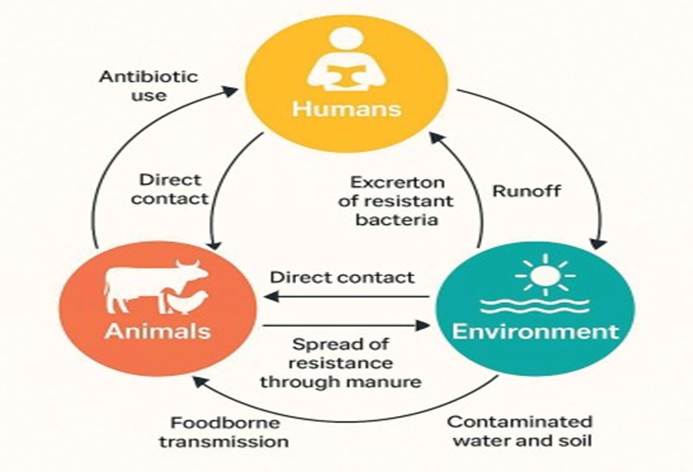
Figure 3. Interconnected one health cycle of antimicrobial resistance across humans, animals, and the environment. This figure illustrates the One Health cycle of antimicrobial resistance (AMR), showing how resistant bacteria move between humans, animals, and the environment. Antibiotic use in humans and livestock leads to resistant organisms that are released through waste into soil, water, and sewage. These environmental reservoirs then facilitate re-exposure and transmission back to humans and animals, sustaining the continuous spread of Antimicrobial Resistance across all sectors.
Source: Pandey et al. (2026)
Transmission Pathways of Antimicrobial-Resistant Organisms and Genes
The spread of AMR occurs through multiple transmission pathways linking humans, animals, food systems, and environmental reservoirs. Direct transmission may occur through human-to-human contact, interactions between humans and animals, or exposure to contaminated environments. Food systems also play an important role in facilitating the movement of resistant microorganisms across populations and geographical regions (Velazquez-Meza et al., 2022). Environmental media, including water, soil, sediments, and wastewater, function as important conduits for the dissemination of resistant organisms and resistance genes. Inadequate sanitation, poor waste management, and environmental contamination can increase opportunities for the circulation of resistant microorganisms between communities, animals, and ecosystems, particularly in resource-limited settings (United Nations Environment Programme [UNEP], 2023; Abdulgafar et al., 2025). Beyond the transmission of resistant bacteria themselves, AMR can spread through horizontal gene transfer. Mobile genetic elements such as plasmids, transposons, and integrons enable resistance genes to move between bacterial populations, accelerating the emergence of multidrug-resistant pathogens. Environmental microbial communities often provide favorable conditions for these genetic exchanges, making them important hotspots for resistance evolution and dissemination (Larsson and Flach, 2022; Solanki and Das, 2024).
Role of Surveillance and Data Integration Across Sectors
Integrated surveillance represents a central component of the One Health response to AMR. Because resistance emerges and circulates across multiple sectors, surveillance systems must extend beyond clinical settings to include animal, food, and environmental sources. Such systems provide essential information on resistance patterns, antimicrobial use, and emerging threats, thereby improving understanding of AMR dynamics and supporting evidence-based decision-making (Delpy et al., 2024). Recent advances in molecular epidemiology have significantly enhanced surveillance capabilities. Whole-genome sequencing, metagenomics, and bioinformatics tools enable the detection of resistance genes, characterization of resistant pathogens, and identification of transmission networks across sectors. These technologies have improved the ability to trace the movement of resistance determinants among human, animal, and environmental reservoirs, providing valuable insights into the epidemiology of AMR (Sati et al., 2025).
A key objective of One Health surveillance is the integration of data generated from diverse monitoring systems. Combining microbiological, epidemiological, environmental, and antimicrobial-use information allows for a more comprehensive assessment of resistance trends and emerging risks. Despite progress in surveillance technologies and data management, challenges remain in achieving harmonized methodologies, interoperable databases, and effective cross-sectoral data sharing, particularly in low-resource settings (Delpy et al., 2024; James et al., 2026). Nevertheless, integrated surveillance remains essential for improving the understanding of AMR and strengthening the scientific basis for coordinated One Health responses.
Table 2.Major transmission pathways and surveillance targets within the one health framework
Pathway | Main reservoir | Examples of Transmission | Surveillance Focus |
Human-to-human | Hospitals, communities | Direct contact | Clinical AMR monitoring |
Animal-to-human | Livestock, aquaculture | Foodborne exposure | Veterinary surveillance |
Environment-to-human | Water, soil, wastewater | Environmental exposure | Environmental monitoring |
Gene transfer | Microbial communities | Plasmids, integrons | Genomic surveillance |
Sector-Specific Contributions to Antimicrobial Resistance
Antimicrobial resistance (AMR) emerges from selective pressures and transmission processes operating across human, animal, and environmental systems. Although these sectors are interconnected within the One Health framework, each contributes distinct pathways that facilitate the development, persistence, and dissemination of resistant microorganisms and antimicrobial resistance genes. Understanding these sector-specific drivers is essential for identifying the origins of resistance and informing coordinated mitigation efforts (Ajayi et al., 2024).
Human Healthcare
Human healthcare remains a major source of antimicrobial selection pressure due to the widespread use of antibiotics in hospitals, outpatient facilities, and community settings. Inappropriate prescribing, empirical treatment without adequate diagnostic confirmation, prolonged antibiotic exposure, and self-medication contribute to the emergence of resistant bacterial populations. Healthcare environments also facilitate the transmission of resistant pathogens because of high patient densities, frequent antimicrobial exposure, and intensive healthcare interventions (Pulcini et al., 2019). Hospitals and long-term care facilities serve as important reservoirs for multidrug-resistant organisms, including methicillin-resistant Staphylococcus aureus, vancomycin-resistant enterococci, and carbapenem-resistant Enterobacterales. The concentration of vulnerable patients, invasive medical procedures, and close-contact settings creates favorable conditions for the persistence and spread of these organisms. Long-term care facilities are particularly important because they bridge healthcare and community environments, allowing resistant pathogens to circulate between institutional and community populations (Morrill et al., 2016).
Livestock, Aquaculture, and Veterinary Antimicrobial Use
Animal production systems represent another major contributor to AMR development. Antimicrobials are widely used in livestock and veterinary medicine for therapeutic, prophylactic, and disease-control purposes, creating selective pressures that favor resistant bacterial populations. These resistant microorganisms can subsequently move through food chains, occupational exposure, direct animal contact, and environmental pathways (Nhung et al., 2016). Food-producing animals constitute important reservoirs of resistance genes and resistant bacteria with zoonotic potential. Evidence indicates that antimicrobial use in animal production contributes to the maintenance of resistant bacterial populations that may be transmitted to humans through contaminated meat, milk, eggs, and other animal-derived products. The magnitude of antimicrobial use in modern livestock production therefore represents a significant component of the global AMR burden (Tang et al., 2017). Aquaculture has emerged as an additional concern because antimicrobial agents introduced into aquatic production systems can affect both pathogenic and environmental microbial communities. The rapid expansion of global aquaculture has been accompanied by increasing antimicrobial consumption, creating opportunities for resistance development and dissemination within aquatic ecosystems and surrounding environments (Schar et al., 2020).
Environmental Contamination and Dissemination of Resistance Determinants
The environment functions as both a reservoir and transmission interface for antimicrobial resistance. Environmental compartments including wastewater systems, rivers, lakes, soils, sediments, and estuarine ecosystems receive antimicrobial residues, resistant microorganisms, and resistance genes originating from human, agricultural, and industrial activities. These inputs create conditions that support the persistence and circulation of resistance determinants beyond their original sources (Singer et al., 2016). Wastewater generated from healthcare facilities, households, pharmaceutical manufacturing, and agricultural operations frequently contains resistant bacteria and residual antimicrobial compounds. Following release into natural ecosystems, these contaminants interact with diverse environmental microbial communities, facilitating the maintenance and spread of resistance genes across ecological boundaries (Smalla et al., 2018). Agricultural runoff, manure application, and livestock waste disposal further contribute to environmental dissemination by introducing resistance determinants into terrestrial and aquatic ecosystems. Studies have demonstrated widespread contamination of environmental habitats with antibiotic resistance genes, highlighting the importance of environmental reservoirs in the global resistance network (Zhu et al., 2017). Environmental microbial communities also provide favorable conditions for horizontal gene transfer, enabling resistance genes to move among bacterial populations and accelerating the evolution of resistant microorganisms (Smalla et al., 2018; Ajayi et al., 2024).
Table 3. Comparative overview of AMR across human, animal, and environmental sectors within the one-health framework
Sector/source | Sentinel ARGs/Pathogens | Dominant drivers | Transmission Pathways | Priority intervention |
Human | MRSA, CRE (K. pneumoniae, E. coli), MDR A. baumannii; genes: blaCTX-M, mecA 1 | Inappropriate prescribing; empirical broad-spectrum use; poor infection control | Person-to-person, healthcare settings, contaminated food and water | Stewardship, rapid diagnostics, infection control, integrated surveillance |
Livestock | ESBL-E. coli, Salmonella, S. aureus, MRSA, E. faecium; genes: blaCTX-M, blaTEM, qnrS, tetA, mcr-1, tetK, ermB, vanA)2 | Routine antibiotic use for prophylaxis, therapy, growth promotion, Antibiotic residues in milk; mastitis treatment; raw milk consumption | Direct contact, contaminated meat and milk, environmental contamination | Restricting antibiotic use, implementing biosecurity measures, promoting vaccination, Surveillance |
Environment | E.coli, Enterobacter spp. | Manure runoff, sewage, wastewater treatment plant (WWTP) effluents | Water, air, soil, crops, food chain | Advanced wastewater treatment, monitoring of effluent discharge, environmental Surveillance |
Aquaculture | Vibrio spp., Aeromonas spp.; genes: floR, sul1, te (), mcr-1 | Unregulated antibiotic use, poor water quality | Contaminated water, seafood consumption, environmental sources | Probiotics, vaccines, effluent regulation, improved aquaculture |
Wastewater/WWTPs | E. coli, Enterobacter spp.; genes: blaCTX-M, sul1, tetA) | Hospital, pharmaceutical, municipal effluents; incomplete treatment | Treated and untreated effluent entering rivers, lakes, irrigation water, sludge reuse | Advanced treatment (UV, ozonation, membranes), ARG monitoring, industrial discharge regulations |
Modified from Al-Khalaifah et al. (2025)
One Health Strategies for AMR Mitigation
AMR cannot be effectively controlled through isolated interventions targeting a single sector. Because resistant microorganisms and resistance genes circulate across human, animal, and environmental systems, mitigation strategies must be coordinated within a One Health framework. Effective AMR control requires a combination of antimicrobial stewardship, infection prevention measures, regulatory oversight, public engagement, and international collaboration. Together, these strategies address both the immediate drivers of resistance and the broader social, environmental, and institutional factors that sustain its emergence and dissemination (Hibbard et al., 2024; James et al., 2026).
Antimicrobial Stewardship as the Foundation of AMR Control
Stewardship programs are widely regarded as the cornerstone of AMR mitigation. Antimicrobial stewardship promotes the responsible use of antimicrobial agents across human health, veterinary medicine, agriculture, and environmental sectors to preserve antimicrobial effectiveness while ensuring optimal health outcomes. Modern stewardship extends beyond reducing antibiotic consumption and emphasizes appropriate prescribing, diagnostic-guided therapy, antimicrobial-use monitoring, and continuous evaluation of prescribing practices (Hibbard et al., 2024; James et al., 2026). Evidence demonstrates that stewardship interventions significantly reduce inappropriate antimicrobial use and lower the incidence of resistant infections. A systematic review and meta-analysis found that antimicrobial stewardship programs were associated with substantial reductions in infections and colonization caused by antibiotic-resistant bacteria, highlighting their effectiveness in healthcare settings (Baur et al., 2017). Within the One Health framework, stewardship principles are increasingly being extended to livestock production, aquaculture, and veterinary medicine, where prudent antimicrobial use can reduce selection pressure and limit the emergence of resistant microorganisms that may spread to humans and the environment.
Infection Prevention, Biosecurity, and WASH Interventions
Preventing infections reduces the need for antimicrobial use and therefore decreases opportunities for resistance development. Infection prevention and control measures, including hand hygiene, vaccination, sanitation, environmental cleaning, and healthcare-associated infection control, remain essential components of AMR mitigation strategies. In animal production systems, biosecurity measures such as controlled farm access, animal health monitoring, vaccination programs, and improved husbandry practices reduce disease incidence and antimicrobial dependence (Pinto Jimenez et al., 2023). Water, sanitation, and hygiene (WASH) interventions are particularly important in low- and middle-income countries where inadequate sanitation infrastructure facilitates the transmission of resistant microorganisms. Poor wastewater management, unsafe drinking water, and inadequate hygiene practices contribute significantly to AMR dissemination across communities and ecosystems. Recent evidence from sub-Saharan Africa highlights substantial WASH gaps as important drivers of resistance transmission between humans, animals, and environmental reservoirs (Abdulgafar et al., 2025). Consequently, investments in sanitation infrastructure, wastewater treatment, and hygiene promotion represent critical One Health interventions for reducing AMR transmission (Abdullahi et al., 2026).
Regulatory and Policy Approaches
Effective governance and regulatory frameworks are essential for sustaining AMR mitigation efforts. National and international policies increasingly focus on restricting inappropriate antimicrobial use, strengthening surveillance systems, regulating antimicrobial sales, and promoting responsible antimicrobial practices across sectors. Regulatory measures targeting over-the-counter antibiotic access, veterinary antimicrobial use, pharmaceutical waste management, and environmental contamination have become important tools for reducing resistance selection pressures (Ajayi et al., 2024). The WHO Bacterial Priority Pathogens List provides an evidence-based framework for prioritizing research, surveillance, and intervention efforts against high-risk resistant pathogens, thereby supporting policy development and resource allocation (Sati et al., 2025). Furthermore, implementation of integrated surveillance systems allows policymakers to identify emerging threats, evaluate intervention effectiveness, and develop evidence-informed AMR strategies (Delpy et al., 2024).
Education, Awareness, and Behavioral Change
Behavioral factors strongly influence antimicrobial use patterns across human and animal health sectors. Educational initiatives targeting healthcare professionals, veterinarians, farmers, policymakers, and the general public play a crucial role in promoting responsible antimicrobial practices. Effective awareness programs improve understanding of AMR risks, encourage adherence to stewardship principles, and support sustainable behavioral changes (Charani et al., 2021). Public perceptions and expectations often influence antibiotic prescribing practices. Studies have shown that providing clear information regarding antibiotic effectiveness and resistance risks can significantly reduce public demand for unnecessary antibiotic prescriptions (Roope et al., 2018). Within the One Health framework, educational interventions should therefore address both individual behaviors and broader social determinants that influence antimicrobial use across sectors.
Global Collaboration and Governance
Given the transboundary nature of AMR, international cooperation is indispensable for effective mitigation. Resistant pathogens and resistance genes move across borders through human travel, trade, food systems, wildlife migration, and environmental pathways, making AMR a shared global responsibility. International organizations increasingly advocate coordinated One Health actions that integrate surveillance, stewardship, research, capacity building, and policy implementation across countries (WHO, 2024c). Recent global initiatives emphasize strengthening integrated surveillance networks, supporting low-resource settings, promoting equitable access to diagnostics and therapeutics, and fostering multidisciplinary collaboration among health, agricultural, and environmental sectors. The successful implementation of these strategies will depend on sustained political commitment, financial investment, and international partnerships capable of addressing the complex and evolving challenges posed by antimicrobial resistance (Delpy et al., 2024; Abdullahi et al., 2026).
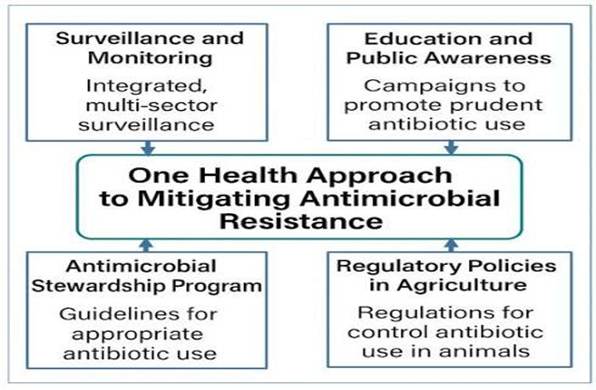
Figure 4.One Health approach to mitigating antimicrobial resistance (AMR). The framework illustrates the integration of surveillance, antimicrobial stewardship, education and awareness, infection prevention, biosecurity, and regulatory policies across human, animal, and environmental sectors to reduce the emergence and spread of antimicrobial resistance.
Source: Elbehiry et al. (2025)
Emerging Innovations and Future Directions
The growing complexity of antimicrobial resistance (AMR) has intensified the search for innovative technologies and multidisciplinary approaches capable of strengthening surveillance, improving therapeutic options, and enhancing global preparedness. While antimicrobial stewardship, infection prevention, and policy interventions remain essential pillars of AMR control, emerging scientific advances are creating new opportunities to understand resistance dynamics and develop more targeted mitigation strategies. Innovations in genomics, artificial intelligence (AI), precision surveillance, and alternative antimicrobial therapies are increasingly shaping the future of One Health responses to AMR. At the same time, global environmental changes, including climate change, are introducing new challenges that require adaptive and forward-looking strategies (Djordjevic et al., 2024; Van Bavel et al., 2024).
Genomics, Metagenomics, and Precision Surveillance
Recent advances in genomic technologies have transformed the ability to detect, characterize, and track antimicrobial resistance across human, animal, and environmental systems. Whole-genome sequencing (WGS) enables detailed analysis of bacterial genomes, facilitating the identification of resistance determinants, virulence factors, and transmission pathways with unprecedented precision. Unlike conventional surveillance methods that focus primarily on phenotypic resistance patterns, genomic approaches provide insights into the evolutionary mechanisms underlying resistance emergence and dissemination (Djordjevic et al., 2024). Metagenomic sequencing has further expanded surveillance capabilities by allowing the direct examination of microbial communities in complex environmental samples without requiring culture-based isolation. This approach enables the detection of antimicrobial resistance genes (ARGs), mobile genetic elements, and previously unrecognized reservoirs of resistance within wastewater systems, agricultural environments, and natural ecosystems (Maestre-Carballa et al., 2024). The integration of genomic and metagenomic data with epidemiological information is facilitating the development of precision surveillance systems capable of identifying emerging resistance threats in near real time. Such systems strengthen One Health surveillance by improving understanding of how resistance determinants circulate between humans, animals, and the environment (Delpy et al., 2024). Furthermore, advances in bioinformatics are enhancing the interpretation of large genomic datasets, enabling more accurate prediction of resistance trends and transmission networks. These developments are expected to improve risk assessment, outbreak investigation, and evidence-based policy development, particularly as genomic surveillance becomes increasingly accessible in low- and middle-income countries (Struelens et al., 2024).
Aificial Intelligence and Digital Technologiesrt
Artificial intelligence and digital health technologies are emerging as powerful tools for addressing the growing challenges associated with AMR surveillance and management. Machine-learning algorithms can analyze large and complex datasets derived from clinical records, genomic databases, environmental monitoring programs, and antimicrobial consumption reports to identify patterns that may not be detectable through conventional analytical approaches (Pennisi et al., 2025).
In clinical settings, AI-driven models are increasingly being used to predict antimicrobial susceptibility, support diagnostic decision-making, and optimize antimicrobial prescribing practices. These applications have the potential to improve treatment outcomes while reducing unnecessary antimicrobial exposure and selective pressure on microbial populations (Pennisi et al., 2025). Digital decision-support systems integrated within healthcare infrastructures can also strengthen antimicrobial stewardship efforts by providing real-time recommendations based on patient characteristics, local resistance patterns, and treatment guidelines. Beyond healthcare settings, AI is contributing to enhanced surveillance and forecasting of AMR trends across One Health sectors. Predictive models incorporating environmental, epidemiological, and genomic data are being developed to identify emerging resistance hotspots and anticipate future resistance patterns. Additionally, AI-assisted drug discovery platforms are accelerating the identification of novel antimicrobial compounds, helping address the declining effectiveness of conventional antibiotics (Djordjevic et al., 2024). As computational tools continue to evolve, their integration into AMR surveillance and response systems is expected to improve the efficiency and effectiveness of global mitigation efforts.
Novel Alternatives to Conventional Antibiotics
The diminishing efficacy of existing antimicrobial agents has stimulated interest in alternative therapeutic approaches that can reduce dependence on traditional antibiotics. Among the most promising innovations is bacteriophage therapy, which employs viruses that specifically infect and destroy bacterial pathogens. Because bacteriophages can target resistant bacteria while sparing beneficial microbiota, they offer a potentially valuable option for managing multidrug-resistant infections. Other emerging alternatives include antimicrobial peptides, microbiome-based therapies, anti-virulence agents, and CRISPR-Cas technologies. Antimicrobial peptides possess broad-spectrum antimicrobial activity and frequently operate through mechanisms distinct from those of conventional antibiotics, reducing the likelihood of cross-resistance. Microbiome-based interventions seek to restore healthy microbial communities that can suppress pathogen colonization and reduce infection risk. Meanwhile, CRISPR-based approaches have demonstrated the capacity to selectively target resistance genes and eliminate resistant bacterial populations with remarkable precision (Djordjevic et al., 2024). Although many of these technologies remain at experimental or early clinical stages, they represent important components of future AMR management strategies. Continued investment in translational research, clinical evaluation, and regulatory development will be necessary to support their broader implementation and integration into existing healthcare and veterinary systems.
Research Gaps and Future Priorities
Despite substantial progress in AMR research, important knowledge gaps continue to limit the effectiveness of global mitigation efforts. Significant uncertainties remain regarding the relative contributions of environmental reservoirs, wildlife populations, and ecological processes to the long-term maintenance and transmission of resistance determinants. Improved understanding of these interactions is needed to strengthen One Health interventions and refine risk-assessment frameworks (Delpy et al., 2024). Another major challenge is the uneven distribution of surveillance capacity, laboratory infrastructure, and technical expertise across regions. Many low- and middle-income countries continue to face substantial barriers to implementing integrated surveillance systems, resulting in gaps in AMR data and limited understanding of regional resistance dynamics. Strengthening laboratory networks, expanding genomic surveillance capabilities, and improving data-sharing mechanisms should therefore remain key priorities for future investment (Delpy et al., 2024).
Future research should also focus on evaluating the effectiveness of emerging technologies, developing sustainable alternatives to conventional antibiotics, and improving the integration of human, animal, and environmental datasets within One Health surveillance frameworks. Greater collaboration among researchers, policymakers, public health agencies, environmental organizations, and veterinary services will be critical for translating scientific advances into practical solutions. By combining technological innovation with coordinated global action, future One Health strategies can enhance resilience against antimicrobial resistance and support the long-term preservation of antimicrobial effectiveness worldwide (Djordjevic et al., 2024; Van Bavel et al., 2024).
Antimicrobial resistance remains one of the most pressing global health challenges of the twenty-first century, threatening the effectiveness of life-saving therapies and undermining progress in human, animal, and environmental health. The complex and interconnected nature of AMR necessitates a One Health approach that recognizes the dynamic interactions among healthcare systems, food production, and environmental ecosystems. Effective mitigation requires coordinated efforts encompassing surveillance, stewardship, infection prevention, environmental management, policy implementation, and public engagement. Emerging innovations in genomics, artificial intelligence, and alternative antimicrobial therapies offer promising opportunities to strengthen future responses. However, sustained investment, interdisciplinary collaboration, and global commitment will be essential to translate these advances into practical and equitable solutions. Strengthening One Health partnerships across sectors remains critical to preserving antimicrobial effectiveness and safeguarding global health for future generations.
Acknowledgement
We thank all the researchers who contributed to the success of this research work.
Conflict of Interest
The authors declared that there are no conflicts of interest.
Funding
No funding was received for this research work.