REVIEW ARTICLE | DOI: https://doi.org/dx.doi.org/JIHM/PP.0012
1Department of International Public Health, Liverpool School of Tropical Medicine, Pembroke Place, Liverpool, L3 5QA, United Kingdom.
2Department of Pharmacy and Health and Nutrition Sciences, University of Calabria, Rende, Italy.
3Department of Physical Science, Eastern New Mexico University, USA.
4Department of Biochemistry, Faculty of Biosciences, Federal University Wukari, Taraba State, Nigeria.
5ResearchHub Nexus Institute, Nigeria.
6Department of Chemical Sciences, Faculty of Science, Anchor University, Ayobo, Lagos State, Nigeria.
*Corresponding Author: Moses Adondua Abah
Citation: Undebe, Williams Begba , Moses Adondua Abah , Micheal Oladosu Abimbola , Adetoyi Gbadebo Moses and Ochuele Dominic Agida (2026), The Effectiveness of Community-Based Interventions for Improving Mental Health Outcomes: A Comprehensive Review, J. Innovations in Healthcare and Medicine 2(3): dx.doi.org/JIHM/PP.0012
Copyright  :
© 2026 Moses Adondua Abah . This is an open-access article distributed under the terms of the Creative Commons Attribution License, which permits unrestricted use, distribution, and reproduction in any medium, provided the original author and source are credited.
:
© 2026 Moses Adondua Abah . This is an open-access article distributed under the terms of the Creative Commons Attribution License, which permits unrestricted use, distribution, and reproduction in any medium, provided the original author and source are credited.
Received: 21 June 2026 | Accepted: 10 July 2026 | Published: 21 August 2026
Keywords: community-based interventions, mental health, public health, peer support, task-sharing, and health equity.
Mental health disorders are a leading contributor to global disability, creating persistent challenges for health systems and individuals across all age groups and socioeconomic settings. Despite growing recognition of mental health as a public health priority, significant treatment gaps remain especially in low- and middle-income countries and among vulnerable groups with limited access to specialist care. Traditional, institution-based models have proven insufficient, prompting increased interest in community-based interventions that relocate mental health support into everyday environments and leverage local resources. This review synthesizes current evidence on the effectiveness of community-based mental health interventions, including mental health promotion, psychoeducation, peer-led support, outreach, task-sharing, and integrated care models. These approaches are grounded in public health and recovery-oriented frameworks, emphasizing empowerment, social inclusion, and the reduction of stigma. The findings indicate that community-based interventions can reduce symptoms, improve functioning, and enhance quality of life for diverse populations, particularly when culturally adapted and supported by community engagement. Critical mechanisms of effectiveness include social connectedness, empowerment, and accessibility. However, implementation is often challenged by workforce shortages, limited supervision, fragmented systems, and socio-cultural barriers. Success depends on adaptability, strong community trust, and integration with existing health and social structures. The review also identifies research gaps in long-term outcomes, digital innovation, and policy integration. In conclusion, community-based interventions offer a promising pathway for more inclusive, equitable, and sustainable mental health care, supporting global efforts to improve mental health outcomes and reduce disparities.
Mental health disorders represent one of the most significant contributors to global disability, affecting individuals across age groups and socioeconomic contexts and placing sustained pressure on health systems worldwide [1, 2, 3]. Despite increasing recognition of mental health as a public health priority, large treatment gaps persist, particularly among young people, older adults, and populations living in low- and middle-income countries, where access to specialist care is limited [2, 4, 5). Conventional institution-based models of care have proven insufficient to meet the scale, complexity, and social dimensions of mental health needs, prompting calls for alternative approaches that are more accessible, equitable, and responsive to local contexts [2, 3, 4]. In response, community-based mental health interventions have gained increasing prominence as a strategy to improve mental health outcomes by decentralizing services and embedding care within everyday social environments [1, 3, 5, 6].
Community-based mental health interventions are grounded in public health and recovery-oriented frameworks that emphasize empowerment, participation, and social inclusion as central components of well-being [2, 4, 6, 7]. These interventions include mental health promotion, psychoeducation, peer support, outreach services, and task-sharing models delivered by trained non-specialist personnel in community settings [3, 5, 7]. By shifting care closer to people’s everyday environments, community-based approaches aim to increase acceptability and cultural relevance while reducing stigma associated with traditional facility-based services [2, 4, 5]. Evidence from recent reviews highlights the growing adoption of community-based interventions for priority and underserved populations, particularly those facing structural and social barriers to accessing mental health care [3, 4, 5, 6].
A growing body of empirical evidence supports the effectiveness of community-based interventions across diverse populations. Among young people, such programs have demonstrated reductions in suicidal thoughts and behaviors, with recent meta-analytic findings showing benefits across multiple intervention types and delivery platforms [3, 5, 8]. Peer-led interventions have also shown promise in improving youth mental health outcomes in low- and middle-income countries, enhancing engagement, social support, and help-seeking behaviors [3, 4, 5]. For older adults, community-based psychosocial and well-being interventions have been associated with reductions in depression and anxiety and improvements in quality of life and social functioning, particularly in resource-limited settings [1, 3, 5]. However, the evidence base is heterogeneous, with variation in study designs, outcomes, and intervention intensity, which complicates comparisons across studies [1, 5, 7].
Implementation challenges significantly influence the real-world effectiveness of community-based mental health interventions. Evidence indicates that scaling task-sharing interventions in low- and middle-income countries is often constrained by workforce shortages, limited supervision, stigma, and weak integration into existing health systems [4, 5, 7]. Facilitators for successful implementation include community trust, intervention adaptability, and alignment with local priorities [3, 6, 7]. Peer support interventions, while effective across different income settings, require clear role definitions, structured training, and sustained institutional support to ensure long-term impact [3, 5, 8]. These findings emphasize the importance of understanding both effectiveness and the contextual and system-level factors that influence successful implementation.
The purpose of this review is to provide a comprehensive synthesis of the evidence on community-based mental health interventions and their impact on mental health outcomes. The review aims to examine the types and components of interventions, including peer-led, task-sharing, and promotion-focused approaches, and their effects on symptoms, functioning, quality of life, and well-being. It further seeks to identify key mechanisms, such as social support, empowerment, and engagement, which contribute to positive outcomes. Contextual and implementation factors, including accessibility, cultural relevance, and sustainability, are explored to inform practical strategies for effective delivery. By incorporating evidence from diverse populations and settings, the review highlights equity considerations, challenges, and opportunities for scaling interventions. Finally, the review identifies gaps in current research and proposes directions for future investigation, aiming to support the design, implementation, and sustainability of community-based interventions that strengthen mental health systems and improve outcomes globally.
Evolution of Community‑Based Mental Health Care
The shift from institutionalized psychiatric care toward community‑based mental health services has been a defining trend in global mental health policy and practice over the past several decades. Historically, mental health care was dominated by long‑stay psychiatric hospitals and institutional wards, where individuals with severe mental illness received care in isolated environments that often failed to support social inclusion or long‑term recovery [9, 10, 11]. Recognition of the limitations and human rights concerns associated with these institutional models including poor quality of life, stigma, and restricted autonomy fueled international calls for fundamental reform of mental health systems [9, 11, 12]. A central component of this evolution has been deinstitutionalization, which involves reducing reliance on large psychiatric institutions while reinvesting resources into a range of community‑oriented services such as outpatient care, mobile crisis teams, supported housing, and peer support networks [9, 10, 11]. Deinstitutionalization is often framed as part of a broader rights‑based and recovery‑oriented transformation of mental health systems that seeks to enhance personal autonomy, community participation, and continuity of care [9, 11, 12]. These changes reflect a growing international consensus articulated in global policy frameworks that mental health services should be delivered as close as possible to people’s everyday environments and integrated with general health and social systems.
The policy shift toward community care has been reflected in both national reforms and regional strategies. Many countries have developed community mental health teams, multidisciplinary outreach services, and collaborative care frameworks as part of efforts to expand access and reduce the burden on hospital‑centric systems [9, 10, 11]. However, the pace and degree of transition vary widely: while some high‑income countries have well‑established community care infrastructures, others including many low‑ and middle‑income settings continue to balance institutional services with emerging community programs [10, 11, 13]. Research on community‑based models highlights not only structural shifts but also innovative approaches to care delivery that extend beyond traditional clinical interventions. For example, systematic reviews of community care models show a spectrum of services from intensive case management and peer‑led supports to integrated treatment pathways that combine clinical, vocational, and psychosocial elements all designed to support recovery, functional outcomes, and social inclusion 9, 12, 14]. These models reflect an expanded understanding of mental health care as encompassing both symptom management and broader social outcomes such as housing stability, employment participation, and community engagement.
Despite widespread endorsement of community‑based care, challenges remain in ensuring equitable and effective implementation. Barriers include insufficient funding for community services, workforce shortages, and persistent stigma that limits utilization and integration with general health systems [9, 10, 13]. Moreover, research shows that poorly planned transitions can lead to service fragmentation and gaps in care continuity if community alternatives are not fully developed alongside reductions in institutional capacity [9, 10]. Nevertheless, recent policy commitments and implementation efforts particularly those incorporating recovery‑oriented design and peer involvement indicate ongoing evolution toward community‑centered systems that emphasize person‑centered outcomes and social participation.
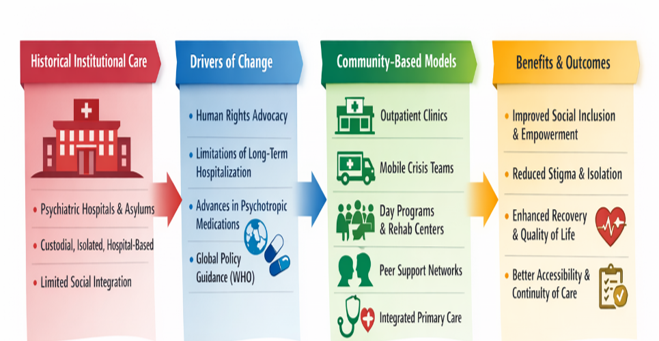
Figure 1. Transition from Institutional to Community-Based Mental Health Care: Models, Drivers, and Outcomes. This figure illustrates the shift from hospital-based institutional care to modern community-based mental health services, highlighting key drivers, intervention models, and associated benefits such as social inclusion, reduced stigma, and improved recovery.
Sources: Modified from [9, 10, 11]
Conceptual and Theoretical Frameworks
Community-based mental health interventions are underpinned by conceptual frameworks that emphasize mental health as a socially embedded and multidimensional phenomenon rather than an exclusively clinical condition [6, 11]. Contemporary theory highlights the limitations of institutional and biomedical models in addressing long-term recovery, social inclusion, and equity, thereby justifying a shift toward community-oriented systems of care [11]. These frameworks position communities as active contexts for prevention, support, and recovery, aligning mental health practice with broader public health and human rights principles [15]. A foundational theoretical lens for community-based mental health is the public mental health framework, which conceptualizes mental health across population, community, and individual levels [6, 15]. This framework integrates social determinants such as housing, education, employment, and social cohesion as central influences on mental health outcomes, reinforcing the need for multisectoral and community-driven interventions [15]. By emphasizing prevention, promotion, and early intervention alongside treatment, public mental health theory provides a robust rationale for community-based approaches that address structural and contextual drivers of mental distress [9].
Recovery-oriented theory constitutes another core foundation, reframing recovery as a personal, non-linear process centered on hope, identity, meaning, empowerment, and social participation rather than symptom remission alone [6, 16, 17]. Recovery-oriented practice emphasizes collaborative relationships, lived-experience expertise, and strengths-based approaches within community settings, which have been shown to support sustained engagement and improved quality of life [14]. The translation of recovery principles into community and social work practice further underscores the importance of culturally responsive, person-centred, and relational care models, particularly for children, youth, and families [18]. Complementing recovery frameworks are conceptual models of social intervention, which clarify how diverse community supports interact across life domains to influence mental health outcomes [19]. These models distinguish between clinical care, peer support, social services, and societal-level interventions, highlighting the cumulative and synergistic effects of coordinated community responses [19]. Systematic evidence demonstrates that community-based models grounded in these theoretical foundations are particularly effective for individuals with persistent and complex mental health needs, as they promote continuity of care, social inclusion, and long-term recovery within real-world community contexts [14].
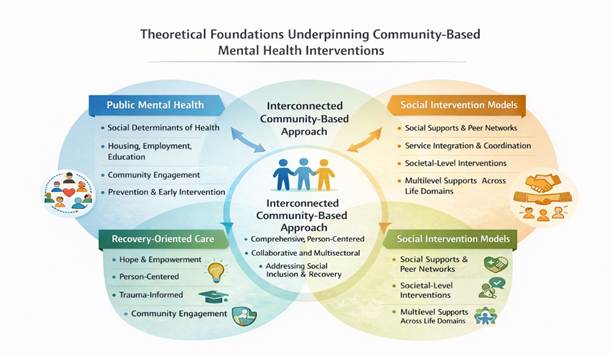
Figure 2. Conceptual and Theoretical Foundations Underpinning Community-Based Mental Health Care. This figure summarizes the core theoretical frameworks informing community-based mental health interventions, including public mental health, recovery-oriented practice, and social intervention models, and illustrates their interconnected roles in shaping person-centred and socially inclusive care.
Source: Modified from [11, 15, 19]
Types of Community-Based Mental Health Interventions
Community-based mental health interventions aim to deliver mental health support within individuals’ social and community environments rather than exclusively in institutional or clinical settings. These interventions enhance accessibility, cultural relevance, and engagement, and are particularly effective in underserved populations [1, 11]. Evidence indicates that such interventions improve mental health literacy, promote recovery, and reduce social isolation while addressing structural and contextual barriers to care [20, 21]. Table 1, summarizes major community-based mental health interventions, highlighting key features, target populations, and outcomes as evidenced in recent empirical studies. The main types of interventions are outlined below.
Table 1. Core types of community-based mental health interventions and their key features
Intervention types | Key features | Targeted population | Evidence |
Mental Health Promotion and Psychoeducation | Builds awareness, reduces stigma, teaches coping skills | Youth, disadvantaged communities | Improves knowledge, coping, engagement with services [11, 21] |
Peer-Led Support and Community Participation | Lived-experience support, mentoring, group engagement | Youth, adults with mental health challenges | Enhances self-efficacy, social support, and recovery [3, 22] |
Outreach and Task-Sharing | Trains lay workers to deliver support, identify risk, link to care | Underserved, low-resource communities | Expands coverage, improves access, culturally relevant [1, 23] |
Integrated and Collaborative Care | Links mental health with primary care and social services | Individuals with complex or co-occurring conditions | Improves continuity, symptom reduction, holistic outcomes [11,24] |
Mental Health Promotion and Psychoeducation
Mental health promotion and psychoeducation interventions focus on increasing awareness of mental health, reducing stigma, and equipping individuals with coping skills to manage stress and early signs of mental distress. These programs may include workshops, educational campaigns, and group sessions designed to improve mental health literacy and psychosocial well-being [11, 21]. Evidence suggests that targeted health literacy initiatives improve both knowledge and practical coping strategies, particularly in disadvantaged or youth populations, enhancing overall engagement with mental health services [21].
Peer-Led Support and Community Participation
Peer-led support involves individuals with lived experience providing mentorship, guidance, and mutual support to others experiencing mental health challenges. Such interventions have been associated with improvements in self-efficacy, social support, and recovery outcomes [3, 22]. Youth-focused peer programs often include group activities, counseling, and education delivered by peers, which strengthen social networks and enhance participation in mental health promotion [3 20]. Peer involvement also contributes to sustainability by fostering community ownership of interventions [6, 22].
Outreach, Task-Sharing, and Lay Health Worker Models
Outreach and task-sharing models redistribute responsibilities from specialist providers to trained community members, such as community health workers or lay counselors, to deliver basic mental health support [11, 23]. These approaches expand service coverage, improve access in underserved areas, and support early identification and referral of individuals with mental health needs [1]. Successful implementation relies on structured training, supervision, and integration into existing community and health systems [23].
Integrated and Collaborative Care Approaches
Integrated and collaborative care models coordinate mental health interventions with primary health care, social services, and community resources to provide comprehensive care [11, 24]. These approaches involve multidisciplinary teams and shared care pathways that link mental health support with broader health and social services. Evidence suggests that integrating care across sectors improves mental health outcomes, enhances continuity of care, and supports individuals with co-occurring mental and physical health conditions [20, 24].
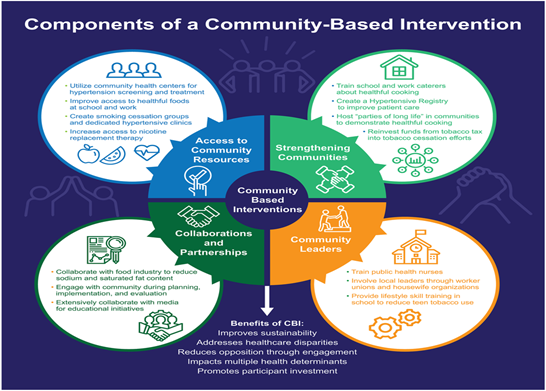
Figure 3. The components of a community-based intervention (CBI). This figure illustrates the key components of a community-based intervention, highlighting how community engagement, stakeholder collaboration, needs assessment, capacity building, culturally appropriate strategies, implementation, monitoring, and sustainability work together to achieve effective and lasting outcomes.
Source: Fullin et al. [25]
Evidence of Effectiveness of Community‑Based Interventions
Community‑based mental health interventions have been increasingly evaluated for their effectiveness across a range of outcomes, including symptom reduction, functioning, quality of life, and empowerment. A growing body of evidence from systematic reviews and meta‑analyses demonstrates that community‑based models can lead to meaningful improvements, particularly when interventions are culturally adapted, peer‑involved, and integrated with local resources [5, 11]. However, the magnitude of these effects varies by intervention type, population, and context.
Impact on Mental Health Symptoms and Functioning
Community‑based programmes have shown significant impacts on core mental health symptoms and overall functioning. A large systematic meta‑analysis focusing on community‑based rehabilitation interventions for people with schizophrenia revealed strong beneficial effects on both symptoms and functional outcomes, indicating substantial improvements when such community interventions supplement conventional care [26]. Likewise, peer support interventions have been associated with statistically significant improvements in recovery and empowerment outcomes among individuals with schizophrenia, with small to moderate effect sizes reported in controlled trials [26]. In youth populations, community‑based strategies that include structured peer and lay support have shown promising reductions in suicidal ideation and other severe symptoms, though methodological variability persists [5].
Quality of Life, Well‑Being, and Social Outcomes
Beyond symptom reduction, community‑based interventions also influence broader aspects of well‑being and social functioning. Psychosocial and social engagement components of community programmes for older adults in low‑ and middle‑income countries have been found to reduce levels of depression and anxiety, and improve overall well‑being, including social interaction and mental health outcomes [1]. Similarly, integrated psychoeducational and community engagement approaches tailored to local cultural contexts enhance quality of life and self‑reported functioning by fostering supportive networks and resource access [11, 21]. Peer support mechanisms by facilitating shared experience, trust, and mutual aid have been linked in multiple reviews to improvements in subjective well‑being, social connection, and adaptive coping across diverse groups [22, 26].
Population‑Level Outcomes and Vulnerable Groups
Community‑based interventions also contribute to improved population‑level outcomes and greater equity in mental health access. Task‑sharing and outreach initiatives that leverage lay health workers and community volunteers have expanded service reach in under‑resourced areas, enabling earlier identification of mental health needs and linkage to appropriate supports [11, 23]. Evidence suggests that culturally adapted community efforts increase acceptability and engagement among underserved populations, thereby addressing historical barriers to mental health care access [1, 3]. Moreover, evidence from community engagement literature indicates that community‑driven interventions can strengthen psychosocial support and self‑efficacy in vulnerable groups such as housing‑insecure mothers and children, although effect sizes vary and more rigorous evaluations are needed [27].
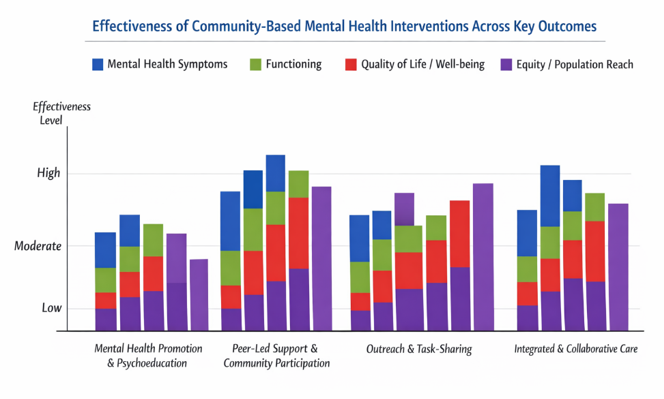
Figure 4. Effectiveness of Community-Based Mental Health Interventions Across Key Outcomes. The figure illustrates the effectiveness of four major community-based interventions (Mental Health Promotion and Psychoeducation, Peer-Led Support and Community Participation, Outreach and Task-Sharing, Integrated and Collaborative Care) across four outcome domains: mental health symptoms, functioning, quality of life/well-being, and equity/population reach. Effectiveness is rated on a three-level scale (Low, Moderate, High) based on synthesized evidence from recent systematic reviews and studies. This chart highlights that peer-led and integrated care models generally achieve the highest effectiveness across most outcomes, whereas psychoeducation and outreach models show moderate improvements depending on context.
Sources: Drafted from [1, 3, 5, 11, 20, 22, 23]
Mechanisms and Contextual Determinants of Effectiveness
Understanding why and how community‑based mental health interventions produce effects requires exploring the underlying mechanisms and the contextual factors that enable or constrain success. Evidence from recent reviews and empirical studies suggests that mechanisms such as social connectedness, stigma reduction, accessibility, cultural relevance, community engagement, and sustainability play central roles in determining outcomes across diverse settings. A core mechanism through which community interventions influence mental health is social connectedness and relational support. Participating in peer groups and shared community activities fosters a sense of belonging and mutual acceptance, which helps reduce feelings of isolation and supports psychological resilience [28, 29]. Qualitative research on peer support dynamics shows that trustful relationship building, group cohesion, and peer facilitation enable participants to feel understood and accepted, which contributes to improved self‑image and reduced self‑stigma over time. These relational mechanisms are often distinct from clinical treatment effects and highlight the unique value of community settings.
Another key mechanism is stigma reduction, which operates at multiple levels individual, interpersonal, and community. Community‑based psychosocial support interventions that engage local volunteers and lay supporters have been shown to reduce internalized and enacted stigma among people affected by infectious diseases and other conditions, while simultaneously improving psychosocial well‑being and quality of life [30, 31]. Because stigma often deters help‑seeking and social participation, interventions that successfully mitigate stigma can increase engagement with care and improve mental health outcomes. Interventions that integrate education, shared experiences, and community dialogues create normative shifts that challenge stigma and normalize help‑seeking behaviors. Accessibility and cultural relevance are contextual determinants that shape whether mechanisms such as connectedness and stigma reduction can be activated. Services located in familiar, non‑clinical community spaces (e.g., community centres, faith groups, schools) have been found to reduce fear and mistrust associated with formal mental health services, making support more approachable and less threatening [11]. Local adaptation including language use, cultural idioms of distress, and alignment with community values further enhances acceptability and relevance, particularly among marginalized populations [32]. When interventions resonate with local norms and practices, communities are more likely to engage, sustain participation, and derive meaning from activities.
Community engagement and ownership function as critical contextual determinants that influence both implementation and sustainability. Collaborative design approaches that involve community stakeholders including people with lived experience, local leaders, and service users in planning, delivery, and evaluation increase the likelihood that interventions will be accepted, supported, and maintained over time [28, 33]. Co‑creation frameworks emphasize shared decision‑making and local data use, which can strengthen readiness and accountability in community initiatives. Conversely, contexts with limited engagement, inadequate training, or insufficient structural support may hinder intervention effectiveness and uptake. Finally, sustainability factors such as training, resource allocation, and supportive policies determine whether mechanisms continue to operate beyond initial implementation phases. Studies indicate that adequate training for lay supporters and ongoing community involvement are essential to ensure that interventions remain effective and relevant [28, 30]. Mechanisms such as repeated social interaction, stigma reduction, and community ownership require continued activation over time; without appropriate contextual support, interventions may falter in achieving long‑term impact.
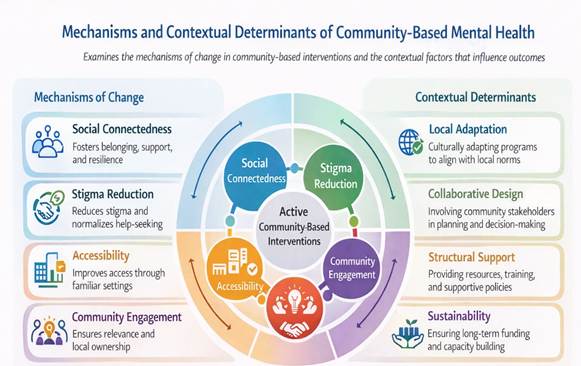
Figure 5. Key Mechanisms and Contextual Drivers of Community-Based Mental Health Interventions. The figure illustrates the key mechanisms and contextual determinants that influence the effectiveness of community-based mental health interventions. The central node represents active interventions, with arrows showing how mechanisms and contextual factors interact to enhance outcomes.
Source: Modified from [30, 31, 33]
Implementation Challenges and Policy Implications
Implementing community-based mental health interventions often encounters systemic, organisational, and contextual challenges that can limit their effectiveness and sustainability unless addressed through strategic policy support and implementation planning. A major barrier is the fragmentation of services and lack of coordinated care pathways. In high-income settings, psychosocial interventions for severe mental illness frequently operate in silos, leading to poor integration across mental health, social services, and primary care, which undermines continuity and holistic support for service users [34]. Policy reforms that incentivize integration across sectors and fund linkages between community programmes and formal health systems are critical to overcome this fragmentation. Another consistent implementation challenge is insufficient workforce capacity and training. Evidence from studies on community health worker and peer support models highlights that inadequate preparation, unclear role definitions, and limited supervision constrain programme delivery and reduce implementers’ confidence [22, 35]. For example, barriers in peer support implementation include role confusion, lack of certification standards, and organisational cultures that do not fully embrace recovery-oriented practices, which can lead to underutilisation of peer roles and higher attrition [22]. Strengthening workforce development through standardized training, supportive supervision, and clear career pathways is an essential policy priority.
Contextual and structural barriers also impede effective implementation in low- and middle-income settings. Socio-cultural norms, economic constraints, and limited infrastructure frequently reduce access, especially where transport, safety, and research capacity are weak [1]. In qualitative studies of community interventions, logistical obstacles such as transportation costs, lack of neutral and accessible venues, and unstable local governance were cited as major deterrents to participation [1]. These challenges underscore the need for policy mechanisms that address social determinants of health and provide resources for enabling environments. Financial sustainability is another pervasive challenge. Community health worker programmes often struggle with ongoing funding, with implementers reporting insufficient financing for long-term operations, supervisory support, and integration into reimbursement systems [35]. Policies that embed community support roles within national health budgets or include them in formal financing mechanisms such as insurance reimbursement can enhance the viability of these programmes.
Finally, stigma and socio-cultural barriers persist as obstacles at multiple implementation levels, affecting both uptake and retention in interventions. Broader societal factors such as mental health stigma, gender norms, and beliefs about traditional healing practices can limit participation and influence help-seeking behaviours [7, 35]. Comprehensive policy responses that include community education, anti-stigma campaigns, and culturally tailored interventions can reduce these barriers and support more equitable access. Addressing these implementation challenges requires coordinated efforts that align policy frameworks, financing structures, workforce strategies, and community engagement to support sustainable and scalable community-based mental health services.
Future Directions
Future research should focus on strengthening evidence quality and long-term evaluation of community-based mental health interventions. Many existing studies rely on short follow-up periods and heterogeneous outcome measures, limiting conclusions about sustained impact and scalability. Greater use of longitudinal designs, pragmatic trials, and standardized outcome frameworks is needed to improve comparability and policy relevance. Another key direction is the development of digital and hybrid community-based models. Combining in-person community engagement with digital platforms such as tele-mental health, mobile applications, and online peer support networks offers opportunities to expand access, particularly for youth and underserved populations. Future efforts should address digital equity, contextual adaptation, and ethical implementation to ensure effectiveness across diverse settings. Finally, scaling and sustainability should be central priorities. Implementation science approaches can help identify strategies for embedding successful interventions into existing health and social care systems. Stronger collaboration between communities, policymakers, and service providers will be essential to support adaptation, financing, and long-term integration of evidence-based community mental health models.
Community-based interventions represent a critical and effective approach to improving mental health outcomes by addressing social, cultural, and structural determinants of well-being. The evidence demonstrates that these interventions can reduce symptoms, enhance functioning, improve quality of life, and promote equity when appropriately designed and implemented. By leveraging mechanisms such as social connectedness, peer support, stigma reduction, and community engagement, community-based approaches complement formal mental health services and strengthen prevention and early intervention efforts. Their flexibility makes them particularly valuable in low-resource and underserved settings. Overall, community-based mental health interventions are essential to building inclusive, responsive, and sustainable mental health systems. Continued investment in rigorous evidence generation, innovation, and system integration will be key to maximizing their long-term impact.
Acknowledgement
We thank all the researchers who contributed to the success of this research work.
Conflict of Interest
The authors declared that there are no conflicts of interest.
Funding
No funding was received for this research work