REVIEW ARTICLE | DOI: https://doi.org/dx.doi.org/JNHHA/PP.0013
1 Department of Biological Sciences, College of Basic and Applied Sciences, Mountain Top University, Ibafo, Ogun State, Nigeria
2Department of Food Engineering, Faculty of Technology, Ile-Ife, Osun State.
3Department of Physical Science, Eastern New Mexico university, USA.
4Department of Biochemistry, Faculty of Biosciences, Federal University Wukari, Taraba State, Nigeria.
5ResearchHub Nexus Institute, Nigeria.
6Department of Chemical Sciences, Faculty of Science, Anchor University, Ayobo, Lagos State, Nigeria.
*Corresponding Author: Moses Adondua Abah
Citation: Okunbi Favour Onasokhare , Okeke Calistus Obinna , Ahinful Isaac Anku , Moses Adondua Abah , Micheal Oladosu Abimbola and Ochuele Dominic Agida (2026) Applications of Nanotechnology in Food Safety: A Review of Nanosensors and Nanomaterials for Foodborne Pathogen Detection, J. Nutrition and Human Health Advances, 2(5): dx.doi.org/JNHHA/PP.0013
Copyright  :
© 2026 Moses Adondua Abah. This is an open-access article distributed under the terms of the Creative Commons Attribution License, which permits unrestricted use, distribution, and reproduction in any medium, provided the original author and source are credited.
:
© 2026 Moses Adondua Abah. This is an open-access article distributed under the terms of the Creative Commons Attribution License, which permits unrestricted use, distribution, and reproduction in any medium, provided the original author and source are credited.
Received: 18 June 2026 | Accepted: 24 July 2026 | Published: 04 September 2026
Keywords: nanotechnology; food safety; foodborne pathogens; nanosensors; nanomaterials and pathogen detection
Foodborne pathogens remain a major global public health concern, contributing significantly to food contamination, disease outbreaks, and economic losses across food supply chains. Conventional detection methods, including culture-based, biochemical, and molecular techniques, often suffer from limitations such as long processing times, complex sample preparation, and inadequate sensitivity for rapid on-site monitoring. In recent years, nanotechnology has emerged as a transformative approach in food safety diagnostics due to its unique physicochemical properties, high surface-area-to-volume ratio, enhanced sensitivity, and rapid detection capabilities. This review critically examines the applications of nanotechnology in foodborne pathogen detection, with emphasis on nanosensors and functional nanomaterials employed in modern food safety systems. Various nanomaterials, including metallic nanoparticles, carbon-based nanostructures, quantum dots, and magnetic nanoparticles, are discussed in relation to their sensing mechanisms, selectivity, and analytical performance. The review further explores different nanosensor platforms, such as electrochemical, optical, fluorescent, colorimetric, and magnetic nanosensors, highlighting their applications in dairy products, meat, seafood, fresh produce, and packaged foods. In addition, recent advances in smart packaging, portable detection devices, lab-on-a-chip technologies, and AI-assisted nanosensing systems are evaluated as emerging tools for real-time monitoring and rapid pathogen identification. Despite remarkable progress, challenges associated with nanomaterial toxicity, regulatory approval, scalability, reproducibility, and commercialization remain significant barriers to widespread adoption. Overall, nanotechnology-based detection systems demonstrate substantial potential to improve food safety monitoring through rapid, sensitive, and reliable pathogen detection, thereby supporting the development of safer and more sustainable food systems worldwide.
Food safety is a major global public health concern due to the persistent burden of foodborne diseases caused by pathogenic microorganisms and toxins. Each year, contaminated food causes millions of illnesses, hospitalizations, and deaths, disproportionately affecting low- and middle-income countries with weak monitoring systems (World Health Organization, 2024). Common pathogens such as Escherichia coli, Salmonella spp., and Listeria monocytogenes are frequently linked to outbreaks in raw, processed, and ready-to-eat foods. Globalized supply chains, changing diets, and climate-related disruptions have further increased contamination risks across production and distribution systems (Velusamy et al., 2010). Therefore, there is a pressing need for rapid, sensitive, and reliable detection methods to prevent outbreaks and ensure food quality before consumption. The economic burden associated with foodborne diseases also places significant strain on healthcare systems and food industries globally, necessitating preventive technological interventions and policy planning strategies globally.
Conventional detection methods, including culture-based techniques, PCR, and immunological assays, are widely used due to their reliability and validation. However, they are often slow, labor-intensive, and require specialized laboratory infrastructure, limiting real-time or on-site application (Singh et al., 2013; Justino et al., 2016). Culture methods may take several days, while molecular and immunological assays require skilled personnel and controlled conditions (Velusamy et al., 2010). Food matrices such as meat and dairy may also interfere with detection accuracy, causing reduced sensitivity and false negatives (Inbaraj and Chen, 2016). These limitations highlight the need for rapid, cost-effective, and portable diagnostic tools. Biosensor-based technologies have thus emerged as promising alternatives offering faster response, higher sensitivity, and potential for miniaturization (Inbaraj and Chen, 2016; Justino et al., 2016).
Nanotechnology has significantly advanced food safety diagnostics by enabling highly sensitive biosensors with improved analytical performance. Nanomaterials possess unique properties such as high surface-area-to-volume ratio, tunable optical behavior, and excellent conductivity, enhancing signal detection (Khan, 2018). Materials including gold nanoparticles, carbon nanotubes, graphene derivatives, and magnetic nanoparticles are widely used in pathogen sensing platforms (Inbaraj and Chen, 2016). Electrochemical nanosensors are particularly notable for their sensitivity, rapid response, and portability (Bobrinetskiy et al., 2021). Additionally, bacteriophage-based and nanoparticle-assisted systems provide high specificity even at low pathogen concentrations (Singh et al., 2013). Recent developments integrate optical, fluorescent, and electrochemical mechanisms for multiplexed, real-time food contaminant detection (Jangid et al., 2025). Furthermore, integration of nanotechnology with microfluidic platforms and artificial intelligence-driven data analysis is increasingly being explored to enhance detection accuracy, automation, and real-time decision-making in food safety monitoring systems and field deployment applications.
Despite progress, nanotechnology-based pathogen detection faces several challenges. Interactions between nanomaterials and complex food matrices can reduce accuracy and reproducibility (Jangid et al., 2025). Concerns regarding nanotoxicity, environmental impact, scalability, and regulatory approval remain significant barriers to commercialization (Khan, 2018). Additionally, variability in sensor performance, stability issues, and lack of standardized protocols limit widespread adoption (Bobrinetskiy et al., 2021). Addressing these challenges requires interdisciplinary collaboration among scientists, engineers, and regulators to ensure safe and effective implementation in real-world food systems.
This review provides a comprehensive overview of nanotechnology-based approaches for foodborne pathogen detection, focusing on nanosensors and nanomaterials. It examines biosensing principles and the role of nanomaterials in improving sensitivity, specificity, and response time. It also evaluates electrochemical, optical, and bacteriophage-based nanosensors across food matrices such as dairy, meat, seafood, and produce. Emerging innovations, including portable devices and real-time monitoring systems, are discussed. Finally, the review highlights advantages, limitations, research gaps, and future directions for developing rapid, reliable, and commercially viable food safety technologies that enhance global public health protection. Particular emphasis is placed on translational challenges and the need for scalable manufacturing approaches to facilitate commercial adoption of these emerging diagnostic technologies in global food systems. Standardization of validation protocols and regulatory frameworks remains essential to ensure reliability,
reproducibility, and safety of nanotechnology-based diagnostic devices across diverse application contexts overall effectiveness.
Fundamentals of Nanotechnology in Foodborne Pathogen Detection
Nanotechnology has emerged as a transformative approach in food safety diagnostics by enabling the development of highly sensitive and rapid detection systems for foodborne pathogens. At the core of this advancement is the ability to manipulate materials at the nanoscale (1–100 nm), where unique physicochemical properties such as increased surface area, quantum effects, and enhanced reactivity significantly improve sensing performance (Poeta et al., 2023). These properties allow nanomaterials to interact efficiently with biological molecules, thereby enhancing the detection of pathogens at very low concentrations in complex food matrices.
Principles of Nanoscale Sensing and Biosensing
Nanoscale biosensing is based on the integration of a biological recognition element (such as antibodies, nucleic acids, enzymes, or bacteriophages) with a nanomaterial-based transducer that converts biological interactions into measurable signals. The high surface-to-volume ratio of nanomaterials increases the density of immobilized bioreceptors, thereby improving sensitivity and lowering detection limits (Shruti et al., 2024). In addition, nanoscale effects such as localized surface plasmon resonance (LSPR) and quantum confinement enhance optical and electrical signal responses, enabling real-time detection of pathogens with high accuracy (Rizzotto et al., 2023).
Electrochemical, optical, and piezoelectric nanosensors are among the most widely studied platforms. Electrochemical nanosensors measure changes in current, voltage, or impedance upon pathogen binding, while optical nanosensors rely on changes in fluorescence, absorbance, or scattering properties. These mechanisms allow rapid and label-free detection, making them highly suitable for food safety applications (Subramaniam and Velu, 2024).
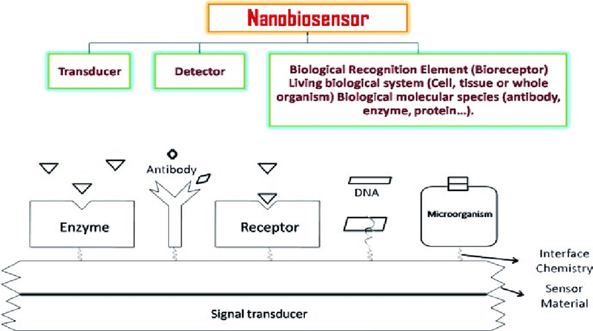
Figure 1.Principle of nanobiosensors. It illustrates the basic working principle of nanobiosensors used in foodborne pathogen detection. The system typically consists of a biorecognition element, such as antibodies, enzymes, or nucleic acids, integrated with nanomaterials that enhance signal sensitivity and detection efficiency. When target pathogens interact with the sensing surface, measurable electrical, optical, or colorimetric signals are generated for rapid and accurate analysis.
Source: Singh (2019)
Interaction of Nanomaterials with Biological Targets
The interaction between nanomaterials and biological targets is fundamental to pathogen detection. Nanoparticles can bind directly to microbial cell walls, nucleic acids, or proteins through electrostatic interactions, covalent bonding, or receptor–ligand recognition. For example, gold nanoparticles can be functionalized with antibodies or DNA probes to selectively bind Escherichia coli or Salmonella spp., producing measurable optical or electrochemical signals (Poeta et al., 2023).
Additionally, nanomaterials can enhance signal amplification by facilitating electron transfer or acting as catalytic labels. Magnetic nanoparticles are particularly useful for target isolation and sample pre-concentration, improving detection efficiency in complex food matrices such as milk, meat, and vegetables (Shruti et al., 2024). These interactions significantly improve sensitivity, specificity, and response time compared to conventional detection systems.
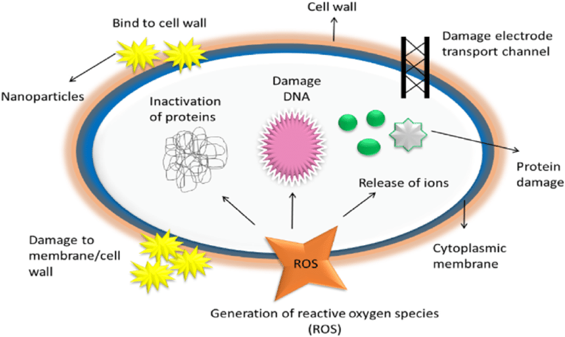
Figure 2.Schematic representation of nanoparticle interaction on microbial cells. It shows the interaction of nanoparticles with microbial cells, including attachment to the cell surface, membrane disruption, and intracellular interference. These interactions enhance microbial detection and contribute to improved sensitivity in nanotechnology-based biosensing systems.
Source: Ashfaq et al. (2022)
Major Foodborne Pathogens of Concern
Foodborne diseases are primarily caused by bacterial pathogens such as Salmonella spp., Escherichia coli (particularly O157:H7), Listeria monocytogenes, and Campylobacter jejuni. These microorganisms are responsible for a significant proportion of global foodborne illness outbreaks and are commonly associated with contaminated meat, dairy products, seafood, and fresh produce (World Health Organization, 2024).
Viruses such as norovirus and hepatitis A virus, as well as certain parasites like Toxoplasma gondii, also contribute to foodborne infections, although bacterial pathogens remain the primary focus of nanosensor-based detection systems due to their prevalence and public health impact (Rizzotto et al., 2023). The ability to detect these pathogens at early stages is critical for preventing large-scale outbreaks and reducing foodborne disease burden.
Nanomaterials Employed in Pathogen Detection
Nanomaterials have become central to modern foodborne pathogen detection due to their exceptional physicochemical properties, including high surface-area-to-volume ratio, tunable optical behavior, strong catalytic activity, and enhanced electrical conductivity. These properties enable improved sensitivity, faster response times, and lower detection limits compared to conventional analytical systems. Recent advances in nanotechnology have enabled the design of multifunctional biosensors capable of detecting pathogens such as Salmonella spp., Escherichia coli, and Listeria monocytogenes at very low concentrations in complex food matrices (Zheng et al., 2023; Shruti et al., 2024).
Metallic Nanoparticles (Gold, Silver, Platinum)
Metallic nanoparticles, particularly gold (AuNPs), silver (AgNPs), and platinum nanoparticles (PtNPs), are widely used in biosensing applications due to their strong surface plasmon resonance and excellent biocompatibility. Gold nanoparticles are especially prominent in colorimetric and optical biosensors, where aggregation-induced color changes enable rapid visual detection of pathogens (Park and You, 2024). Silver nanoparticles exhibit strong antimicrobial activity and enhanced signal amplification, making them suitable for dual-function detection systems. Platinum nanoparticles, though less commonly used, provide excellent catalytic activity for electrochemical sensing platforms. Recent studies highlight that noble metal nanoparticles improve signal transduction efficiency and allow label-free detection of foodborne bacteria in real time (Zheng et al., 2023). Their ability to be easily functionalized with antibodies, DNA probes, or aptamers further enhances selectivity and detection accuracy.
Carbon-Based Nanomaterials (Graphene, Carbon Nanotubes)
Carbon-based nanomaterials such as graphene, graphene oxide, reduced graphene oxide, and carbon nanotubes (CNTs) have gained significant attention due to their high electrical conductivity, mechanical strength, and large surface area. These properties make them highly effective in electrochemical biosensors for pathogen detection. Graphene-based platforms enable rapid electron transfer and highly sensitive signal detection, while CNTs enhance electrode conductivity and support biomolecule immobilization (Chen et al., 2024). In food safety applications, graphene derivatives have been used to detect bacterial contamination in dairy products, meat, and water samples with improved sensitivity and reduced detection time (Shruti et al., 2024). Additionally, carbon nanomaterials support multiplexed detection systems due to their ability to interact with multiple biomolecular targets simultaneously.
Quantum Dots and Fluorescent Nanomaterials
Quantum dots (QDs) are semiconductor nanocrystals that exhibit size-dependent fluorescence properties, high photostability, and strong signal brightness. These characteristics make them ideal for optical biosensing applications in food pathogen detection. QDs can be conjugated with antibodies or nucleic acid probes to detect specific bacterial strains through fluorescence emission changes. Fluorescent nanomaterials, including carbon dots and upconversion nanoparticles, have also been widely explored for their ability to provide real-time and highly sensitive detection signals (Yuan et al., 2023). Compared to traditional organic dyes, quantum dots offer superior stability and resistance to photobleaching, making them suitable for long-term monitoring of food safety conditions. Their multiplexing capability also allows simultaneous detection of multiple pathogens in a single assay (Chen et al., 2024).
Magnetic Nanoparticles and Nanocomposites
Magnetic nanoparticles, particularly iron oxide (Fe₃O₄) nanoparticles, are widely used in pathogen detection due to their ability to be manipulated by external magnetic fields. This property enables efficient separation, pre-concentration, and purification of target microorganisms from complex food matrices before detection. Magnetic nanoparticle-based biosensors enhance sensitivity by isolating pathogens from interfering substances in food samples, thereby improving detection accuracy (Adampourezare et al., 2023). Recent developments also include magnetic nanocomposites, which combine magnetic cores with conductive or optical materials to improve signal amplification and detection efficiency. These hybrid systems are increasingly used in electrochemical and immunosensing platforms for rapid foodborne pathogen detection (Zheng et al., 2023).
Table 1. Functional classification of nanomaterials in foodborne pathogen detection
Nanomaterials | Representative Materials | Role in Pathogen Detection |
Metallic nanoparticles
| Gold (AuNPs), Silver (AgNPs), Platinum (PtNPs) | Enable rapid optical/colorimetric readouts and enhanced electrochemical signal transduction for sensitive pathogen detection in food samples |
Carbon-based nanomaterials | Graphene, graphene oxide, carbon nanotubes (CNTs) | Enhance biosensor sensitivity by promoting efficient electron transfer and stable bioreceptor immobilization in complex food matrices |
Quantum dots and fluorescent nanomaterials | CdSe QDs, carbon dots, upconversion nanoparticles | Support ultra-sensitive fluorescence sensing and multiplex detection of foodborne pathogens in heterogeneous food systems |
Magnetic nanoparticles | Fe₃O₄, CoFe₂O₄ nanoparticles | Enable selective isolation and pre-concentration of pathogens from food matrices, improving downstream detection accuracy |
Nanocomposites | Hybrid systems (Au–graphene, CNT–Fe₃O₄, polymer-based hybrids) | Integrate optical, electrochemical, and magnetic functions to improve robustness, sensitivity, and real-time detection performance |
Nanosensor Platforms for Food Safety Applications
Nanosensor platforms have emerged as advanced analytical tools for rapid and sensitive detection of foodborne pathogens and contaminants. These systems integrate nanomaterials with biological recognition elements such as antibodies, enzymes, aptamers, and nucleic acids to convert biological interactions into measurable electrical, optical, or magnetic signals. Compared with conventional microbiological methods, nanosensors provide faster detection, improved sensitivity, portability, and lower detection limits for real-time food safety monitoring applications (Wang et al., 2023; Tarannum et al., 2024).
Electrochemical Nanosensors
Electrochemical nanosensors are among the most extensively studied biosensing platforms for food safety applications because of their high sensitivity, rapid response, and compatibility with miniaturized devices. These systems detect changes in electrical properties such as current, impedance, or voltage generated during interactions between pathogens and nanomaterial-modified electrodes. Nanomaterials including graphene, carbon nanotubes, metallic nanoparticles, and conductive polymers improve electron transfer efficiency and signal amplification, thereby enhancing analytical performance (Rizzotto et al., 2023). Recent advances in electrochemical biosensors have enabled rapid and selective detection of foodborne pathogens such as Escherichia coli, Salmonella spp., and Listeria monocytogenes in complex food matrices with significantly reduced assay time and low detection limits (Wang et al., 2023). Furthermore, the development of lab-on-a-chip electrochemical biosensors has improved portability and facilitated on-site food pathogen detection (Zolti et al., 2023). Electrochemical aptasensors and genosensors have also demonstrated enhanced specificity and stability through aptamer-based molecular recognition strategies (Nazari-Vanani and Negahdary, 2024).
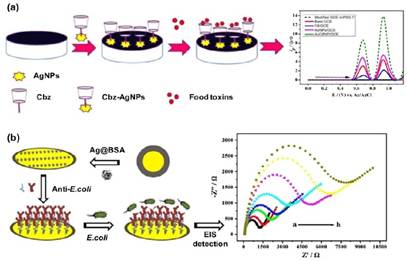
Figure 3.Silver nanoparticle based cbz for detection of food pollutant by electrochemical sensors. It depicts the application of silver nanoparticle-based electrochemical sensors for the detection of food pollutants. The incorporation of silver nanoparticles enhances electrical conductivity, signal amplification, and detection sensitivity, enabling rapid and accurate pollutant analysis in food samples.
Source: Tarannum et al. (2024)
Optical and Fluorescence-Based Nanosensors
Optical and fluorescence-based nanosensors detect pathogens through measurable changes in fluorescence intensity, absorbance, Raman scattering, or refractive index. These systems commonly employ quantum dots, noble metal nanoclusters, carbon dots, and plasmonic nanoparticles because of their excellent optical properties, high photostability, and tunable emission characteristics (Pan, 2024). Fluorescence-based nanosensors enable highly sensitive and multiplex detection of microbial contaminants in food systems, while surface-enhanced Raman scattering (SERS) platforms amplify optical signals for trace-level pathogen analysis (Pang et al., 2024). The integration of nanomaterials with optical biosensing technologies has therefore enhanced the sensitivity and accuracy of food contaminant detection systems (Tarannum et al., 2024).
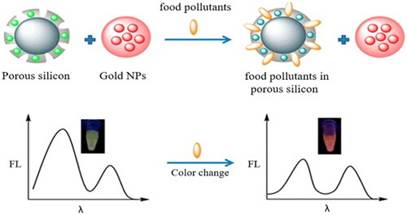
Figure 4.Nanoparticle based fluorescence sensors (‘turn-off’) fluorescence quenching, (‘turn-on’) fluorescence amplification, and (FRET) fluorescence resonance energy transfer for detection of food pollutants.
Source: Tarannum et al. (2024)
Colorimetric and Plasmonic Nanosensors
Colorimetric nanosensors provide rapid visual detection of pathogens through observable color changes induced by nanoparticle aggregation or localized surface plasmon resonance effects. Gold and silver nanoparticles are widely employed because of their distinct plasmonic properties and ease of surface functionalization. These sensors are advantageous for field and point-of-care applications because they require minimal instrumentation and allow rapid interpretation of results. Plasmonic nanostructures significantly improve biosensing sensitivity by enhancing optical signal transduction during pathogen-binding events (Anker et al., 2008). Recent developments in nanomaterial-based colorimetric sensing systems have further improved rapid food contaminant detection and real-time monitoring capabilities (Tarannum et al., 2024).
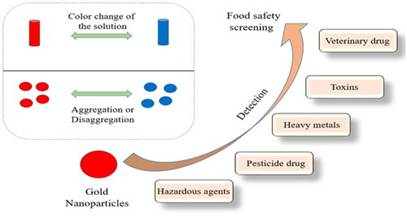
Figure 5.Nanoparticle based colorimetric sensors for food safety screening test significantly shifting the absorption band to red and changing the colour to blue. It demonstrates the working mechanism of nanoparticle-based colorimetric sensors used in food safety screening. Interaction with target contaminants causes a shift in the absorption band from red to blue, producing a visible color change that enables rapid and simple detection.
Source: Tarannum et al. (2024)
Magnetic and Immuno-Nanosensors
Magnetic nanosensors utilize magnetic nanoparticles, particularly iron oxide nanoparticles, to isolate and concentrate pathogens from complex food matrices before detection. This pre-concentration process minimizes matrix interference and improves analytical sensitivity. Immuno-nanosensors combine antibodies or aptamers with nanomaterials to achieve selective recognition of target microorganisms. Hybrid magnetic–electrochemical systems have demonstrated enhanced specificity and rapid detection efficiency for foodborne pathogens in contaminated food products (Nazari-Vanani and Negahdary, 2024). The incorporation of multifunctional nanomaterials into biosensing platforms has also improved sensor stability, selectivity, and overall diagnostic performance in food safety applications (Tarannum et al., 2024).
Applications in Food Safety Monitoring
Nanotechnology-based biosensors and nanosensing platforms have gained considerable attention in food safety monitoring because of their rapid response, high sensitivity, portability, and ability to operate in complex food matrices. These systems have been increasingly applied across diverse food categories, including dairy products, meat, seafood, fresh produce, and ready-to-eat foods, while also supporting the development of intelligent packaging and portable detection devices for real-time food quality assessment.
Detection in Dairy Products
Dairy products are highly susceptible to microbial contamination because of their rich nutrient composition and moisture content. Foodborne pathogens such as Listeria monocytogenes, Escherichia coli, and Salmonella spp. are commonly associated with milk, cheese, and yogurt products. Nanobiosensors based on electrochemical, fluorescence, and optical detection mechanisms have demonstrated rapid and highly sensitive detection of microbial contaminants in dairy matrices. Noble metal nanocluster-based optical nanosensors and electrochemical biosensors have shown improved sensitivity and lower detection limits for identifying pathogenic bacteria in milk products, thereby reducing analysis time compared with conventional microbiological methods (Wang et al., 2023; Pang et al., 2024). Portable nanosensing systems have also improved on-site monitoring of dairy safety during processing and storage.
Detection in Meat and Poultry
Meat and poultry products are major reservoirs for foodborne pathogens due to contamination during slaughtering, handling, transportation, and storage. Nanotechnology-based detection systems have significantly improved rapid screening of pathogens such as Campylobacter, Salmonella, and Listeria in raw and processed meat products. Electrochemical nanosensors integrated with aptamers and nanomaterial-modified electrodes provide enhanced selectivity and rapid pathogen identification in meat samples (Nazari-Vanani and Negahdary, 2024). In addition, smart nanosensors incorporated into packaging systems enable continuous monitoring of spoilage gases, microbial growth, and freshness indicators during storage and distribution (Heo and Lim, 2024).
Detection in Seafood and Water Samples
Seafood and water samples are highly vulnerable to microbial contamination and toxin accumulation because of environmental exposure and poor storage conditions. Nanomaterial-based optical and electrochemical biosensors have been widely applied for rapid detection of pathogenic microorganisms and contaminants in seafood products. Surface-enhanced Raman scattering (SERS) nanosensors and fluorescence-based systems have demonstrated high sensitivity for detecting bacterial contamination and spoilage indicators in fish and shellfish products (Pan, 2024; Pang et al., 2024). Portable nanosensor platforms have further improved water quality monitoring through rapid on-site detection of microbial pathogens and hazardous contaminants in aquatic environments.
Detection in Fruits, Vegetables, and Ready-to-Eat Foods
Fresh fruits, vegetables, and ready-to-eat foods are increasingly associated with foodborne disease outbreaks due to contamination during harvesting, processing, packaging, and retail handling. Nanosensor technologies have enabled rapid identification of pathogens, pesticide residues, and spoilage biomarkers in fresh produce. Optical nanosensors, colorimetric biosensors, and electrochemical sensing platforms provide sensitive detection of contaminants in minimally processed foods while reducing sample preparation requirements (Tarannum et al., 2024). The integration of nanotechnology into food packaging materials has also improved microbial monitoring and shelf-life assessment in ready-to-eat products (Herrera-Rivera et al., 2024).
Smart Packaging and Real-Time Monitoring Systems
Smart packaging systems represent one of the most significant applications of nanosensor technology in food safety. These systems integrate nanosensors, gas indicators, biosensors, and intelligent monitoring devices into food packaging materials to provide real-time information about food quality, freshness, and microbial contamination. Intelligent packaging technologies can detect changes in oxygen concentration, carbon dioxide levels, pH, temperature, and volatile spoilage compounds during storage (Chiu et al., 2024). Recent developments in nano-enabled smart packaging have improved shelf-life monitoring, traceability, and contamination detection in packaged foods (Bhatlawande et al., 2024). Gas sensors and spoilage indicators incorporated into packaging films, labels, and sachets further support rapid assessment of food deterioration and microbial growth (Heo and Lim, 2024).
Portable and Point-of-Care Detection Devices
Portable and point-of-care nanosensing devices have transformed food safety diagnostics by enabling rapid, on-site detection of pathogens without the need for sophisticated laboratory infrastructure. Lab-on-a-chip biosensors, smartphone-integrated nanosensors, paper-based analytical devices, and portable electrochemical systems provide real-time detection of food contaminants in field conditions. These technologies are particularly valuable in food processing facilities, supply chains, and resource-limited environments because they reduce assay time, operational cost, and dependence on centralized laboratories (Zolti et al., 2023). Battery-free and autonomous smart sensing systems have further enhanced real-time monitoring capabilities through wireless sensing and integrated food quality assessment technologies (Douaki et al., 2025).
Table 2. Applications of nanosensor platforms in food safety monitoring
Food Category | Common target | Nanosensor Platform | Monitoring function |
Dairy products | Listeria monocytogenes, Escherichia coli, Salmonella spp. | Electrochemical and optical nanosensors | Detection of microbial contamination in milk and dairy products |
Meat and poultry | Campylobacter spp., Salmonella spp., Listeria spp. | Electrochemical aptasensors and smart packaging sensors | Monitoring of pathogen contamination and spoilage |
Seafood and water samples | Vibrio species, microbial toxins | Fluorescence-based and SERS nanosensors | Detection of microbial contaminants and spoilage indicators |
Fruits and vegetables | Pathogenic bacteria, pesticide residues | Colorimetric and optical nanosensors | Detection of contaminants on fresh produce |
Ready-to-eat foods | Microbial contaminants and spoilage organisms | Electrochemical and immuno-nanosensors | Monitoring of microbial safety in processed foods |
Smart packaging systems | Spoilage gases, pH changes, microbial metabolites | Embedded nanosensors and gas sensors | Real-time monitoring of food freshness and storage conditions |
Portable detection devices | Foodborne pathogens and contaminants | Lab-on-a-chip and smartphone-based nanosensors | On-site and rapid food safety analysis |
Advantages, Limitations, and Safety Concerns
Nanotechnology-based biosensors have improved food safety monitoring through rapid detection, high analytical sensitivity, and low detection limits compared with conventional microbiological methods. The unique electrical, optical, and catalytic properties of nanomaterials enhance signal amplification and improve detection efficiency for foodborne pathogens in complex food matrices (Wang et al., 2023). In addition, nanosensor platforms support multiplex detection and real-time monitoring of multiple contaminants simultaneously, while portable and smart packaging systems enable continuous assessment of food freshness and microbial spoilage during storage and transportation (Zolti et al., 2023; Heo and Lim, 2024).
Despite these advantages, several technical and safety concerns limit large-scale application. Certain nanomaterials may exhibit cytotoxicity, oxidative stress induction, and environmental persistence, raising concerns regarding their potential impact on human health and ecosystems (Yaqoob et al., 2020). Sensor stability, reproducibility, and scalability also remain significant challenges because variations in nanomaterial synthesis and surface functionalization can affect analytical performance and consistency (Rizzotto et al., 2023). Furthermore, commercialization of nanosensor technologies is constrained by high production costs, limited standardization protocols, and the absence of harmonized regulatory frameworks for nanomaterial-based food safety systems (Tarannum et al., 2024). Continued interdisciplinary research and regulatory development are therefore necessary to ensure the safe and reliable integration of nanotechnology into food safety monitoring applications.
Emerging Trends and Future Perspectives
Recent advances in nanosensor technology are driving the development of intelligent and highly integrated food safety monitoring systems. Artificial intelligence (AI)-assisted biosensors and smartphone-integrated nanosensing platforms are increasingly being explored for rapid signal interpretation, automated pathogen analysis, and real-time food quality assessment. The incorporation of AI algorithms into biosensing systems improves analytical accuracy, data processing efficiency, and predictive monitoring of foodborne contaminants, while smartphone-based devices enhance portability and field applicability for point-of-care food diagnostics (Banicod et al., 2025). Furthermore, intelligent biosensing platforms integrating advanced nanomaterials and automated sensing technologies are expected to improve future foodborne pathogen surveillance and healthcare applications (Assudani et al., 2026). Lab-on-a-chip and microfluidic technologies are also transforming food safety diagnostics by enabling miniaturized, automated, and multiplex pathogen detection systems. These platforms integrate sample preparation, separation, and biosensing processes into compact devices with reduced reagent consumption and shorter detection time. Recent microfluidic biosensors have demonstrated improved sensitivity and rapid detection of foodborne pathogenic bacteria in complex food matrices, making them promising tools for real-time and on-site food safety monitoring (Zhang et al., 2025). In addition, biosensors for detecting food contaminants continue to evolve toward portable, user-friendly, and high-throughput analytical systems for industrial applications (Inês and Cosme, 2025).
Sustainability has also become an important focus in nanotechnology research, leading to increasing interest in biodegradable and eco-friendly nanomaterials for food packaging and sensing applications. Biodegradable nanomaterials derived from renewable polymers such as starch, cellulose, and chitosan offer improved biocompatibility and reduced environmental impact compared with conventional metallic nanoparticles (Mishra et al., 2024). Nevertheless, metallic and metal-decorated nanomaterials continue to attract attention because of their enhanced catalytic, optical, and antimicrobial properties in biosensing applications (Yaqoob et al., 2020). Another emerging innovation is the integration of CRISPR/Cas systems with nanobiosensors for highly selective and rapid detection of foodborne pathogens. CRISPR-based biosensors combined with electrochemical and fluorescence transduction mechanisms have demonstrated exceptional specificity, sensitivity, and rapid nucleic acid detection capabilities in food safety diagnostics (Xie et al., 2024). Future industrial and commercial adoption of nanosensor technologies will depend on improvements in cost-effectiveness, large-scale manufacturing, sensor stability, and regulatory standardization. Advances in smart sensing systems, portable analytical devices, and intelligent packaging technologies are expected to accelerate commercialization and strengthen real-time food safety monitoring across global food supply chains.
Nanotechnology has emerged as a transformative approach in food safety monitoring through the development of highly sensitive, rapid, and portable biosensing systems for detecting foodborne pathogens and contaminants. The integration of advanced nanomaterials with electrochemical, optical, magnetic, and fluorescence-based sensing platforms has significantly improved analytical performance, enabling real-time monitoring across diverse food matrices including dairy products, meat, seafood, fresh produce, and ready-to-eat foods. Emerging innovations such as smart packaging systems, lab-on-a-chip devices, AI-assisted biosensors, and CRISPR-based nanosensing technologies further demonstrate the growing potential of nano-enabled diagnostics in modern food safety management.
Despite these advancements, challenges related to nanomaterial toxicity, environmental impact, sensor stability, scalability, and regulatory standardization continue to limit large-scale industrial adoption. Addressing these limitations will require interdisciplinary collaboration, improved safety assessment strategies, and the development of cost-effective and sustainable nanomaterials. Continued progress in intelligent sensing technologies, portable diagnostic devices, and automated monitoring systems is expected to accelerate commercialization and strengthen global food safety surveillance. Overall, nanotechnology-based biosensors hold substantial promise for enhancing rapid pathogen detection, improving food quality assurance, and supporting safer and more sustainable food systems worldwide.
Acknowledgement
We thank all the researchers who contributed to the success of this research work.
Conflict of Interest
The authors declared that there are no conflicts of interest.
Funding
No funding was received for this research work.
Significance of the Study
The significance of this study lies in its comprehensive evaluation of how nanotechnology particularly nanosensors and nanomaterials can revolutionize the detection of foodborne pathogens, thereby greatly enhancing food safety. By highlighting the sensitivity, specificity, and rapid response capabilities of nanoscale devices, this review underscores the potential for early and accurate identification of contaminants in the food supply chain. Such advancements can lead to faster outbreak prevention, reduced public health risks, and improved consumer confidence in food products. Moreover, the study provides valuable insights for researchers, industry stakeholders, and policy makers aiming to implement cutting-edge technologies that ensure food quality and safety in an increasingly complex global food system.