REVIEW ARTICLE | DOI: https://doi.org/dx.doi.org/JNHHA/PP.0012
1Department of International Public Health, Liverpool School of Tropical Medicine, Pembroke Place, Liverpool, L3 5QA, United Kingdom.
2 Department of Pharmacy and Health and Nutrition Sciences, University of Calabria, Rende, Italy.
3 Department of Physical Science, Eastern New Mexico University, USA.
4 Department of Biochemistry, Faculty of Biosciences, Federal University Wukari, Taraba State, Nigeria.
5 ResearchHub Nexus Institute, Nigeria.
6 Department of Chemical Sciences, Faculty of Science, Anchor University, Ayobo, Lagos State, Nigeria.
*Corresponding Author: Moses Adondua Abah
Citation: : Onuorah Uju Maryanne, Ahinful Isaac Anku, Moses Adondua Abah, Micheal Oladosu Abimbola and Ochuele Dominic Agida (2026) Food Policy and Nutrition Outcomes in Vulnerable Populations: A Review of Current Evidence and Future Directions, J. Nutrition and Human Health Advances, 2(4): dx.doi.org/JNHHA/PP.0012
Copyright  :
© 2026 Moses Adondua Abah. This is an open-access article distributed under the terms of the Creative Commons Attribution License, which permits unrestricted use, distribution, and reproduction in any medium, provided the original author and source are credited.
:
© 2026 Moses Adondua Abah. This is an open-access article distributed under the terms of the Creative Commons Attribution License, which permits unrestricted use, distribution, and reproduction in any medium, provided the original author and source are credited.
Received: 09 June 2026 | Accepted: 16 August 2026 | Published: 21 August 2026
Keywords: food policy; nutrition outcomes; vulnerable populations; food security; malnutrition; and public health nutrition
Food policy plays a critical role in shaping nutrition outcomes, particularly among vulnerable populations disproportionately affected by food insecurity, malnutrition, and diet-related diseases. This review examines current evidence on the relationship between food policies and nutritional outcomes in low-income households, children, women, rural communities, and other nutritionally at-risk groups. The review explores major policy interventions, including fiscal measures such as food taxes and subsidies, food assistance and social protection programs, food fortification initiatives, nutrition labeling, and regulations targeting unhealthy food environments. Evidence indicates that well-designed food policies can improve dietary diversity, reduce micronutrient deficiencies, enhance food security, and lower the risk of obesity and noncommunicable diseases. School feeding programs, cash transfer schemes, and mandatory fortification strategies have demonstrated notable positive impacts on maternal and child nutrition outcomes in several settings. However, the effectiveness of these policies is often constrained by poverty, weak governance, political and commercial influences, unequal food access, and climate-related disruptions to food systems. The review further highlights the importance of culturally appropriate, equity-centered, and multisectoral approaches in addressing persistent nutritional disparities. Emerging trends such as sustainable food systems, digital nutrition monitoring, and community-driven interventions are also discussed as promising directions for future policy development. Overall, the evidence suggests that integrated and context-specific food policies are essential for improving nutrition outcomes among vulnerable populations. Strengthening implementation, monitoring, and cross-sector collaboration will be critical for achieving long-term nutritional equity and global public health goals.
Food insecurity and malnutrition remain major global public health challenges, particularly among vulnerable populations exposed to poverty, conflict, inequality, and limited access to nutritious foods (FAO et al., 2024). Although global food production has improved, millions of people still experience hunger and poor dietary quality, especially in low- and middle-income countries with fragile food systems and economic instability (World Bank, 2023). Recent evidence shows that many households cannot afford healthy diets, increasing the prevalence of undernutrition, micronutrient deficiencies, obesity, and diet-related diseases (Herforth et al., 2020). Children, pregnant women, displaced populations, and rural communities remain disproportionately affected due to persistent inequalities in food accessibility and affordability (UNICEF, 2024).
The burden of malnutrition is increasingly characterized by the coexistence of undernutrition and obesity, commonly described as the “double burden” of malnutrition (Swinburn et al., 2019). This trend is strongly linked to dietary transitions driven by industrialized food systems and increased consumption of ultra-processed foods (Baker et al., 2020). Such foods are often inexpensive, highly accessible, and nutrient-poor, making vulnerable populations more susceptible to obesity and noncommunicable diseases alongside nutrient deficiencies (Baker et al., 2020). Consequently, international health agencies continue to emphasize healthy dietary patterns and sustainable nutrition strategies as essential components of disease prevention and public health improvement (WHO, 2026).
Food policy has therefore become an important tool for improving nutrition outcomes and reducing food-related inequalities. Food policies include government and institutional actions that regulate food production, pricing, distribution, marketing, and consumption patterns (Ruel et al., 2018). Evidence suggests that nutrition-sensitive policies such as food subsidies, school feeding programs, food fortification, and taxation of unhealthy food products can improve dietary diversity and food security among vulnerable populations (Hawkes et al., 2020). In addition, integrated “double-duty actions” that simultaneously target undernutrition, obesity, and micronutrient deficiencies are increasingly recognized as effective approaches for addressing multiple forms of malnutrition within rapidly changing food systems (Hawkes et al., 2020).
Despite growing attention to nutrition policy, major barriers continue to limit policy effectiveness in many settings. Weak governance systems, inadequate infrastructure, poor monitoring frameworks, and commercial influences from the food industry often reduce the success of nutrition interventions, particularly in low-resource regions (Baker et al., 2020). Furthermore, global crises such as the COVID-19 pandemic exposed vulnerabilities in food and health systems, contributing to increased childhood malnutrition and nutrition-related mortality (Headey et al., 2020). Climate change, inflation, and displacement also continue to intensify food insecurity and nutritional inequalities worldwide (UNICEF et al., 2024). These challenges highlight the growing need for resilient, equitable, and multisectoral food policy approaches.
This review examines the relationship between food policy and nutrition outcomes among vulnerable populations through a synthesis of current evidence and emerging policy directions. The review focuses on major food policy interventions, including fiscal policies, food assistance programs, food fortification strategies, and regulatory measures that influence dietary behaviors and nutritional health. Particular attention is given to vulnerable groups disproportionately affected by food insecurity and malnutrition, such as children, women, low-income households, rural populations, and displaced communities. The review also explores how structural inequalities, governance limitations, climate-related disruptions, and socioeconomic conditions influence the effectiveness of food policies across different contexts. In addition, the paper evaluates evidence regarding the impact of these interventions on food security, dietary diversity, micronutrient deficiencies, obesity, and maternal and child nutrition outcomes. Emerging approaches such as sustainable food systems, nutrition-sensitive interventions, digital monitoring systems, and equity-centered policy frameworks are further discussed as promising directions for improving future nutrition outcomes. Ultimately, this review aims to provide a comprehensive understanding of how evidence-based and context-specific food policies can contribute to equitable, sustainable, and resilient nutrition systems globally.
Food Policy Frameworks and Nutrition Pathways
Food policy frameworks consist of governmental and institutional strategies designed to influence food production, distribution, affordability, accessibility, and consumption patterns in ways that improve public health and nutrition outcomes. Contemporary food policies increasingly recognize that malnutrition is shaped not only by insufficient food supply but also by broader social, economic, and environmental determinants embedded within food systems (Ruel et al., 2018). As a result, food policy approaches have expanded beyond agricultural productivity to include nutrition-sensitive interventions aimed at improving dietary quality, reducing health inequalities, and strengthening food security among vulnerable populations (Wang et al., 2022). Effective food policy frameworks therefore require coordinated action across multiple sectors, including agriculture, healthcare, education, trade, and social protection systems (Wang et al., 2022).
Food policies are commonly categorized into fiscal policies, food assistance and social protection programs, food regulatory policies, and food environment interventions. Fiscal measures such as taxes on unhealthy foods and subsidies for nutritious foods are intended to influence consumer purchasing behaviors and improve dietary patterns, particularly among low-income populations (Løvhaug et al., 2022). Food assistance programs, including school feeding initiatives, food subsidies, and nutrition interventions targeting disadvantaged households, have also demonstrated positive effects on food access and nutritional status (Black et al., 2012; Norris et al., 2023). In addition, regulatory policies such as front-of-pack labeling, mandatory food fortification, and restrictions on unhealthy food marketing are increasingly used to encourage healthier food choices and reduce nutrition-related diseases (Burgaz et al., 2023). Food environment policies further aim to improve access to healthy diets by addressing inequalities associated with urban poverty, food deserts, and limited availability of nutritious foods in vulnerable communities (Vilar-Compte et al., 2021).
The relationship between food policy and nutrition outcomes operates through interconnected pathways involving food availability, affordability, accessibility, and dietary behavior. Policies that increase access to affordable and nutritious foods can improve dietary diversity and reduce food insecurity among vulnerable households (Ruel et al., 2018). Similarly, school feeding programs and targeted nutrition interventions can improve nutrient intake and support healthier growth and development among children and adolescents (Norris et al., 2023). Evidence also indicates that food environment policies can positively influence population diets by promoting healthier food purchasing patterns and reducing consumption of unhealthy products (Hansen et al., 2022). These interventions are particularly important in the context of the global nutrition transition, where increased consumption of ultra-processed foods has contributed to rising rates of obesity and diet-related noncommunicable diseases worldwide (Baker et al., 2020).
Despite growing evidence supporting food policy interventions, several structural and socioeconomic factors continue to limit their effectiveness. Poverty, low educational attainment, geographic isolation, and weak governance systems often reduce access to healthy diets among disadvantaged populations (Vilar-Compte et al., 2021). Furthermore, the widespread availability and aggressive marketing of ultra-processed foods continue to undermine public health nutrition goals, especially in low-income settings where inexpensive unhealthy foods are more accessible than nutritious alternatives (Baker et al., 2020). Recent evidence also emphasizes that food policies must simultaneously address nutrition, social equity, and environmental sustainability to achieve long-term effectiveness (Burgaz et al., 2023). Consequently, modern food policy frameworks increasingly prioritize resilience, sustainability, and equity-centered approaches capable of improving nutrition outcomes while addressing broader food system inequalities.
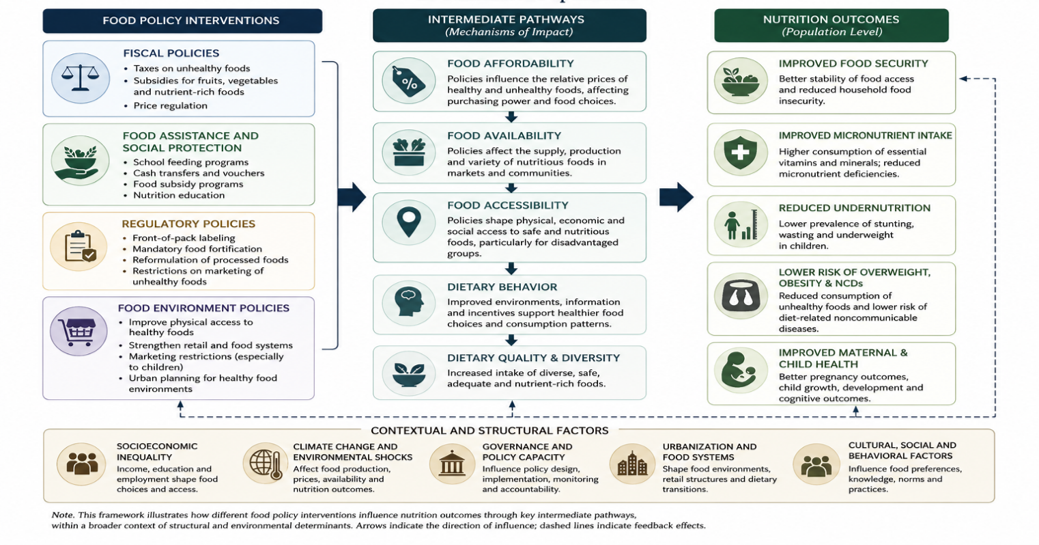
Figure 1: Conceptual framework linking food Policy interventions to nutrition outcomes in vulnerable populations. The framework illustrates the major pathways through which food policy interventions influence nutrition outcomes among vulnerable populations through changes in food affordability, accessibility, dietary behavior, and food environments.
Source: Adapted from Ruel et al. (2018); Wang et al. (2022) and Burgaz et al. (2023).
Food Policy Interventions and Nutrition Outcomes in Vulnerable Populations
Food policy interventions are increasingly recognized as essential tools for improving nutrition outcomes and reducing health inequalities among vulnerable populations. These interventions influence dietary behaviors, food accessibility, affordability, and food environments through coordinated actions across health, agriculture, education, and social protection systems (Wang et al., 2022). Current evidence demonstrates that effective food policies can improve food security, dietary diversity, maternal and child nutrition, and reduce the burden of obesity and diet-related noncommunicable diseases when appropriately implemented and supported by strong governance systems (Burgaz et al., 2023). However, the effectiveness of these interventions often varies according to socioeconomic conditions, policy enforcement capacity, and the structural characteristics of local food systems.
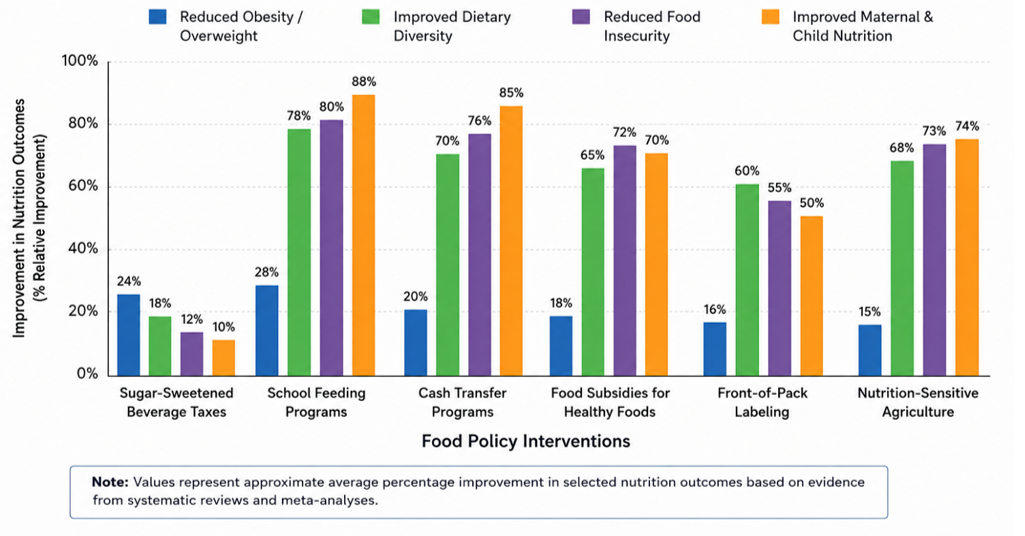
Figure 2: Comparative impact of major food policy interventions on nutrition outcomes in vulnerable populations. The chart presents a comparative overview of the relative effectiveness of major food policy interventions in improving nutrition outcomes among vulnerable populations based on evidence from recent systematic reviews and global nutrition reports. School feeding programs, cash transfer interventions, and nutrition-sensitive agricultural policies demonstrate the strongest positive impacts on food security, dietary diversity, and maternal-child nutrition, while fiscal and regulatory measures contribute significantly to healthier dietary behaviors and reduction of diet-related diseases
Sources: Adapted from Afshin et al. (2017); de Groot et al. (2017); Taillie et al. (2020); Andreyeva et al. (2022); Norris et al. (2023); WFP (2025)
Fiscal and Economic Policies
Fiscal and economic policies are among the most widely implemented food policy strategies aimed at improving population diets and nutrition outcomes. These interventions primarily include sugar-sweetened beverage taxes, subsidies for healthy foods, food pricing regulations, and economic incentives designed to encourage healthier dietary choices (Andreyeva et al., 2022). Evidence from systematic reviews and meta-analyses indicates that taxes on sugary beverages and ultra-processed foods significantly reduce purchases and consumption of unhealthy products associated with obesity, diabetes, and cardiovascular diseases (Andreyeva et al., 2022). Similarly, subsidies targeting fruits, vegetables, and other nutrient-rich foods improve affordability and increase healthy food consumption, particularly among low-income households that are highly sensitive to food prices (Afshin et al., 2017).
These fiscal interventions have demonstrated important nutrition outcomes in vulnerable populations by improving dietary quality and reducing consumption of energy-dense processed foods. Nevertheless, socioeconomic inequalities continue to influence policy effectiveness because many disadvantaged communities remain exposed to unhealthy food environments where ultra-processed foods are cheaper and more accessible than healthier alternatives (Vilar-Compte et al., 2021). The global expansion of ultra-processed food systems has further accelerated unhealthy dietary transitions and increased obesity prevalence worldwide (Baker et al., 2020). Consequently, evidence suggests that fiscal measures are most effective when integrated with complementary food environment regulations, nutrition education, and broader social protection policies (Løvhaug et al., 2022).
Social Protection and Food Assistance Programs
Social protection and food assistance programs are critical interventions for improving food security and nutrition outcomes among vulnerable populations. These policies include school feeding programs, conditional cash transfers, food voucher systems, nutrition-sensitive safety nets, and targeted maternal-child nutrition interventions (Norris et al., 2023). Evidence indicates that these programs significantly improve household food access, dietary diversity, and nutritional intake when adequately funded and appropriately targeted toward disadvantaged groups (de Groot et al., 2017).
School feeding interventions are particularly important because they simultaneously address child nutrition, educational participation, and social protection goals. According to the World Food Programme, school feeding programs contribute substantially to improved nutrient intake, cognitive performance, and school attendance among children in low-resource settings where school meals often represent the most reliable source of daily nutrition (WFP, 2025). Cash transfer programs have also shown positive effects on maternal and child nutrition by increasing household purchasing power and improving access to nutritious foods (de Groot et al., 2017). Furthermore, integrated nutrition assistance programs combining healthcare, sanitation, and nutrition education have demonstrated stronger long-term nutrition outcomes than isolated interventions alone (Norris et al., 2023). Despite these benefits, persistent poverty, inflation, and food system instability continue to limit the sustainability and reach of many social protection programs globally (FAO et al., 2024).
Regulatory and Food Environment Policies
Regulatory and food environment policies are increasingly used to reduce unhealthy dietary behaviors and improve public nutrition outcomes. These interventions include front-of-pack nutrition labeling, mandatory food reformulation, restrictions on unhealthy food marketing, trans-fat elimination policies, and regulations targeting ultra-processed foods (Hansen et al., 2022). Evidence demonstrates that front-of-pack warning labels significantly improve consumer awareness and reduce purchase intentions for products high in sugar, salt, and unhealthy fats (Taillie et al., 2020). Such interventions are particularly beneficial in populations with limited nutrition literacy because simplified labeling systems facilitate healthier purchasing decisions.
Policies aligned with the World Health Organization “Best Buys” for noncommunicable disease prevention have also contributed to improved dietary behaviors and reduced exposure to unhealthy foods, particularly among children and adolescents (Allen et al., 2018). Restrictions on unhealthy food advertising and mandatory reformulation policies have been associated with reduced intake of harmful nutrients and lower risk of obesity and cardiovascular diseases. However, growing commercial influence from transnational food corporations continues to challenge the implementation of effective public health nutrition policies (Moodie et al., 2021). Aggressive marketing practices, political lobbying, and expansion of ultra-processed food markets disproportionately affect vulnerable populations where unhealthy processed foods dominate local food environments (Moodie et al., 2021). Strengthening regulatory governance therefore remains essential for improving nutrition equity and protecting population health.
Nutrition-Sensitive Agriculture and Community-Based Interventions
Nutrition-sensitive agriculture and community-based interventions are increasingly recognized as sustainable approaches for improving long-term nutrition outcomes among vulnerable populations. Unlike conventional agricultural policies focused primarily on food production, nutrition-sensitive agriculture integrates nutritional objectives into food systems by promoting dietary diversity, micronutrient-rich foods, and equitable food access (Ruel et al., 2018). Interventions such as crop diversification, home gardening, biofortification, livestock integration, and women-centered agricultural programs have demonstrated positive effects on household food security and dietary quality, particularly in rural communities (Ruel et al., 2018).
Community-based interventions further strengthen nutrition outcomes by incorporating culturally appropriate approaches, Indigenous knowledge systems, and participatory decision-making processes. A systematic review by Browne et al. (2020) found that culturally tailored food policy interventions improved dietary behaviors and strengthened food system resilience among Indigenous populations when communities were actively involved in policy development and implementation. Additionally, nutrition-sensitive agricultural interventions can enhance resilience to food system shocks associated with climate change, economic instability, and supply chain disruptions (Béné et al., 2020). Nevertheless, challenges such as weak infrastructure, inadequate agricultural support services, poverty, and poor policy coordination continue to constrain the long-term effectiveness of many community nutrition programs (Wang et al., 2022).
Overall, current evidence demonstrates that integrated food policy interventions can substantially improve nutrition outcomes among vulnerable populations when implemented through coordinated, equity-centered, and multisectoral approaches. However, achieving sustainable nutrition improvements requires stronger governance systems, effective policy enforcement, community participation, and long-term investment in resilient food systems capable of addressing both undernutrition and the growing burden of diet-related diseases globally.
Table 1: Summary of major food policy interventions and nutrition outcomes in vulnerable populations
Policy intervention | Major Nutrition Outcomes | Key evidence | References |
Sugar-sweetened beverage taxes and unhealthy food taxation
| Reduced consumption of sugary drinks and ultra-processed foods; lower obesity and NCD risk | Fiscal policies consistently reduced purchases of unhealthy beverages and improved dietary behavior, especially where taxation levels were substantial and well enforced. | Afshin et al. (2017); Andreyeva et al. (2022); Hansen et al. (2022) |
Healthy food subsidies and pricing interventions
| Improved affordability and intake of fruits and vegetables; reduced dietary inequalities | Subsidies targeting healthy foods improved dietary quality among low-income households and vulnerable groups sensitive to food pricing. | Afshin et al. (2017); Løvhaug et al. (2022); Burgaz et al. (2023) |
School feeding and social protection programs | Improved child nutrition, dietary diversity, school attendance, and food security | School meals, cash transfers, and food assistance programs significantly improved nutrient intake and household food access in vulnerable populations | de Groot et al. (2017); WFP (2025); Norris et al. (2023) |
Front-of-pack labeling and food environment regulation | Improved nutrition awareness and healthier food choices | Nutrition labeling and food reformulation policies reduced purchase intentions for unhealthy foods and supported healthier consumer behavior. | Allen et al. (2018); Taillie et al. (2020); Hansen et al. (2022) |
Restrictions on unhealthy food marketing | Reduced exposure to unhealthy foods among children and adolescents | Regulatory policies targeting food marketing contributed to healthier dietary environments and reduced promotion of nutrient-poor foods. | Allen et al. (2018); Hansen et al. (2022) |
Nutrition-sensitive agriculture and community interventions | Improved dietary diversity, food security, and micronutrient intake | Crop diversification, home gardening, and community-based nutrition programs improved nutrition outcomes, particularly in rural settings. | Ruel et al. (2018); Browne et al. (2020); Burgaz et al. (2023) |
Policies targeting ultra-processed foods and food system governance | Reduced diet-related disease risk and strengthened nutrition governance | Expansion of ultra-processed foods contributed to obesity and poor diets, while stronger food governance improved nutrition policy effectiveness | Baker et al. (2020); Moodie et al. (2021); Wang et al. (2022) |
Integrated and multisectoral food policy approaches | Improved nutrition resilience and long-term food security | Coordinated interventions across agriculture, health, education, and social protection sectors were more effective in improving sustainable nutrition outcomes | Béné et al. (2020); Wang et al. (2022); FAO et al. (2024) |
Challenges and Barriers Limiting Policy Effectiveness
Despite increasing implementation of food and nutrition policies globally, multiple barriers continue to limit their effectiveness in improving nutrition outcomes among vulnerable populations. Structural inequalities, weak governance systems, unhealthy food environments, climate-related disruptions, and inadequate nutrition education frequently reduce the long-term impact of policy interventions (HLPE, 2020). These challenges are particularly significant in low- and middle-income countries where poverty, food insecurity, and limited institutional capacity remain widespread (FAO et al., 2024).
Socioeconomic Inequalities and Food Affordability
Socioeconomic inequality remains a major obstacle to achieving equitable nutrition outcomes. Many vulnerable households cannot afford healthy diets because nutritious foods are often more expensive and less accessible than highly processed foods rich in sugar, salt, and unhealthy fats (Herforth et al., 2020). Rising food prices, unemployment, and economic instability further worsen food insecurity and dietary vulnerability among low-income populations (World Bank, 2023). In many urban communities, unhealthy food environments characterized by limited access to fresh foods and high availability of ultra-processed foods contribute to poor dietary quality and increased risk of obesity and diet-related diseases (Turner et al., 2020).
Weak Governance and Policy Implementation Challenges
Weak governance systems and fragmented policy coordination significantly undermine food policy effectiveness. Nutrition policies are often poorly integrated across sectors such as health, agriculture, education, trade, and social protection, resulting in inefficient implementation and reduced policy impact (Wang et al., 2022). Inadequate funding, weak monitoring systems, insufficient trained personnel, and inconsistent political commitment further limit sustainability of nutrition interventions (HLPE, 2020). Consequently, many evidence-based food policies fail to produce meaningful population-level improvements despite strong scientific support.
Commercial Influence and Unhealthy Food Environments
The rapid expansion of ultra-processed foods and commercial influence from transnational food corporations continue to challenge public health nutrition efforts globally. Aggressive marketing strategies, especially those targeting children and adolescents, promote unhealthy dietary behaviors and increased consumption of foods high in sugar, salt, and unhealthy fats (Baker et al., 2020). Commercial lobbying may also weaken implementation of regulatory measures such as sugar taxes, food labeling policies, and restrictions on unhealthy food advertising. As unhealthy processed foods become increasingly affordable and accessible, vulnerable populations remain disproportionately exposed to diet-related noncommunicable diseases and obesity (Swinburn et al., 2019).
Climate Change and Food System Instability
Climate change represents a growing threat to global food security and nutrition outcomes. Environmental shocks such as droughts, floods, heatwaves, and declining agricultural productivity disrupt food production systems and increase food prices, particularly in vulnerable regions (IPCC, 2022). These disruptions reduce availability of nutrient-rich foods and increase risks of hunger, undernutrition, and micronutrient deficiencies. Armed conflicts, economic crises, and global health emergencies such as the COVID-19 pandemic have further exposed the fragility of food systems by disrupting food supply chains and increasing food insecurity worldwide (FAO et al., 2024).
Limited Nutrition Education and Behavioral Barriers
Limited nutrition literacy and cultural factors also reduce the effectiveness of food policy interventions. Many individuals lack adequate knowledge about healthy dietary practices, decreasing responsiveness to nutrition labeling, dietary guidelines, and public health campaigns (WHO, 2026). Cultural food preferences and misinformation may further contribute to unhealthy eating behaviors in some communities. Evidence suggests that food policies are more effective when combined with culturally sensitive nutrition education and community-based awareness programs that encourage sustainable healthy dietary habits (Turner et al., 2020).
Overall, current evidence demonstrates that food policy effectiveness is influenced by complex interactions among socioeconomic conditions, governance systems, commercial pressures, climate change, and behavioral factors. Addressing these barriers requires integrated and multisectoral strategies capable of strengthening food systems, improving healthy food access, enhancing policy implementation, and promoting long-term nutrition resilience among vulnerable populations.
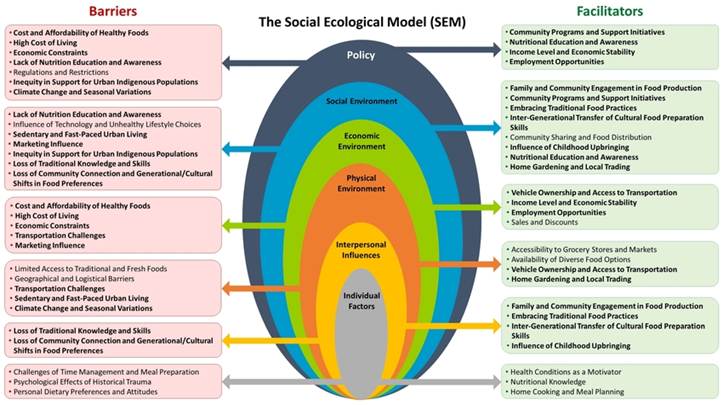
Figure 3: Conceptual framework of barriers and facilitators to healthy eating among urban indigenous populations based on the Social Ecological Model (SEM). The figure illustrates the multilevel social, environmental, cultural, and economic factors influencing healthy eating behaviors among urban Indigenous populations, highlighting interactions between individual, community, institutional, and policy-level determinants within the Social Ecological Model framework.
Source: Shafiee et al. (2024)
Emerging Trends and Future Directions
Improving nutrition outcomes among vulnerable populations requires stronger, more integrated, and evidence-based food policy systems. Future policies should move beyond isolated interventions toward multisectoral approaches that simultaneously address food affordability, healthy food environments, healthcare access, education, and sustainable food systems (HLPE, 2020). Greater collaboration among governments, international organizations, public health institutions, and local communities will be essential for achieving long-term nutrition security and reducing global nutrition inequalities. One major priority is strengthening policies that improve affordability and accessibility of healthy diets. Recent evidence emphasizes the need for fiscal measures such as healthy food subsidies, taxation of unhealthy foods, and investments in resilient local food systems to make nutritious diets more attainable for low-income populations (WHO, 2024). Policies should also prioritize regulation of ultra-processed food marketing, particularly to children and adolescents, while promoting healthier and culturally appropriate dietary patterns (FAO and WHO, 2024).
Future food policy frameworks must additionally incorporate climate resilience and sustainability into nutrition planning. Climate change increasingly threatens agricultural productivity, food availability, and dietary quality, especially in vulnerable regions (IPCC, 2022). Sustainable food systems that support biodiversity, local food production, and environmentally responsible agricultural practices are therefore critical for long-term nutrition security (Swinnen et al., 2024). Digital technologies and data-driven systems also offer important opportunities for improving nutrition policy implementation and monitoring. Real-time food security surveillance, digital nutrition education, and integrated health information systems can strengthen early identification of vulnerable populations and improve policy responsiveness (WHO, 2026). Furthermore, community participation and culturally sensitive interventions should remain central to future food policies to ensure local acceptability, equity, and sustainability. Overall, future progress in nutrition improvement will depend on coordinated, equity-centered, and climate-resilient food policy strategies capable of addressing the complex social, economic, and environmental determinants of malnutrition among vulnerable populations.
Food policies play a critical role in shaping nutrition outcomes among vulnerable populations by influencing food accessibility, affordability, dietary quality, and broader food environments. Evidence from recent studies demonstrates that interventions such as fiscal policies, social protection programs, regulatory measures, and nutrition-sensitive agricultural strategies can significantly improve food security, dietary diversity, maternal and child nutrition, and reduce the burden of diet-related diseases when effectively implemented. However, persistent socioeconomic inequalities, weak governance systems, unhealthy food environments, climate-related disruptions, and limited nutrition literacy continue to hinder the effectiveness and sustainability of many interventions.
The review further highlights that nutrition challenges are multidimensional and require integrated policy approaches that extend beyond isolated health interventions. Addressing malnutrition in all its forms demands coordinated actions across agriculture, health, education, trade, environmental sustainability, and social protection sectors. Greater emphasis on equity-centered and culturally sensitive policies is also necessary to ensure that interventions effectively reach disadvantaged populations disproportionately affected by food insecurity and poor nutrition outcomes. Future progress will depend on strengthening governance systems, improving access to affordable healthy diets, regulating unhealthy food environments, and building resilient food systems capable of responding to economic, environmental, and public health crises. Sustainable improvements in global nutrition therefore require long-term political commitment, multisectoral collaboration, community participation, and evidence-based policy implementation aimed at reducing nutritional inequalities and promoting healthier populations worldwide.
Acknowledgement
We thank all the researchers who contributed to the success of this research work.
Conflict of Interest
The authors declared that there are no conflicts of interest.
Funding
No funding was received for this research work.