LETTER TO THE EDITIOR | DOI: https://doi.org/dx.doi.org/NHHA/PP.0011
RUDN University, Moscow, Russia.
*Corresponding Author: Sergei V. Jargin
Citation: Sergei V. Jargin, (2026). Separate Nutrition, J. Nutrition and Human Health Advances2(2): dx.doi.org/NHHA/PP.0011
Copyright  :
© Sergei V. Jargin. This is an open-access article distributed under the terms of the Creative Commons Attribution License, which permits unrestricted use, distribution, and reproduction in any medium, provided the original author and source are credited.
:
© Sergei V. Jargin. This is an open-access article distributed under the terms of the Creative Commons Attribution License, which permits unrestricted use, distribution, and reproduction in any medium, provided the original author and source are credited.
Received: 09 March 2026 | Accepted: 14 March 2026 | Published: 24 April 2026
Keywords:
The concept of separate nutrition and food combining is based on the known fact that composition of digestive juices depends on the food composition [1]. Critics noted that combinations of products proposed or rejected within the framework of this concept are not always scientifically founded. For example, a series of monographs and articles with selective citations claimed anticancer properties of cruciferous plants (e.g., cabbage) and components of green tea [2,3]. Certain authors have been employed at an enterprise manufacturing dietary supplements; but no conflict of interest was declared. This letter does not propose combinations of foodstuffs, but consumption of only one product at a time. Reasonable exceptions are allowed: sauces and seasonings to stimulate the appetite and peristalsis; vegetable oil can be added to various dishes to prevent constipation. Fiber-rich foods may be effective against constipation and overweight; however, the tolerance must be determined individually. The food should be variegated; but intervals between consumption of different products are recommendable. There is nothing unusual about it: this is the kind of nutrition by some individuals working mainly from home [4]. Eating is an afterthought to a busy schedule [5]. There is no time to prepare complex dishes. Simple meals are prepared according to a momentary preference. Only one product is often consumed. In aged individuals, the choice is additionally limited due to missing teeth. Examples of dishes: various pureed soups from one type of vegetable, crushed in a blender, with the addition of flour (zatyrukha or liquid mash); mashed raw vegetables or fruits; canned fish (herring and other fish sold in Russia is not always fresh), minced meat heated in a microwave or boiled (meatballs). Given the obscurity of ingredients of the minced meat on sale, it is advisable to prepare it by one's own hand or just to cut the meat into small pieces. This mode of nutrition stimulates the secretion of digestive juices that are optimal for the given product. As experience shows, with such a diet, dyspepsia is prevented.
Older individuals have lower calorie requirements but similar or even higher needs of certain nutrients compared to younger adults [6]. Importance of the diet quality increases with age. Nutrient-dense options with smaller portions are advisable. Systematic reviews [7,8] could not draw conclusions about relationships between frequency of meals and energy intake on one side, and alignment with the Dietary Guidelines for Americans on the other side [6]. In particular, balanced diet that integrates variety of nutrients and foods can be effective in preventing dementia [9], also if consumed separately. At any age, it is necessary to avoid undernutrition. When cognitive functions decline, the intake may decrease [9]. Therefore, food quantity should be given more attention. As far as reasonably possible, the intake of added sugar, saturated fats, sodium and alcohol should be limited [6]. It is necessary to avoid poor quality beverages and surrogates containing technical (hydrolytic or synthetic) ethanol [10].
Food must be ingested when hunger is felt, not necessarily at a certain time of the day. For people working from home, the order of the day may be shifted, daytime being confused with nighttime. However, it is better to limit food intake at night, since the functioning of the digestive system is subject to biorhythms [11,12]. In addition, at night there is an increased risk of falling asleep with a full stomach, which can have adverse consequences: eructation with aspiration of gastric contents. Biological signals should not be confused with emotional ones [13]. It is necessary to recognize a false sense of hunger and not to eat when one has stress or neurotic symptoms. Eating disorders per se are neurotic conditions. Accordingly, patients often report childhood trauma including physical or sexual abuse [14]. In particular, obsessive-compulsive disorder is associated with eating disorders. Obsessive-compulsive personality traits in children showed high predictive value for eating disorders. In conditions of domestic violence, a child may develop compulsions [15]. Binge eating and alcohol drinking may be a compulsion or “obsessive passion” [16,17]. Loss of control over eating is common among children and adolescents, which is associated with adiposity, psychological impairments, depression and anxiety [18]. Many adolescents have incorrect weight perception, social phobia, weight-based self-esteem and bodily shame, which is associated with overeating. This pattern may persist in advancing age [19].
If not thirsty, it is advisable to separate food intake from soft drinks, so as not to dilute the gastric juice. On the contrary, some bitter and/or beer may improve appetite and digestion. Meat, fish or fruits can be accompanied by a moderate amount of wine. Milk is recommended to be taken separately from other products. Of note, milk is effective against high acidity with stomach irritation, heartburn, and gastritis symptoms. For the same purpose, baking soda can be added to milk; everyone develops their own doses experimentally. Adequately applied method of separate nutrition helps to reduce body weight.
Some busy individuals, consciously or unconsciously, eat separately. They do not prepare breakfast, lunch and dinner, but consume just one product when they perceive the need. Here the concept of separate nutrition is partly overlapping with that of the “Intuitive eating” [13], which steers away from rigid dietary recommendations. The intuitive diet is personalized as each individual has different needs and preferences at different times. Professional literature confirmed that intuitive eaters have lower obesity rates [5]. Hearing the Self is often preferable to rigid diets [20]. Last but not least, religion can help against overeating. By associating immoderate eating with promiscuity and seeking to prevent both, Christians have sought to impose moral and spiritual discipline [21].
Lunch at a canteen or restaurant (appetizer, first course, second course, dessert) may be too voluminous, contain ingredients suboptimally combining with each other or physiologically superfluous. The quantity and formula should be determined individually based on appetite, taking into account personal experience and medical considerations: somebody is apprehensive of constipation, another individual may get stomach ache from acidic foods; certain products cause allergy. However, the principle of separate nutrition can be adhered to in canteens and restaurants; menu examples: varied fish dishes with beer; meat hors d’oeuvres with some beer or bitter (e.g. bacon or ham with a pickle) plus a cutlet; port wine with fruit or cake (Fig. 1). Alcohol is optional: it is preferable to consume less than more [6]. The images can be seen in the preprint [22], two more are presented here (Fig. 1,2). Previously we reported on wines of foreign denominations, which tasted differently from their analogues in other countries [4]. A bottle of Port “produced from carefully hand-picked grapes of the Douro Walley [emphasis added]” (Fig. 1) has been purchased in the Gastronome No. 1 within the GUM (Upper Trading Rows) in Moscow. The fluid was very sweet and tasted differently from Portuguese originals.
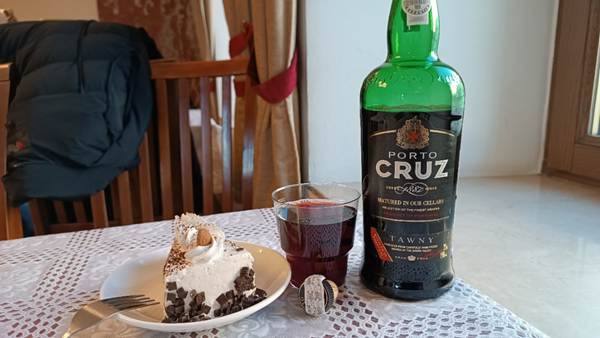
Fig. 1. Refectory in the 3rd floor of the GUM (Upper Trading Rows) in Moscow has always fresh hors d’oeuvres. It is not always the case at other places. Some dishes are compatible with the concept of separate nutrition.
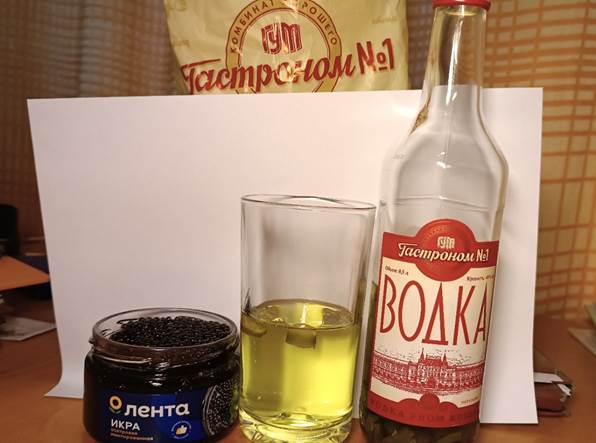
Fig. 2. Pertsovka (pepper vodka) with caviar.
Conflict of interest
The author declares no conflict of interest